Modern workplaces are rapidly rethinking how they provide food and refreshments to employees. Traditional office cafeterias, once considered essential for large companies, are becoming increasingly difficult to maintain due to rising labor costs, operational complexity, and changing employee expectations.
As businesses continue focusing on flexibility, efficiency, and workplace experience, many organizations are turning toward micro market services as a smarter alternative. These self-service retail spaces provide employees with convenient access to snacks, beverages, fresh meals, and healthy options without the overhead associated with traditional cafeterias.
Today’s workplaces prioritize convenience, technology, employee wellness, and operational efficiency. Micro markets align closely with these priorities, making them one of the fastest-growing workplace refreshment solutions across corporate offices, healthcare facilities, and manufacturing environments.
Why Traditional Office Cafeterias Are Becoming Less Practical
Traditional cafeterias require substantial operational management. Businesses must handle staffing, food preparation, inventory management, equipment maintenance, sanitation procedures, and operating schedules.
For many organizations, especially those with hybrid workforces or fluctuating employee attendance, maintaining a full cafeteria no longer makes financial sense.
Large offices are also facing increasing pressure to reduce operational costs while still providing quality workplace amenities that support employee satisfaction.
Traditional cafeterias often struggle with:
- High staffing requirements
- Rising food service expenses
- Limited operating hours
- Food waste and spoilage
- Long employee wait times
- Inefficient space utilization
These operational challenges are encouraging businesses to explore more flexible and technology-driven alternatives.
What Makes Micro Market Services Different?
Unlike cafeterias that rely heavily on staff and fixed schedules, micro market services provide self-service access to food and beverages using modern retail technology.
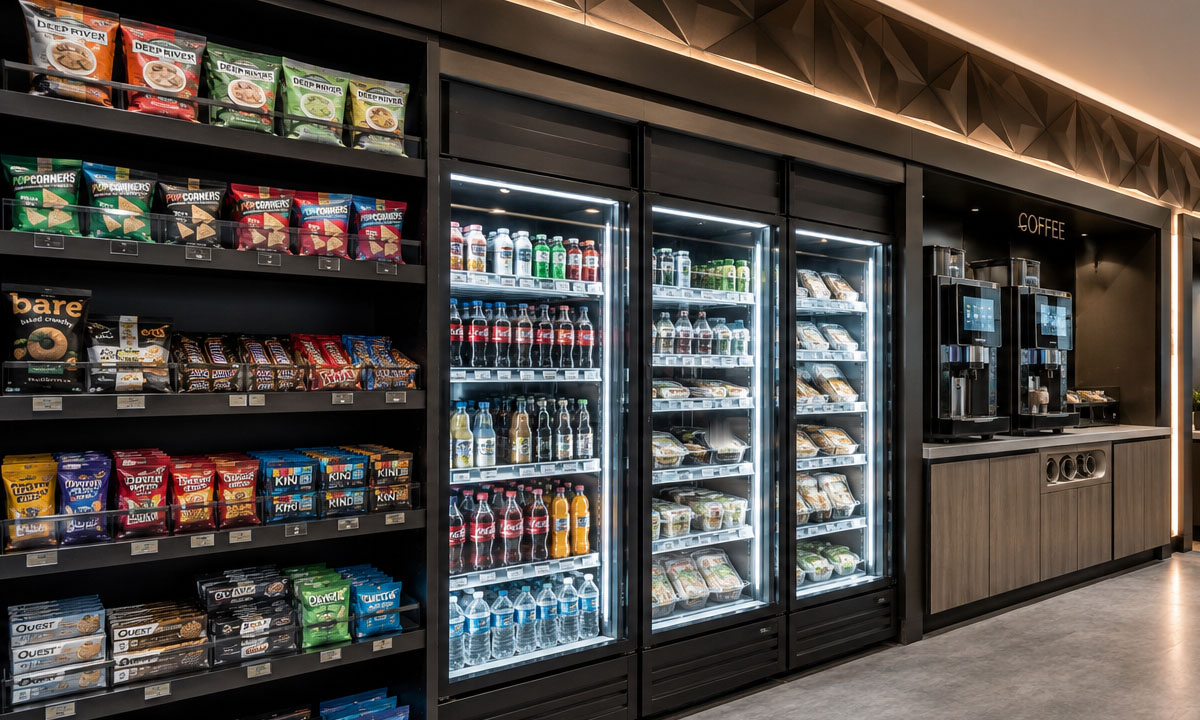
Micro markets typically include open shelving, refrigerated coolers, self-checkout kiosks, and cashless payment systems. Employees can quickly grab meals, snacks, or beverages without waiting in cafeteria lines.
According to insights from Wikipedia’s overview of micro markets, micro markets combine unattended retail technology with convenience-focused workplace food services.
Businesses implementing modern micro market workplace solutions are creating more flexible and efficient breakroom experiences that better align with today’s workforce expectations.
How Micro Markets Improve Employee Productivity
One major reason large offices prefer micro markets is their positive impact on employee productivity. Employees no longer need to leave the workplace to find meals or spend excessive time waiting in cafeteria lines.
Quick and convenient access to refreshments allows employees to maximize break times while minimizing disruptions during the workday.
Micro markets also operate continuously, giving employees access to food and beverages outside traditional cafeteria hours. This is especially valuable for businesses with flexible schedules, overnight shifts, or extended operations.
Modern self-service systems help employees access refreshments more efficiently while improving the overall workplace experience.
Employee Wellness Is Driving Workplace Food Innovation
Employee wellness has become a central focus for modern organizations. Businesses increasingly recognize the relationship between healthier workplace environments and employee satisfaction.
Micro markets make it easier for organizations to offer fresh meals, healthier snacks, hydration options, and wellness-focused products directly inside the office.
According to insights from the American Psychological Association’s healthy workplace research, healthier work environments contribute positively to employee well-being and organizational performance.
Wellness-focused micro market features include:
- Fresh food and healthier snack options
- Better beverage variety and hydration access
- Flexible food availability during all shifts
- Reduced stress from off-site food trips
- Convenient self-service accessibility
- More personalized food selections
These workplace improvements help organizations create more employee-focused office environments.
Labor Cost Reduction Is a Major Advantage
One of the biggest reasons businesses shift from cafeterias to micro markets is labor cost reduction. Traditional food service operations require cooks, cashiers, maintenance staff, and supervisors to operate effectively.
Micro markets significantly reduce these staffing requirements by using self-checkout systems and automated inventory management technology.
This operational efficiency allows organizations to redirect resources toward other workplace improvements while still maintaining quality refreshment services.
Businesses can also reduce costs associated with food preparation equipment, cafeteria seating areas, and extensive kitchen maintenance.
For companies focused on operational scalability, micro markets provide a more sustainable long-term solution.
Smart Technology Supports Modern Breakroom Solutions
Technology plays a major role in the success of micro markets. Advanced inventory systems, AI-powered analytics, cashless payments, and automated restocking tools help organizations manage workplace refreshments more efficiently.
Businesses investing in smart workplace retail technology are increasingly combining micro markets with connected inventory and payment systems to improve operational visibility.
These systems help organizations:
- Track inventory in real time
- Monitor purchasing trends
- Reduce inventory waste
- Improve product availability
- Support contactless transactions
- Enhance overall workplace convenience
Technology-driven refreshment systems create more efficient and modern workplace environments.
Digital Transformation Is Changing Workplace Expectations
The shift toward self-service workplace retail is part of a broader digital transformation trend affecting nearly every industry.
According to insights from IBM’s explanation of digital transformation, organizations are increasingly using digital technologies to improve operational efficiency and customer experiences.
Modern employees now expect workplace amenities that reflect the convenience and technology they experience in everyday retail environments.
Micro markets align with these expectations by providing frictionless access to refreshments through automated systems and digital payment technology.
This technology-forward approach helps businesses modernize office environments while improving employee convenience.
Why Employees Prefer Flexible Breakroom Solutions
Employees increasingly value flexibility in workplace amenities. Traditional cafeterias often operate during fixed hours and may provide limited menu options.
Micro markets allow employees to access snacks, beverages, and meals whenever needed without depending on cafeteria schedules.
Employees prefer micro market environments because they offer:
- Faster self-service transactions
- Greater food and beverage variety
- Continuous refreshment access
- Convenient cashless payments
- Shorter wait times during breaks
- More flexible workplace convenience
These benefits contribute to stronger employee satisfaction and improved workplace experience.
Businesses seeking to improve workplace culture can also explore modern breakroom strategies that support employee retention through upgraded workplace amenities.
Micro Markets Support Hybrid and Scalable Workplaces
Hybrid work models have made traditional cafeterias more difficult to manage efficiently. Employee attendance can fluctuate significantly from day to day, making cafeteria staffing and food planning less predictable.
Micro markets adapt more easily to these changes because they require fewer staff members and operate more flexibly.
They also scale efficiently across multiple office locations, manufacturing facilities, and healthcare environments.
For growing organizations, micro markets provide a workplace refreshment system that can evolve alongside changing workforce needs.
Conclusion
Large offices are increasingly moving away from traditional cafeterias in favor of smarter, more flexible workplace refreshment systems. Rising operational costs, changing workforce expectations, and the demand for better workplace experiences are driving this transition.
Through micro market services, businesses can improve employee productivity, support employee wellness, and reduce operational overhead while providing modern breakroom solutions.
By combining self-service convenience, smart technology, and flexible food access, micro markets create workplace environments that better support both employees and organizational efficiency.
As workplace modernization continues, micro markets will remain one of the most effective and scalable refreshment solutions for large offices.