Scaling a business involves managing inventory, expanding physical space, hiring talent, and adjusting team workflows. During rapid growth, workplace perks often fall behind. A breakroom that served twenty employees with a single coffee pot and a basic snack basket quickly becomes inadequate when team headcount reaches fifty or more.
A well-structured office refreshment services strategy does more than keep employees fed and hydrated. It supports employee retention, improves daily productivity, and reflects company culture. Planning a refreshment program for a growing workforce requires a balance between variety, logistics, budget, and scalable technology.
Why Growing Businesses Need Better Breakroom Solutions
An expanding company has a different operating rhythm from a small team. Day-shift employees, remote staff coming into the office, and rotating teams need consistent access to quality refreshments throughout the day.
Evidence-based frameworks like The CDC Worksite Health ScoreCard highlight how systematic organizational assessment allows employers to identify gaps in workplace nutrition and build targeted health promotion programs. Gathering direct feedback through brief employee surveys helps managers select inventory that gets consumed rather than wasted.
Providing accessible snacks and beverages removes unnecessary stress during short break windows. Research on employee wellness programs shows that timely breaks and proper nourishment directly support alertness, workplace satisfaction, and daily output. A well-planned breakroom supports those moments by keeping essential items ready when staff need them. You can explore how breakroom solutions impact employee retention when designing a supportive environment for long-term growth.
What Should a Modern Office Refreshment Program Provide?
The best workplace breakroom solutions start with the workforce rather than the equipment. A growing office may need snacks, cold beverages, fresh meals, coffee, water, and healthier alternatives.
A practical workplace setup often incorporates:
- Cold beverages and bottled water
- Coffee and hot tea options
- Grab-and-go snacks for short breaks
- Fresh meals for longer shifts
- Healthier snack choices
- Refrigerated fresh food
- Cashless payment terminals
- Reliable restocking and equipment maintenance
Product selection should also reflect employee preferences. Teams working long, intense hours may prefer high-protein snacks or cold brew coffee over standard sugary drinks. Office managers can review consumption patterns to refine what employees actually want.
Exploring Office Refreshment Service Options
Traditional breakroom vending services remain a reliable option for compact spaces or high-traffic corridors because machines require relatively little footprint and operate continuously. Modern vending technology supports credit cards and mobile pay, making quick purchases seamless for staff.
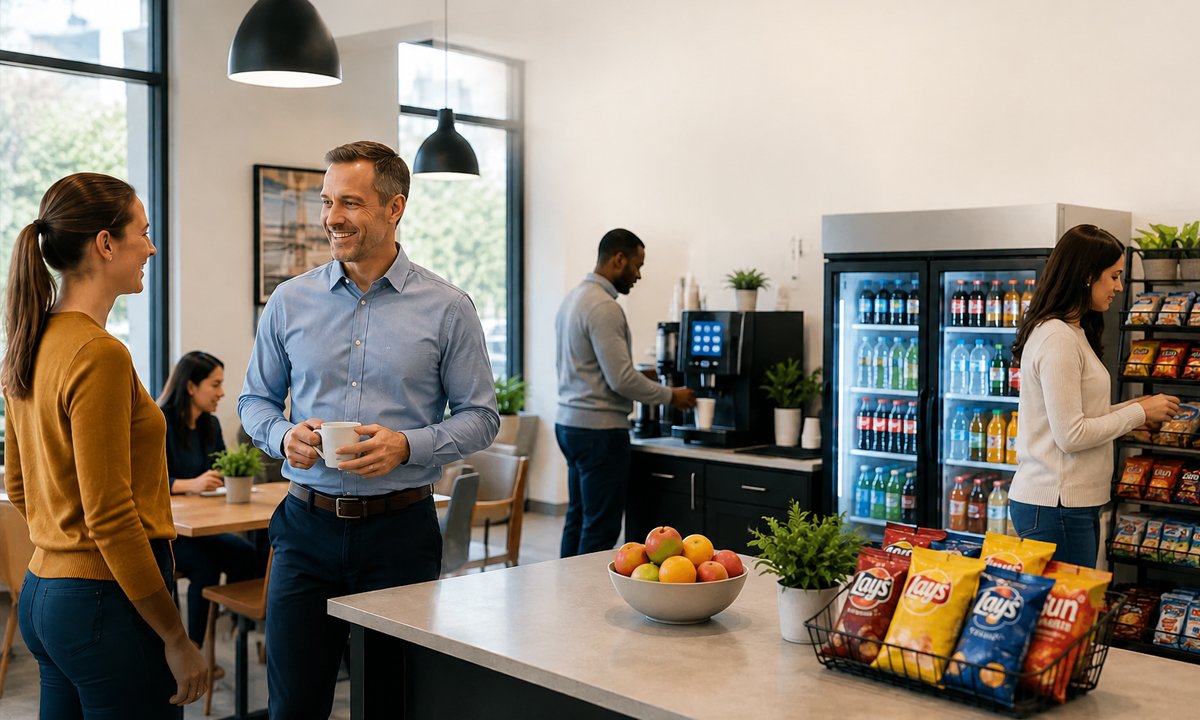
However, rapidly expanding businesses frequently transition toward micro-markets. These open-concept, self-checkout spaces feature open coolers, display shelves, and self-serve kiosks. Implementing micro-markets allows companies to offer fresh salads, deli sandwiches, yogurt parfaits, and premium drinks in a modern retail setting. Check out our dedicated service page on Micro-Markets to see how open-style layouts transform team spaces.
For companies seeking a subsidized model, office pantry services allow employers to supply free snacks, fresh fruit, and cold drinks as an employee perk. You can explore how an office pantry service boosts morale by offering fully funded amenities to your team.
Furthermore, premium office coffee services serve as the cornerstone of daily breakroom interaction. Moving from traditional glass-pot brewers to bean-to-cup machines or plumbed water filtration systems elevates daily office culture while reducing single-use waste.
How to Plan Refreshment Options Around Office Growth
Before selecting equipment or vendor services, business leaders should evaluate how employees use the facility throughout the workday.
Start with structured operational planning. Following a framework like the CDC Workplace Health Model ensures a coordinated rollout through four clear phases: assessment, planning, implementation, and evaluation.
First, calculate active headcount, peak break hours, and available square footage. Next, design the physical layout carefully. Placing heavy-traffic equipment like vending machines away from narrow hallways prevents bottlenecks during lunch hours. Integrating seating near coffee stations creates informal meeting spaces where cross-departmental collaboration happens naturally. Reviewing specialized Office Coffee Services options can help you design a focal hub that fits your layout and team preferences.
Finally, evaluate service response times when choosing a vendor partner. Ask prospective vendors about maintenance schedules, emergency support, inventory monitoring, and delivery frequency. A broken cooler or an empty coffee machine lowers employee morale and impacts daily productivity.
Managing Logistics and Automated Restocking
Managing breakroom inventory manually can quickly overwhelm administrative staff. Tracking stock levels, handling expired items, and calling for repairs distracts office managers from core company priorities.
Partnering with a professional refreshment provider resolves these operational friction points. Industry insights on total rewards strategies from SHRM emphasize that tailored employee benefits and efficient perks align workplace culture with overall business retention goals. Modern service providers use real-time telemetry and smart monitoring systems to track machine sales automatically. This technology alerts service teams when inventory runs low or when equipment requires maintenance.
Data-driven replenishment keeps popular snacks and drinks in stock while eliminating waste from slow-moving items. This analytical approach ensures your refreshment program continuously evolves based on actual workforce consumption.
Building a Scalable Breakroom Strategy
The best breakroom solutions do more than place food and drinks inside an office. They build a reliable space for employees to recharge, collaborate, and feel valued while giving management clear visibility into product demand and costs.
For growing businesses, a practical setup often combines managed office refreshment services, premium coffee stations, smart hydration units, and flexible pantry or micro-market spaces. The right combination depends on overall headcount, building layout, company culture, and budget.
The next time your organization evaluates its workplace amenities, look beyond basic snack boxes. Look at how your breakroom functions during peak break hours, after big meetings, or when hiring sprees increase office attendance. When every employee can step into the breakroom and reliably find fresh, high-quality options waiting, your refreshment strategy is doing exactly what it was designed to do: supporting your people as your business grows.