Employee retention depends on far more than one workplace perk. Pay, management, workload, growth opportunities, benefits, and company culture all influence whether employees choose to stay. Still, the smaller details of the everyday work experience matter too.
That is where micro markets can play a supporting role. A well-planned breakroom will not solve a retention problem, but it can remove a daily inconvenience by giving employees easier access to meals, snacks, and beverages during their shifts.
For Memphis offices, warehouses, manufacturing facilities, and other workplaces, micro markets offer a flexible alternative to traditional vending. When included in a broader employee-experience strategy, they can make the workday more convenient and show that practical employee needs have been considered.
What Is a Micro Market?
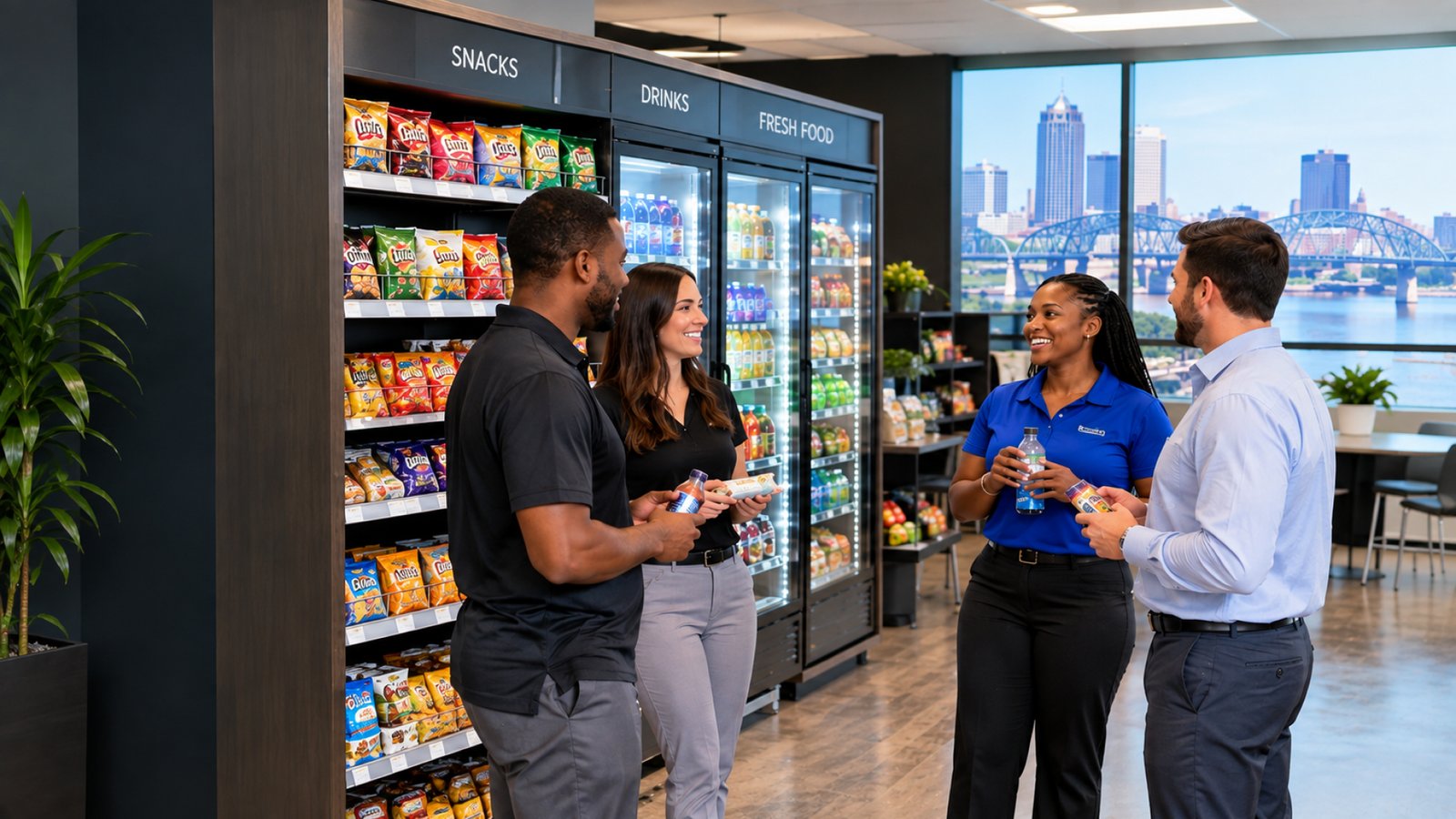
A micro market is an unattended, self-checkout food and beverage space. Rather than purchasing through a single machine, employees can browse products displayed on shelves and in refrigerated units before paying at a kiosk or another cashless checkout system.
The National Automatic Merchandising Association’s micro market overview describes these spaces as unattended retail environments with open shelves, coolers, product information, and cashless self-checkout.
This format creates an experience closer to a compact convenience store than a traditional vending machine. An office micro market can offer packaged snacks, fresh food, grab-and-go meals, cold beverages, and other products in one accessible area.
For employees working short breaks, late shifts, or in locations with limited nearby food options, that convenience can make a real difference in the daily work experience.
How Workplace Amenities Support Retention
Refreshment programs are often treated as facilities decisions, but they also form part of the environment employees interact with each day.
Current Gallup research on employee wellbeing reports that employees who are thriving in their wellbeing are 65% less likely to watch for or actively seek a new job. Gallup examines wellbeing broadly, not micro markets specifically, so this finding should not be used to claim that a breakroom upgrade directly prevents turnover.
It does, however, reinforce a wider point: employees notice how their work environment supports their everyday needs. A clean, reliable, well-stocked breakroom is one small part of that experience.
For Memphis employers operating long or multiple shifts, convenient food access can also prevent employees from spending much of a short break traveling elsewhere for refreshments.
Micro Markets vs. Traditional Vending
Traditional vending remains useful in many workplaces. It requires relatively little space, offers quick purchases, and works well in smaller offices or high-traffic areas.
Micro markets provide a different experience. Open shelves and refrigerated units can accommodate a broader selection, including salads, sandwiches, fresh meals, snacks, and beverages. Employees can see products before purchasing and use cashless self-checkout technology.
January Service Company’s Micro Markets service focuses on creating a refreshment setup around the needs of each workplace instead of treating every breakroom the same.
Neither format is automatically better. The right choice depends on workforce size, available space, shift patterns, security considerations, and the products employees actually want.
What Makes a Micro Market Useful?
Installing a micro market does not automatically improve the employee experience. Its usefulness depends on how well it is planned and managed.
Product Variety Based on Demand
A large selection is not helpful if employees are uninterested in most of it. The product mix should balance familiar snacks and beverages with fresh meals, breakfast products, protein-focused choices, and other items suited to the workforce.
Reliable Stocking
Frequently empty shelves can quickly reduce trust in the market. Inventory information helps providers identify popular items, plan restocking, and replace products that consistently remain unsold.
Convenient Technology
Checkout should be quick and straightforward. January Service Company’s AI Smart Coolers provide another example of how workplace refreshment technology can support convenient access and inventory visibility.
A Clean, Comfortable Space
The physical environment matters as well. Clean surfaces, organized shelves, suitable lighting, and appropriate seating can make the breakroom feel like a place where employees can use their break comfortably.
Why Convenience Matters Across Memphis Workplaces
Different workplaces use refreshments differently. A traditional office may see its highest demand in the morning, at lunch, and during the afternoon. Warehouses, manufacturing facilities, healthcare environments, and other multi-shift operations may need food access throughout the day and overnight.
Nearby restaurants may not be open when late-shift employees take their breaks. A micro market can provide food and beverages across those schedules without requiring a staffed cafeteria.
That does not mean every workplace needs the same setup. Workforce size, break times, available space, and purchasing patterns should guide both the market design and product selection.
Micro Markets Are One Part of Employee Experience
Research from SHRM on global workplace culture found a strong relationship between positive workplace culture and employees’ intention to remain with their organization.
A micro market cannot replace fair compensation, good management, reasonable workloads, career development, or supportive scheduling. It works best as a practical part of a broader workplace strategy.
Employers should therefore avoid presenting refreshments as a solution to turnover. The more accurate benefit is that a reliable micro market can improve one repeated part of the workday: finding food or drinks during a limited break.
Measuring Employee Use
Employers do not have to guess whether the market is useful. Sales and inventory information can reveal which products sell consistently, which categories are ignored, and when restocking is most frequently required.
Employee feedback adds context that sales data cannot provide. Short surveys or informal conversations can identify missing meal options, preferred beverages, dietary requests, or problems with checkout and layout.
These measures indicate whether employees use and value the amenity. They should not be treated as direct proof that the micro market has improved retention. Turnover, engagement surveys, exit feedback, attendance, and broader workforce trends must be considered separately.
Why Choose January Service Company?
January Service Company has served Memphis-area workplaces since 1982. Its team supports micro market programs through product planning, regular restocking, equipment service, and technology that helps track purchasing patterns.
Because each workplace operates differently, JSC can consider employee count, shift schedules, available space, and product demand when developing a refreshment setup. This local support allows the program to adjust as workplace needs change.
Build a Breakroom Employees Will Use
A useful breakroom does not need to be extravagant. It needs to be convenient, reliable, clean, and aligned with what employees actually want.
Micro markets can support that experience by expanding food and beverage choices and making refreshments available across different schedules. For more context, JSC’s guide to breakroom solutions and employee retention explains how other breakroom improvements can fit into a wider employee-experience strategy.
Ready to create a more useful breakroom for your Memphis team? Talk with January Service Company about a micro market designed around your workforce, schedule, and available space.