
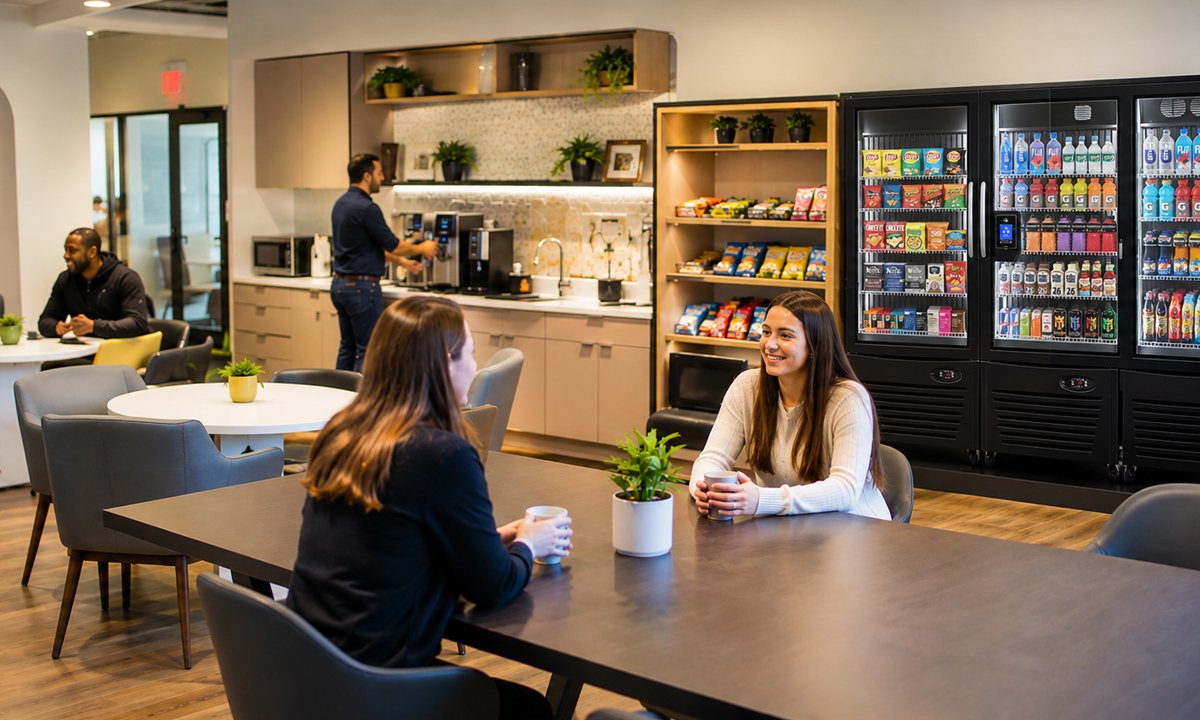
Walk into most offices and you will find a breakroom that gets used out of necessity. Most employees do not choose it. A stale coffee pot, a fridge nobody wants to open, and a table nobody sits at for long can hurt the experience. Yet the employee breakroom has quietly become one of the most telling indicators of workplace culture. When companies design it well, people linger, talk, and recharge. When it is an afterthought, people avoid the space. That avoidance says more about a company than most leaders realize.
Building a breakroom people genuinely want to use is not about spending a fortune on furniture. It is about understanding what makes a space feel worth the walk. Then, companies can follow through with the right mix of comfort, convenience, and consistency.
Why the Employee Breakroom Matters More Than You Think
Breaks are not a productivity drain. Research on workplace design and employee wellbeing consistently shows that short, restorative breaks improve focus. They also reduce fatigue over the course of a workday. This point is supported by findings published through the National Institutes of Health. When employees have access to a space that genuinely helps them reset, they can come back to their desks sharper and more engaged.
The employee breakroom also functions as an informal meeting ground. Employees share ideas over coffee. New hires meet their teammates. Casual conversations often solve problems that formal meetings never quite reach. A breakroom that discourages this kind of interaction can quietly close off a valuable communication channel. Poor lighting, limited seating, or outdated equipment can create that problem. Most companies do not realize what they lose.
What Makes a Breakroom Something People Actually Use
Comfort and Design
Seating matters more than most facilities teams assume. A cramped table with folding chairs sends a different message. A better space offers natural light, comfortable seating, and enough room for a few small groups to sit at once. Simple touches like plants and better lighting can help. A thoughtful layout can also make a breakroom feel inviting rather than functional.
Food and Beverage Variety
This is where most breakrooms fall short. A single coffee machine and a vending unit stocked with the same snacks for years will not hold anyone’s attention. Employees today expect variety. They want fresh options, better coffee, and hydration choices that go beyond a water cooler. This is exactly where thoughtful breakroom vending services and modern pantry service offerings make a measurable difference. They give teams choices that feel current rather than leftover from a decade ago.
Technology and Convenience
Cashless payment, self-checkout options, and real-time restocking are no longer nice extras. They are what separates a modern breakroom from one that feels stuck in the past. When employees can grab what they want without friction, they use the space more often. They also appreciate it more genuinely.
Consistency also plays a bigger role than most people expect. An empty snack shelf or an out-of-order coffee machine does more damage to how employees perceive a breakroom than most facilities teams realize. Employees remember the one time something was missing more than the ten times it was stocked correctly. Modern breakroom vending services increasingly rely on automated alerts and inventory tracking. These tools prevent exactly this kind of gap and keep shelves filled without someone manually checking every day. That kind of reliability turns a breakroom from a convenience into something employees genuinely trust.
The Link Between Breakroom Solutions and Employee Wellness
Workplace wellness programs often focus on gyms, mental health days, and insurance benefits. They can overlook one of the simplest levers available: the breakroom itself. According to guidance from SHRM on employee engagement, consistent, small moments of connection and comfort throughout the workday contribute meaningfully to how engaged people feel with their employer. A well-stocked, comfortable breakroom is one of the easiest ways to deliver that consistency without requiring a major policy overhaul.
The Centers for Disease Control and Prevention has also highlighted practical workplace solutions that support employee health. The guidance notes that accessible amenities and supportive physical environments can support overall workplace wellbeing. A breakroom stocked with better food and beverage choices is a tangible, low-friction way to act on that guidance.
This is where the connection between breakroom solutions and employee experience becomes clear. It is not just about snacks. It is about signaling that the company has thought about the small moments in an employee’s day. The focus should not be only on the big ones.
Practical Steps to Upgrade Your Breakroom
Start with an honest audit. Walk through the space as if you were a new hire seeing it for the first time. Is the seating comfortable? Is the coffee good? Are the snack and beverage options something people actually want?
Or have they simply been there the longest?
From there, prioritize based on what employees actually use. A company exploring modern pantry service options often finds that variety and freshness matter more to staff than sheer quantity. Others find that shifting toward a ai micro market setup gives employees more control over their choices. Self-checkout convenience also gives traditional vending a clear alternative.
It also helps to look at what other companies have done successfully. Reviewing how Breakroom Upgrades Have Improved Retention at similar organizations can offer a useful benchmark. This can help companies make informed changes of their own.
Finally, treat the breakroom as an ongoing investment rather than a one-time project. Restocking consistency, seasonal variety, and periodic refreshes of the space can keep it from sliding back into the forgettable version most offices settle for. It also helps to ask employees directly what they would change. A short, informal survey often surfaces small frustrations. These might include a coffee machine that runs out too quickly or a lack of healthier snack options that leadership would otherwise never hear about.
Acting on that feedback, even in small ways, tends to build more goodwill than the upgrade itself.
The Real ROI of a Breakroom People Love
The value of a great employee breakroom rarely shows up as a single line item. Instead, it shows up everywhere else. It shows up in slightly longer conversations between coworkers and in new hires who feel welcome faster. It also shows up in the quiet decision an employee makes to stay five more minutes rather than eat lunch at their desk alone. None of that is dramatic, and that is exactly the point. Workplace refreshments and comfortable, well-designed spaces build culture in small, repeated moments rather than grand gestures.
Companies that treat their breakroom as part of the employee experience, not just a utility closet with a fridge, tend to see the difference reflected in engagement and retention over time. It costs far less than most wellness initiatives and delivers something employees notice every single day. That combination, low effort and daily visibility, is rare in workplace improvements. It is exactly why the breakroom deserves more attention than it usually gets.