The modern workplace has evolved far beyond desks, meeting rooms, and office equipment. Today’s employees expect convenient workplace amenities that support their well-being, productivity, and overall experience throughout the workday. As a result, organizations of all sizes are investing in better breakroom solutions to create more engaging and functional work environments.
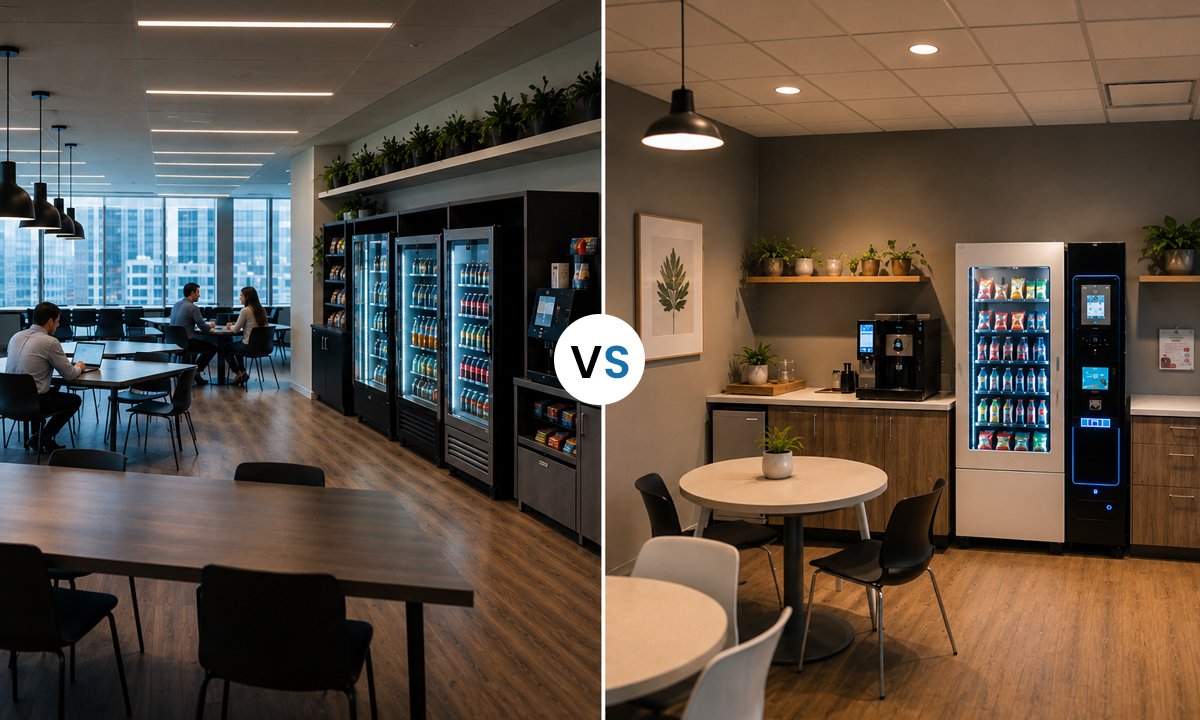
However, the needs of a large corporation differ significantly from those of a small office. While both seek to improve employee satisfaction and operational performance, the scale, budget, workforce size, and usage patterns often require very different approaches.
A breakroom that serves 50 employees has different demands than one supporting 5,000 workers across multiple shifts. Understanding these differences helps organizations select the right breakroom services and workplace amenities that align with their goals and workforce requirements.
This article explores the key distinctions between breakroom solutions for large corporations and small offices, helping businesses identify the most effective strategy for their workplace.
Why Breakroom Solutions Matter in Today’s Workplace
Employee expectations have changed dramatically over the past decade. Workers increasingly view workplace convenience and wellness support as important factors when evaluating employers.
Breakrooms are no longer simply places to take a quick break. They have become extensions of workplace culture that contribute to collaboration, employee engagement, and productivity.
According to insights from Gallup’s research on employee engagement, organizations that invest in employee experience often see stronger engagement and workplace performance outcomes.
Whether serving a small team or a large workforce, a well-designed breakroom can positively influence employee satisfaction and daily workplace interactions.
Understanding the Needs of Small Office Breakrooms
Small offices typically operate with fewer employees, limited floor space, and more modest budgets. As a result, their breakroom requirements tend to focus on convenience, affordability, and efficient use of available space.
For many small organizations, the primary objective is to provide basic refreshment options without dedicating excessive resources to breakroom management.
Smaller workplaces often prioritize flexibility and simplicity. Solutions such as coffee services, compact vending machines, or small pantry programs can provide employees with convenient access to snacks and beverages while maintaining cost control.
Because employee populations are smaller, inventory turnover rates may also be lower, requiring a more focused product strategy to minimize waste.
Effective breakroom planning for smaller offices centers on practicality and value.
How Large Corporations Approach Breakroom Services
Large organizations face a different set of challenges. Higher employee counts, multiple departments, larger facilities, and varying work schedules create more complex refreshment requirements.
Large corporate environments often require scalable solutions capable of serving hundreds or even thousands of employees throughout the day.
Common priorities for large corporate breakrooms include:
- Serving large employee populations efficiently
- Supporting multiple work shifts
- Reducing congestion during peak periods
- Offering broader food and beverage selections
- Integrating technology-driven management systems
- Enhancing employee satisfaction and retention
These priorities often lead larger organizations to adopt more advanced workplace retail solutions that can support higher demand while maintaining operational consistency.
Space Utilization Is a Major Differentiator
One of the biggest differences between large and small office breakrooms is space utilization.
Small offices frequently operate within tighter physical constraints. Every square foot must serve a purpose, making compact refreshment solutions particularly valuable.
In contrast, large corporations often have greater flexibility when designing employee spaces. Larger breakrooms may include dedicated dining areas, collaborative spaces, micro markets, or self-service retail environments.
The ability to allocate more space allows larger employers to create richer employee experiences while supporting greater traffic volumes.
Organizations evaluating breakroom investments should carefully consider how available space influences both employee convenience and operational effectiveness.
Workplace Amenities Vary by Organizational Scale
The type of workplace amenities offered often reflects the size and objectives of the organization.
Smaller businesses may focus on providing convenient essentials such as coffee, snacks, and beverages that support daily productivity.
Larger employers frequently view breakroom amenities as strategic tools for attracting and retaining talent.
Modern solutions such as micro markets allow large organizations to provide expanded food selections, fresh meal options, and self-service convenience without the overhead associated with traditional cafeterias.
The broader range of amenities available to larger organizations often contributes to stronger employee engagement and satisfaction.
However, the most effective solution is not necessarily the largest, it is the one that best matches employee needs and workplace goals.
Employee Benefits Extend Beyond Refreshments
Breakrooms provide value that extends beyond food and beverages.
Comfortable and convenient employee spaces support workplace culture, encourage social interaction, and contribute to employee well-being.
Research discussed in academic studies on workplace collaboration and organizational behavior highlights the importance of informal interactions in fostering communication and teamwork.
Employees who have access to welcoming breakroom environments are more likely to engage with colleagues and experience positive workplace interactions.
For this reason, organizations increasingly view breakrooms as important components of broader employee experience initiatives.
Technology Plays a Larger Role in Corporate Environments
Technology adoption tends to increase as workplace scale grows.
Large corporations often implement advanced systems to improve inventory visibility, purchasing efficiency, and employee convenience.
Solutions such as smart store technology help organizations manage workplace refreshments more effectively while providing employees with modern retail experiences.
Technology-driven breakroom advantages include:
- Real-time inventory monitoring
- Automated replenishment processes
- Cashless payment systems
- Data-driven product planning
- Reduced administrative workload
- Enhanced operational visibility
These capabilities are particularly valuable in larger workplaces where manual management becomes increasingly difficult.
Operational Efficiency Becomes More Important at Scale
As employee populations grow, maintaining operational efficiency becomes a higher priority.
Large organizations must ensure refreshment services remain accessible, reliable, and cost-effective despite higher usage levels.
According to insights from the U.S. Bureau of Labor Statistics productivity resources, productivity improvements often result from better processes, technology adoption, and resource utilization.
Advanced breakroom solutions help large organizations streamline operations while minimizing service disruptions and inventory shortages.
Smaller offices also benefit from efficient refreshment services, but their management requirements are typically less complex.
This difference often influences the type of breakroom infrastructure that each organization chooses to implement.
Choosing the Right Breakroom Strategy
There is no universal breakroom solution that works for every organization.
Businesses should evaluate workforce size, available space, employee preferences, operational goals, and budget constraints before selecting a strategy.
Organizations interested in exploring how workplace amenities impact employee satisfaction can also review our guide on breakroom experience and employee retention.
The most successful breakroom programs align workplace amenities with organizational objectives while supporting employee well-being and productivity.
Whether serving a small team or a large workforce, thoughtful planning remains essential.
Conclusion
Effective breakroom solutions look different for large corporations and small offices because each environment faces unique challenges and opportunities.
Small workplaces often prioritize simplicity, affordability, and efficient space utilization, while larger organizations focus on scalability, technology integration, and comprehensive employee benefits.
By understanding these differences, businesses can implement the right breakroom services and workplace amenities to support employee satisfaction, productivity, and long-term operational success.
The best breakroom strategy is not determined by size alone, it is determined by how well it serves the people who use it every day.