
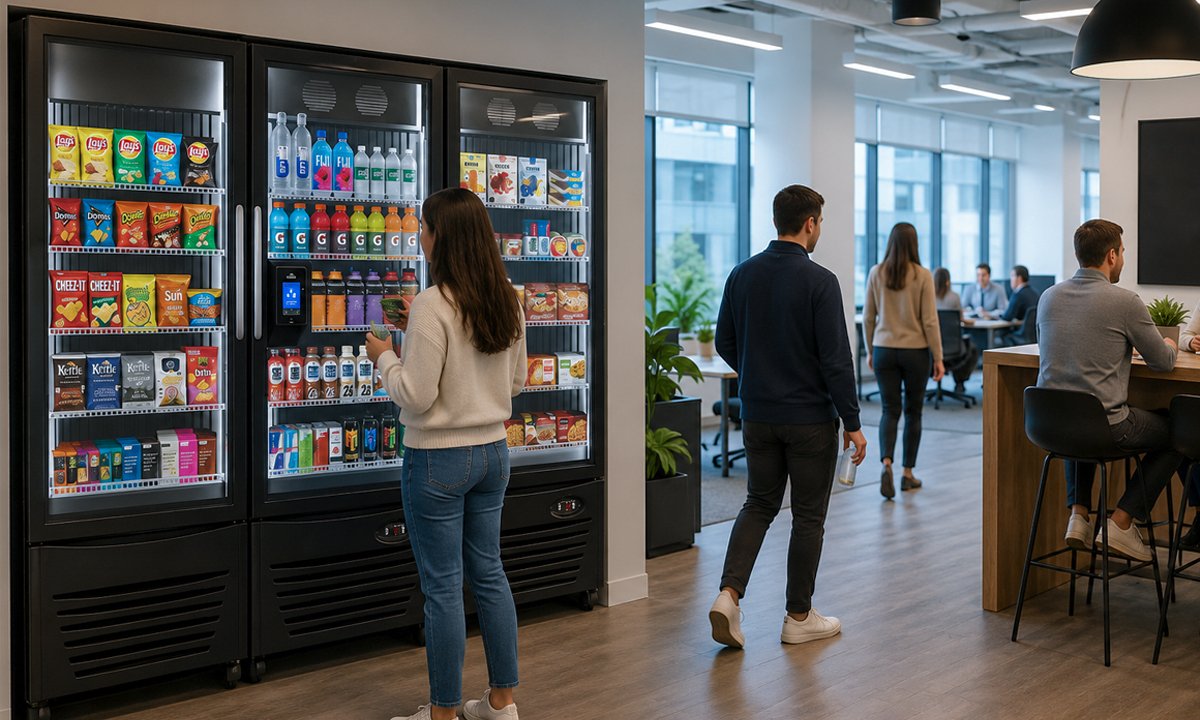
The way organizations provide food and beverages to employees has changed dramatically over the past decade. Traditional cafeterias were once the primary solution for serving meals in large offices, manufacturing plants, hospitals, and educational institutions. While cafeterias continue to serve an important purpose in some environments, many businesses now require more flexible, cost-effective, and technology-driven alternatives.
Today’s workplace food service focuses on convenience, accessibility, and employee choice rather than fixed meal schedules. Instead of investing in large dining facilities with dedicated staff, employers are introducing micro markets, smart vending solutions, and modern office pantry programs that provide fresh food and beverages throughout the day.
These innovations allow organizations to improve employee satisfaction while making better use of available space and reducing operational costs. As workforce expectations continue to evolve, workplace food service is becoming more personalized, efficient, and adaptable than ever before.
Why Traditional Cafeterias Are No Longer the Only Option
Traditional cafeterias require substantial investments in kitchen facilities, food preparation equipment, staffing, cleaning, and ongoing maintenance. These operational requirements make cafeterias difficult to justify for many organizations, particularly businesses with changing employee populations or multiple shifts.
Modern employees also expect greater flexibility. Rather than eating only during designated meal periods, they often prefer access to refreshments whenever their schedules allow.
According to insights from Wikipedia, food service includes a wide range of methods used to prepare and deliver meals across commercial, institutional, and workplace settings. Today’s workplace refreshment programs reflect this broader definition by providing flexible food access through automated and self-service solutions.
Organizations evaluating ai micro markets are finding that these self-service environments deliver many of the benefits traditionally associated with cafeterias while requiring significantly less space and operational management.
How Modern Workplace Food Service Benefits Employees
- Provide access to fresh meals, snacks, and beverages throughout the day.
- Eliminate dependence on fixed cafeteria operating hours.
- Improve convenience with self-service purchasing options.
- Support healthier food choices through expanded product selections.
- Reduce employee travel time during meal and break periods.
- Create scalable break room services for organizations of every size.
These benefits allow businesses to create a better workplace experience while using existing office space more efficiently.
Micro Markets Are Changing Workplace Dining
One of the biggest developments in workplace refreshment programs is the rapid adoption of micro markets. Unlike traditional vending machines, micro markets create open retail environments where employees can browse refrigerated meals, snacks, beverages, and convenience items before completing purchases through self-checkout kiosks.
This approach combines the convenience of a neighborhood convenience store with the efficiency of automated retail technology. Employees enjoy greater product variety, while employers benefit from simplified inventory management and lower operating costs.
Businesses researching vending service memphis frequently discover that micro markets provide a flexible solution capable of serving both small offices and large facilities without requiring cafeteria expansion.
Smart Vending Solutions Support Modern Workplaces
While micro markets continue to grow in popularity, smart vending solutions remain an essential part of workplace food service. Today’s connected vending equipment offers cashless payments, remote inventory monitoring, automated restocking alerts, and real-time reporting that improve operational efficiency.
Organizations implementing modern ai vending solutions can provide reliable food and beverage access while reducing manual inventory checks and service interruptions.
Smart vending technology also allows businesses to adjust product selections based on purchasing trends, helping employees consistently find the refreshments they prefer while minimizing product waste.
Why Employee Expectations Continue to Change
Modern employees expect workplace amenities that support convenience, flexibility, and overall well-being. Food service is no longer viewed as simply providing meals, it has become part of the overall employee experience. Organizations that offer accessible refreshments throughout the day often create workplaces where employees feel better supported and spend less time leaving the office for food.
According to insights from Gallup, workplace environments that support employees contribute to stronger engagement, productivity, and retention. While food service is only one part of the employee experience, providing convenient access to quality refreshments can positively influence daily workplace satisfaction.
Businesses evaluating vending machine memphis frequently prioritize refreshment programs that combine convenience, technology, and product variety to better meet evolving workforce expectations.
Key Features of Today’s Workplace Food Service
- Self-service purchasing through digital kiosks and cashless payment systems.
- Flexible food options including fresh meals, snacks, and beverages.
- Real-time inventory monitoring to improve product availability.
- Automated restocking that minimizes empty shelves.
- Scalable refreshment programs for organizations of different sizes.
- Technology-driven reporting that supports better operational decisions.
These capabilities help employers modernize food service while improving operational efficiency and employee satisfaction.
Technology Is Driving the Evolution of Food Service
Technology has become the foundation of modern workplace food service. Automated inventory systems, cloud-based reporting, touchless payments, and connected vending equipment allow organizations to deliver consistent refreshment services with minimal administrative effort.
Research published by ScienceDirect highlights how digital technologies continue transforming food systems and operational processes across multiple industries. These advancements are also reshaping workplace food service by helping businesses improve inventory accuracy, reduce waste, and respond more effectively to changing employee demand.
Organizations researching vending supply memphis increasingly look for providers that combine advanced technology with dependable service to create efficient, future-ready refreshment programs.
Choosing the Right Workplace Food Service Strategy
Every organization has different operational requirements, employee populations, and available space. Some businesses benefit most from micro markets, while others may prefer smart vending equipment or a professionally managed office pantry. The best solution often combines multiple refreshment options to meet the needs of different departments and work schedules.
For example, manufacturing facilities operating around the clock may combine vending machines with micro markets to serve multiple shifts, while corporate offices may focus on fresh meals and premium beverages. Businesses planning long-term growth should also evaluate providers based on technology integration, inventory management, and ongoing service support rather than equipment alone.
To learn how technology supports more efficient refreshment programs, read our guide on How Vending Machine Technology Improves Inventory Accuracy and Reduces Waste, which explains how connected systems improve product availability while reducing operational costs.
Organizations evaluating a vending machine supplier in Memphis should also consider service responsiveness, reporting capabilities, and inventory visibility to ensure their workplace food service program continues delivering value as employee needs evolve.
Ultimately, long-term success depends not only on the quality of the equipment but also on the provider’s ability to deliver reliable service, advanced technology, and flexible product management that can grow with your organization.
Conclusion
The future of workplace food service extends well beyond traditional cafeterias. By adopting micro markets, smart vending solutions, modern office pantry programs, and flexible break room services, organizations can provide employees with convenient access to food and beverages while reducing operational complexity and making better use of existing space.
As workplace expectations continue to evolve, businesses that invest in technology-driven refreshment solutions are better positioned to improve employee satisfaction, support productivity, and create more adaptable workplaces. Modern food service is no longer defined by a cafeteria, it is defined by convenience, accessibility, and innovation.