
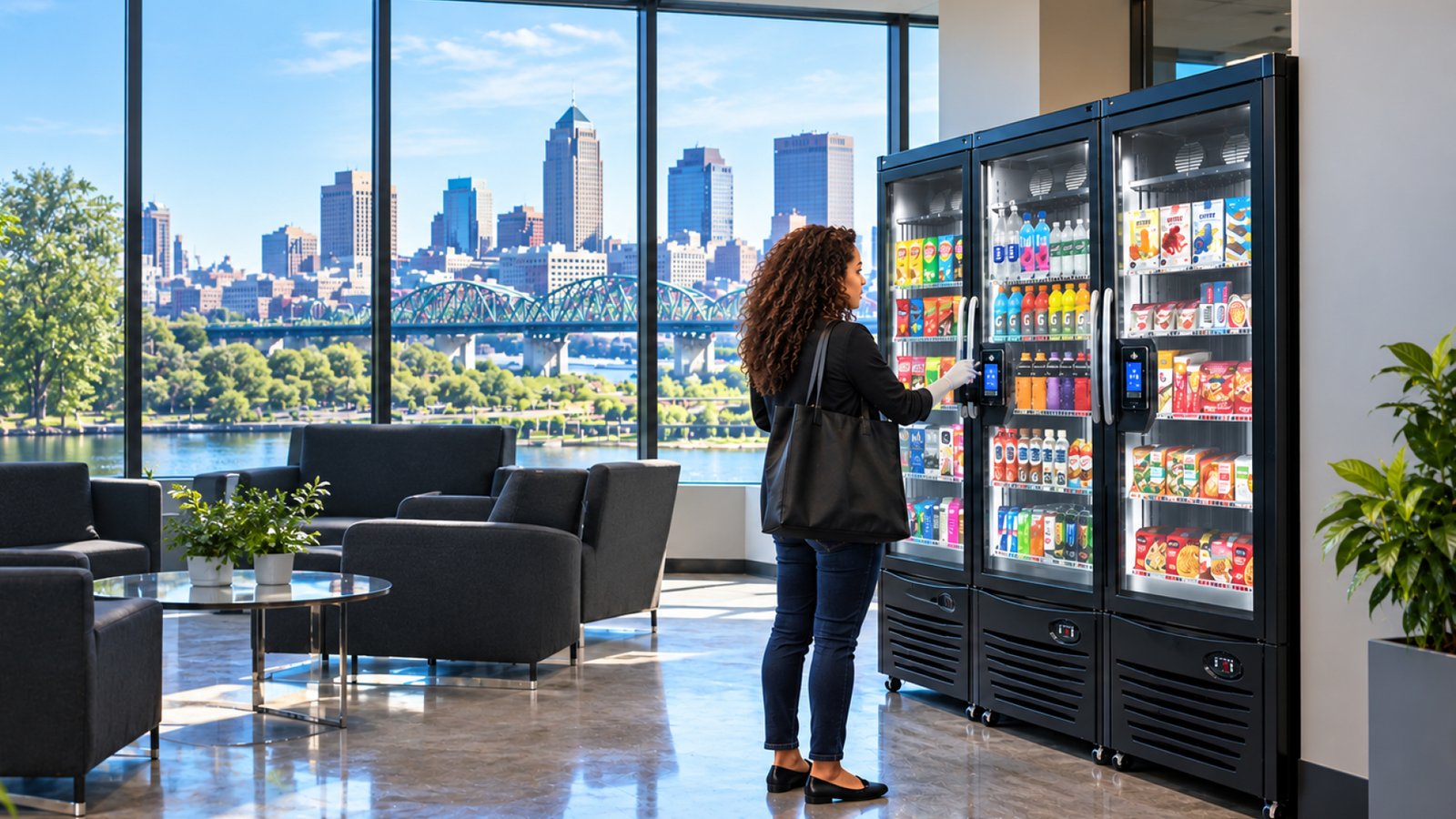
Walk into almost any Memphis office, warehouse, or manufacturing floor today. You may notice something has changed. The old coin-operated machine is gone or on its way out.
A new generation of AI vending technology has taken its place. These systems can track inventory, accept multiple payment methods, and alert operators when a machine needs attention. Some can even identify potential inventory issues before employees notice them.
For a business owner or facilities manager, this shift raises a practical question: how much technology does your workplace actually need?
Not every business needs the same setup. Choosing the wrong system can mean paying for features nobody uses. It can also frustrate employees if the machine cannot keep up with demand.
The goal is not to buy the newest gadget. It is to choose a vending system that fits your business, employees, and daily operations.
Why Vending Technology Decisions Matter More Than Ever
The way people pay, snack, and take breaks at work has changed over the past several years. Hybrid schedules can create less predictable rush periods. Employees may also expect the same cashless vending machines experience they get at a coffee shop or grocery store.
More workplace devices now connect to office networks, too. Even a snack machine can become part of a company’s broader technology footprint.
This is why smart vending machines can be more than a convenience upgrade. They can affect employee satisfaction, IT considerations, accessibility, and the overall breakroom experience.
The right equipment can make daily operations easier. The wrong equipment can create unnecessary costs and maintenance issues.
Start With Your Business’s Actual Needs, Not the Latest Trend
Before comparing machines or providers, take an honest look at your workplace.
A 15-person office has very different vending needs from a 300-person distribution center. Yet some providers approach both with the same one-size-fits-all pitch.
Ask yourself a few questions before shopping for equipment:
- How many employees will realistically use the machine during a shift?
- Does your workplace operate 24/7?
- Does activity concentrate around specific shift times?
- Do you have reliable Wi-Fi or cellular coverage where the machine will sit?
- What is your budget, including ongoing service costs?
- Do you need one machine or several?
- Will you offer snacks, drinks, fresh food, or a combination?
If you are still mapping out what your workplace needs, our Memphis vending services page walks through the available options in more detail.
Starting with your actual needs can help you avoid paying for technology your workplace will rarely use.
Understanding What AI Vending Technology Actually Does
The term gets thrown around a lot, so it helps to be specific.
In practical terms, AI vending technology can use sales data, inventory sensors, and connected software to help operators manage machines. These systems may identify purchasing patterns and alert operators when inventory needs attention.
Some systems can provide more detailed analytics. Depending on the equipment, operators may be able to identify slow-moving products and adjust the product mix based on purchasing data.
A small office may not need this level of automation. A large facility with multiple machines and unpredictable shifts may benefit much more.
The technology can help reduce stockouts and make restocking more efficient. However, the right level of automation depends on your actual volume and operational needs.
Do not choose a system simply because its features sound impressive. Choose technology that solves a problem your business actually has.
Cashless Payment Options Are Becoming Essential
A few years ago, cashless payment was often considered a nice extra. Today, it is much closer to a standard expectation.
Fewer employees regularly carry cash. A machine that only accepts coins and bills may therefore create unnecessary friction for customers.
Modern business vending solutions can support options such as tap-to-pay cards and mobile wallets. Some systems also offer app-based ordering or account-based payment.
When evaluating providers, ask which payment methods come standard. Also ask whether certain options require additional hardware or fees.
That detail is easy to overlook during a sales conversation. However, it can affect both convenience and long-term costs.
Security Considerations for Connected Machines
Any vending machine with Wi-Fi or cellular connectivity is a networked device. That creates security considerations that businesses should address before installation.
Depending on how the equipment is configured, connected machines may interact with a company’s network or other digital systems. Businesses should therefore understand how the provider protects and maintains the equipment.
This is not a reason to avoid smart vending machines. It is a reason to ask direct questions.
Find out how the provider handles:
- Network security
- Software updates
- Device access
- Data protection
- Encryption
- Remote system management
The Cybersecurity and Infrastructure Security Agency offers useful background on Internet of Things device security.
It can also provide a helpful starting point when discussing connected vending equipment with your IT team or provider.
Compliance Essentials: Accessibility and Food Labeling
Two compliance areas deserve attention before installing new vending equipment: accessibility and nutritional labeling.
The first is physical accessibility. Federal standards address reach ranges, controls, and clearances for self-service equipment, including vending machines.
These requirements help ensure that people with disabilities can use the equipment. The U.S. Access Board provides guidance on Self-Service Transaction Machines.
Review these requirements when deciding where and how to install your equipment.
Nutritional labeling is another consideration for certain vending operators. Federal rules require calorie information for applicable vending machine operators that meet the relevant requirements, including the federal threshold for operators with 20 or more vending machines.
The FDA’s vending machine labeling guidance explains the requirements and exemptions.
Even if your business does not currently fall under these rules, understanding them can help if your vending operation grows.
Choosing the Right Vending Machine Service Provider
Technology is only half the equation.
The provider behind that technology determines how well the system works day to day. A machine with impressive features is only useful if the provider can keep it stocked, maintained, and operational.
When comparing vending machine service providers, ask about:
- Average repair response times
- Restocking schedules
- Product selection
- Pricing transparency
- Service fees
- Software updates
- Customer support
- Equipment maintenance
It is also worth asking how the provider handles software updates for connected machines. Outdated systems can create reliability and security concerns over time.
Our AI-powered smart store page explains how these systems can help local businesses manage vending more efficiently.
Matching Technology to Your Workplace Culture
Beyond specifications and compliance, your vending setup should reflect how your team actually works and eats.
A software company with a young, health-conscious workforce may prioritize fresh food and detailed nutrition information.
A manufacturing facility with overnight shifts may care more about reliability and 24-hour availability.
Workplace vending machines work best when you choose them around these realities. A generic feature checklist may not tell you what your employees actually need.
Think about your team’s schedules, preferences, and breakroom habits. Then choose technology that supports those patterns.
If you are still deciding how much service your business needs overall, our micromarket solutions page covers a broader breakroom option that may work well for businesses with higher traffic or more varied needs.
Making the Final Decision
There is no universal answer to which vending technology is best for a Memphis business.
The right choice depends on your headcount, budget, shift patterns, location, and how employees use the space.
Approach the decision methodically.
Start by assessing your actual usage patterns. Then consider cashless payment, accessibility, security, and service quality. Finally, compare the features that providers offer against the problems you actually need to solve.
Do not get pulled toward features that sound impressive but have little value for your workplace.
The goal is not to find the most advanced machine on the market. It is to find a setup that keeps your team supplied, keeps equipment running, and avoids unnecessary headaches for your facilities or IT team.
Take the time to map your needs first. The right vending technology choice will usually become much clearer from there.