
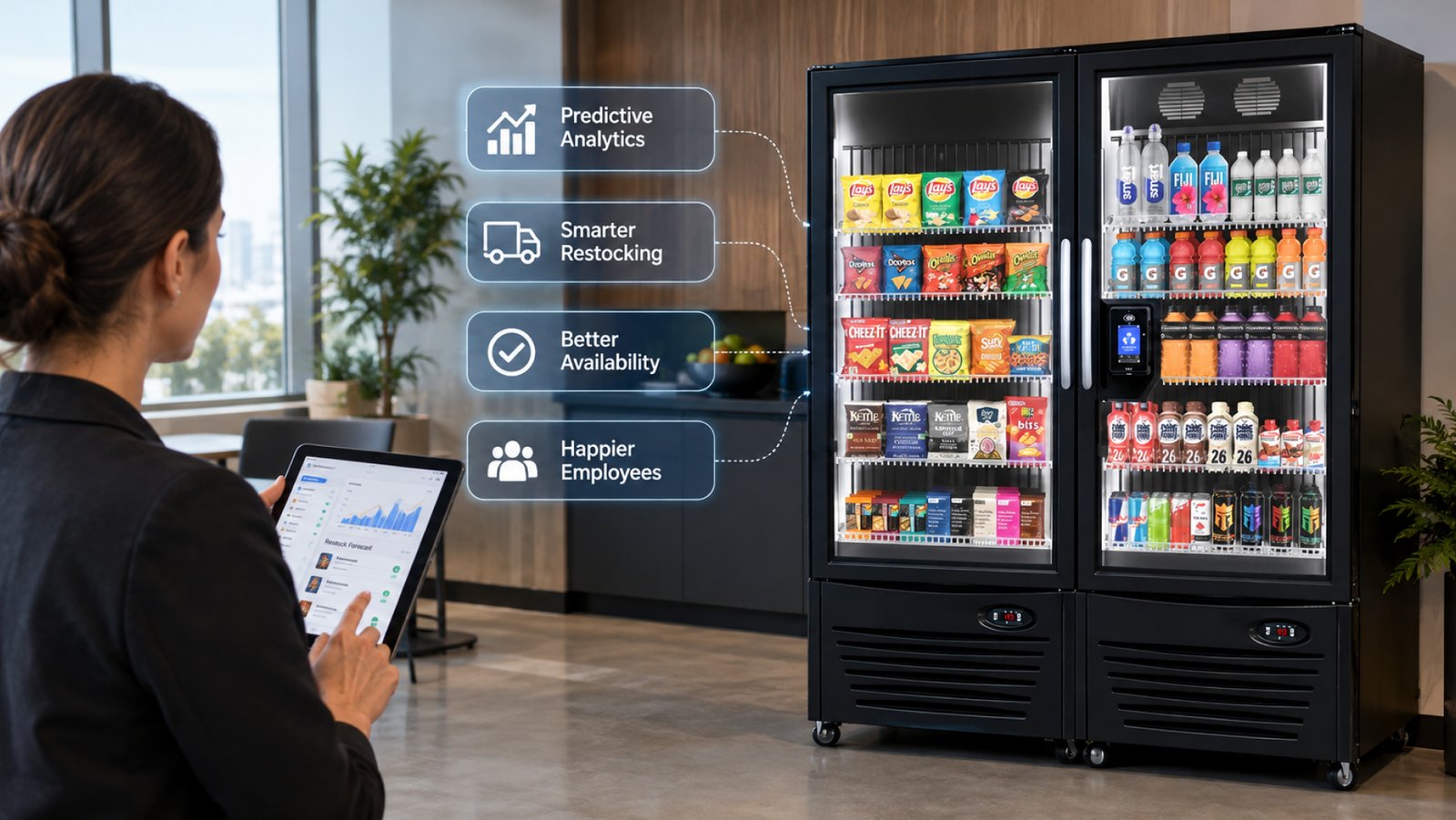
Nothing frustrates an employee like walking to a vending machine and finding their usual drink sold out. Repeated stockouts make the service less useful.
Vending machine service providers can use sales and inventory data to make better restocking decisions instead of relying only on fixed routines. It can estimate demand, plan visits, and guide replenishment, though it cannot prevent every stockout.
The Problem With Guess-Based Restocking
A fixed route is convenient, but demand differs between machines. A machine near a busy break room may sell out of popular drinks by Wednesday, while one on a quieter floor still has plenty of stock before the next visit.
Restocking every machine the same way can leave popular products unavailable and slower-selling items sitting too long. Excess inventory can also take up space and increase waste for products with limited shelf lives.
A responsive approach considers sales, product turnover, and when each machine needs replenishment.
What Predictive Analytics Means
Predictive analytics uses past data to estimate what may happen next. For vending, it means reviewing sales patterns to forecast which products may sell, in what quantities, and over what period.
For example, bottled water may sell faster on hot days. Software can compare sales patterns across machines.
Forecasts are estimates, not guarantees, and should be updated as demand changes. Accurate forecasts also depend on clean sales records and noting when a machine is empty, offline, or temporarily unavailable. January Service Company’s technology solutions include inventory tracking and demand forecasting to support workplace refreshment operations.
What Data Helps Providers Forecast Demand?
Useful information includes sales by product, time, day, season, and workplace type. Providers may also consider events, shifts, and changes in site occupancy.
Depending on the equipment, connected machines can send remote sales or stock updates. This telemetry helps providers identify machines that may need attention before a driver visits.
Providers can also set a par level—the target quantity of a product to keep in a machine. Sales records help staff set higher targets for popular products and lower ones for slower sellers.
For more on how technology supports stock accuracy and waste reduction, read our article on how vending machine technology improves inventory accuracy and reduces waste.
How Demand Forecasting Works
Forecasting systems analyse past sales for patterns. Some machine-learning models also consider weekdays, holidays, and changing demand.
An IEEE research paper on vending-machine demand prediction examines machine-learning methods that use historical sales and related variables. In its tests, adding factors such as holidays and days of the week slightly improved predictions. Results can differ depending on the data and model used, so the findings should not be treated as a guarantee for every provider.
Providers can use forecasts to prepare quantities and prioritise locations before a route, adjusting the plan as new information arrives.
Building a Smarter Restocking Schedule
A traditional schedule may send a driver to every location on set days. A data-informed schedule can prioritise machines that are running low or are expected to sell out before the next visit.
Research from the American Economic Association on demand estimation when products are unavailable used vending-machine inventory data to study how stockouts affect demand estimates. When a product is unavailable, recorded sales alone cannot show how many people might have bought it. Accounting for availability can help providers make better-informed inventory decisions.
Forecasts can help providers prioritise visits and adjust quantities, but they must still balance stock levels, travel time, supplier availability, and delivery costs. A good schedule balances availability with travel costs and excess stock.
How Inventory Data Can Improve Product Choices
Restocking is not only about when a driver visits. It is also about what goes into the machine. If a product repeatedly sells slowly while another often runs low, the provider may adjust quantities or discuss a different product mix with the customer.
A ScienceDirect study of vending-machine demand estimation examined how sales and lost-sales information can improve demand estimates. Including lost-sales information improved the researchers’ model, though results may differ across vending operations.
Product choices should reflect employee preferences and the workplace. A warehouse with overnight shifts may need a different mix from a small office. Providers can review sales and feedback before changing stock.
What Businesses Gain From Smarter Restocking
Forecasting can help providers plan stock and routes more carefully. Employees may be more likely to find popular items available, while providers can identify products that are not moving and make better-informed replenishment decisions.
More accurate planning may reduce unnecessary visits or excess stock, while helping staff prepare the right quantities for each location. Results depend on data quality, forecast updates, supplier availability, and execution. Data cannot guarantee constant availability.
Why People Still Matter
Predictive tools depend on useful data. New machines have little sales history, workplace changes can make old patterns unreliable, and suppliers may run short.
Drivers and account managers can spot equipment faults, damaged packaging, and unwanted products. Workplace feedback helps explain unusual sales patterns and guide product changes.
Technology should support service, not replace communication. Look for a provider that combines useful data with clear communication and a practical response when machines need attention.
Questions to Ask Vending Machine Service Providers
Not every provider uses the same systems, so ask specific questions before choosing a service:
- Do your machines report sales or inventory remotely, or do staff check stock during visits?
- How do you decide which machines need restocking first?
- How do you adjust product quantities when demand changes?
- Can you respond when a popular item sells out unexpectedly?
- Who should we contact about empty slots, machine faults, or product requests?
These answers reveal how the provider uses data and handles problems between visits. Ask for clear explanations; tracking capabilities vary by machine. You can also ask how often the product mix is reviewed and whether you can request specific items.
Why Choose January Service Company?
January Service Company has served Memphis-area workplaces since 1982. Its offerings include vending, office coffee, micro markets, and other workplace food and beverage solutions.
The right setup depends on your workplace and employees’ preferences. Ask how often machines are checked and how product requests, faults, and shortages are handled.
Explore January Service Company’s vending service to learn more about its workplace vending options.
Restock Smarter, Not Harder
Predictive analytics gives vending providers another way to make restocking decisions using sales patterns instead of relying entirely on fixed routines. It can help estimate demand, plan inventory, and identify machines that may need attention sooner.
The strongest approach combines data, reliable service, and employee feedback. For vending options in Memphis, contact January Service Company to discuss your workplace’s needs and the support available.