
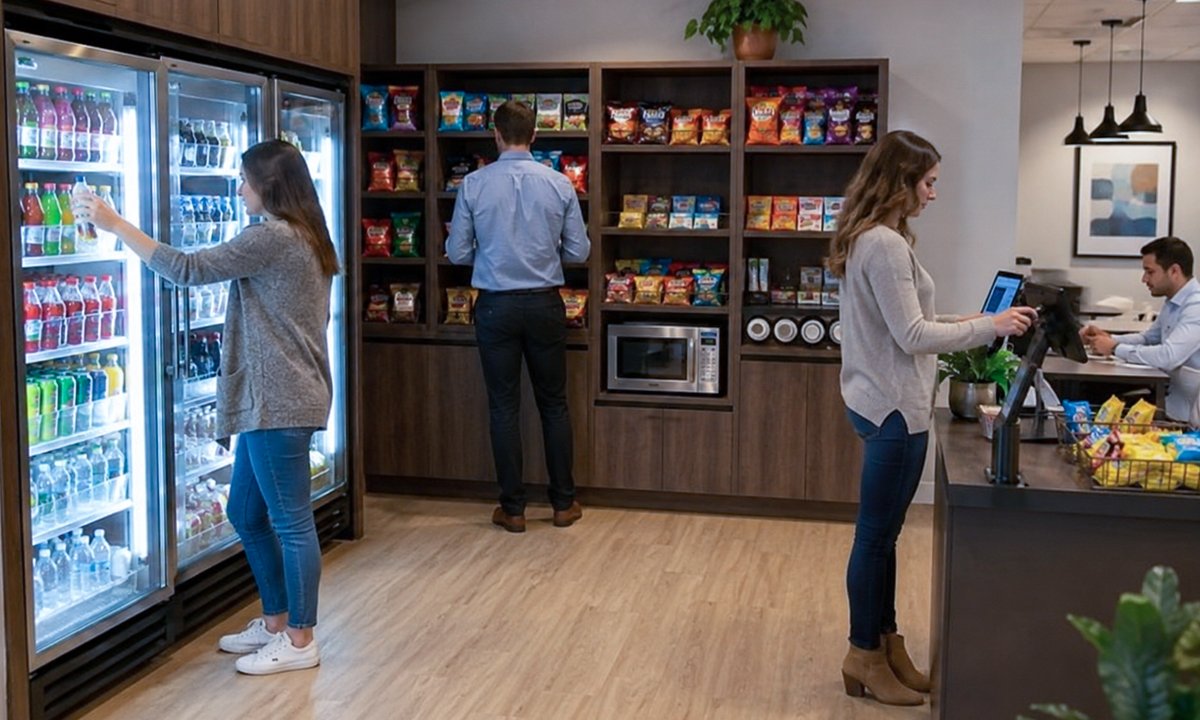
Workplace food and beverage services have evolved significantly over the past decade. While the traditional vending machine remains a familiar solution in many offices, businesses are increasingly seeking more flexible, engaging, and employee-focused alternatives. One option gaining widespread adoption is the micro market.
A micro market combines the convenience of self-service retail with a wider selection of products than conventional vending equipment can typically offer. Employees gain access to fresh meals, snacks, beverages, and grab-and-go items through an open-market environment that operates directly within the workplace.
For organizations looking to improve employee satisfaction, support workplace productivity, and modernize breakroom amenities, transitioning from traditional vending to a micro market can be a strategic investment. However, making the transition successfully requires careful planning and execution.
This guide outlines the key steps businesses should follow when replacing traditional vending systems with a modern office micro market solution.
Why Businesses Are Moving Beyond Traditional Vending Machines
Many workplaces are discovering that traditional vending machines no longer meet employee expectations. Limited product selections, restricted capacity, and inflexible merchandising options can create challenges for both employers and employees.
Today’s workforce expects greater convenience, healthier food choices, and a more modern purchasing experience. As a result, organizations are increasingly exploring vending machine alternatives that provide a broader range of products and improved user experiences.
According to insights from Wikipedia’s overview of self-service retail systems, self-service environments empower consumers to browse and select products independently, creating a more convenient and engaging experience.
Micro markets build upon this self-service concept by offering a workplace retail environment that feels more like a small convenience store than a vending machine area.
Step 1: Evaluate Employee Needs and Workplace Demand
Before implementing a micro market, organizations should first assess employee preferences and consumption patterns.
Understanding workplace demand helps determine the appropriate market size, product mix, and layout requirements.
Businesses should consider factors such as employee population, operating hours, shift schedules, and existing refreshment usage.
Gathering employee feedback through surveys or informal discussions can also provide valuable insights into food preferences and purchasing habits.
A successful office micro market begins with understanding the needs of the people who will use it every day.
Step 2: Assess Available Space
Unlike traditional vending machines, micro markets require dedicated space for shelving, coolers, checkout systems, and product displays.
The good news is that most organizations can convert existing breakrooms, unused office areas, or underutilized common spaces into effective micro market environments.
When evaluating space requirements, consider:
- Employee traffic patterns
- Accessibility for all users
- Electrical and connectivity needs
- Refrigeration requirements
- Product display opportunities
- Future expansion potential
A well-designed layout improves convenience while encouraging employee engagement with the market.
Step 3: Choose the Right Micro-Market Solutions Provider
Selecting an experienced provider is one of the most important steps in the transition process.
A quality provider will help with planning, installation, inventory management, technology integration, and ongoing support.
Businesses should evaluate potential partners based on their experience, product selection capabilities, service responsiveness, and technology offerings.
Organizations seeking advanced micro-market solutions should look for providers capable of delivering both operational support and innovative retail technology.
The right partnership significantly increases the likelihood of a successful transition.
Step 4: Implement Modern Retail Technology
Technology is one of the defining characteristics of a successful micro market.
Unlike traditional vending machine systems, modern markets rely on digital kiosks, inventory tracking tools, cashless payments, and connected management platforms.
These technologies help streamline operations while improving the employee experience.
Organizations can leverage workplace retail technology solutions to gain greater visibility into inventory levels, purchasing trends, and system performance.
The integration of technology also helps automate many administrative tasks that would otherwise require manual oversight.
Step 5: Develop an Effective Product Strategy
One of the biggest advantages of a micro market is product flexibility.
Traditional vending machines are limited by slot configurations and equipment constraints. Micro markets allow organizations to offer a much wider range of products, including fresh foods, healthy snacks, beverages, and convenience items.
An effective product strategy should focus on employee preferences while maintaining a balanced inventory mix.
Organizations that regularly evaluate purchasing patterns can continuously refine product offerings to maximize engagement and satisfaction.
The broader selection available through a micro market often becomes one of the most appreciated workplace amenities.
Businesses operating manufacturing plants, distribution centers, or other large workplaces should also consider the unique planning requirements of industrial environments. Our guide on Micro Markets for Manufacturing Facilities: What to Consider explains how to select the right layout, technology, and product mix to create a successful micro market that meets employee needs while supporting efficient operations.
Step 6: Optimize Inventory Management
Effective inventory management is essential for maintaining product availability and minimizing waste.
Unlike traditional vending systems, micro markets generate detailed sales data that helps operators make informed stocking decisions.
According to insights from Investopedia’s guide to inventory management, businesses that optimize inventory processes can improve efficiency while reducing unnecessary costs.
Inventory management best practices include:
- Monitoring sales trends regularly
- Tracking high-demand products
- Reducing slow-moving inventory
- Using automated restocking alerts
- Reviewing seasonal purchasing patterns
- Maintaining inventory accuracy
These practices help ensure employees consistently find the products they want while supporting operational efficiency.
Step 7: Prepare Employees for the Transition
Employee communication plays an important role in any workplace change initiative.
Introducing a new micro market should include clear explanations of how the system works, available payment methods, and product offerings.
Organizations should provide demonstrations or educational materials that help employees become comfortable with the new environment.
A positive launch experience encourages early adoption and helps employees quickly recognize the benefits of the new system.
When employees understand how the market operates, they are more likely to embrace the transition.
Step 8: Measure Performance and Continuously Improve
The transition process does not end after installation.
Successful organizations continuously evaluate market performance using data and employee feedback.
According to insights from Harvard Business Review’s perspective on digital transformation, organizations achieve the greatest value from technology investments when they focus on continuous improvement rather than one-time implementation.
Performance metrics may include participation rates, product sales, inventory turnover, and employee satisfaction scores.
Regular analysis helps identify opportunities for optimization and growth.
Businesses can also gain additional insights from our comparison of micro market services and full-service vending, which explores the operational advantages of modern workplace retail environments.
Benefits of Making the Transition
Organizations that successfully transition from traditional vending to a micro market often experience meaningful operational and cultural benefits.
Common advantages include:
- Expanded food and beverage selections
- Improved employee satisfaction
- Better workplace productivity
- Increased convenience and accessibility
- Enhanced self service food experiences
- Greater inventory visibility and control
These benefits contribute to a stronger workplace experience while supporting long-term organizational goals.
Conclusion
Transitioning from a traditional vending machine setup to a micro market is more than a workplace upgrade, it is a strategic investment in employee experience and operational efficiency.
By evaluating employee needs, selecting the right provider, implementing modern technology, optimizing inventory management, and continuously improving performance, organizations can create a workplace retail environment that better meets the expectations of today’s workforce.
As businesses continue seeking smarter vending machine alternatives, micro markets offer a scalable and employee-friendly solution that supports convenience, flexibility, and workplace productivity well into the future.