
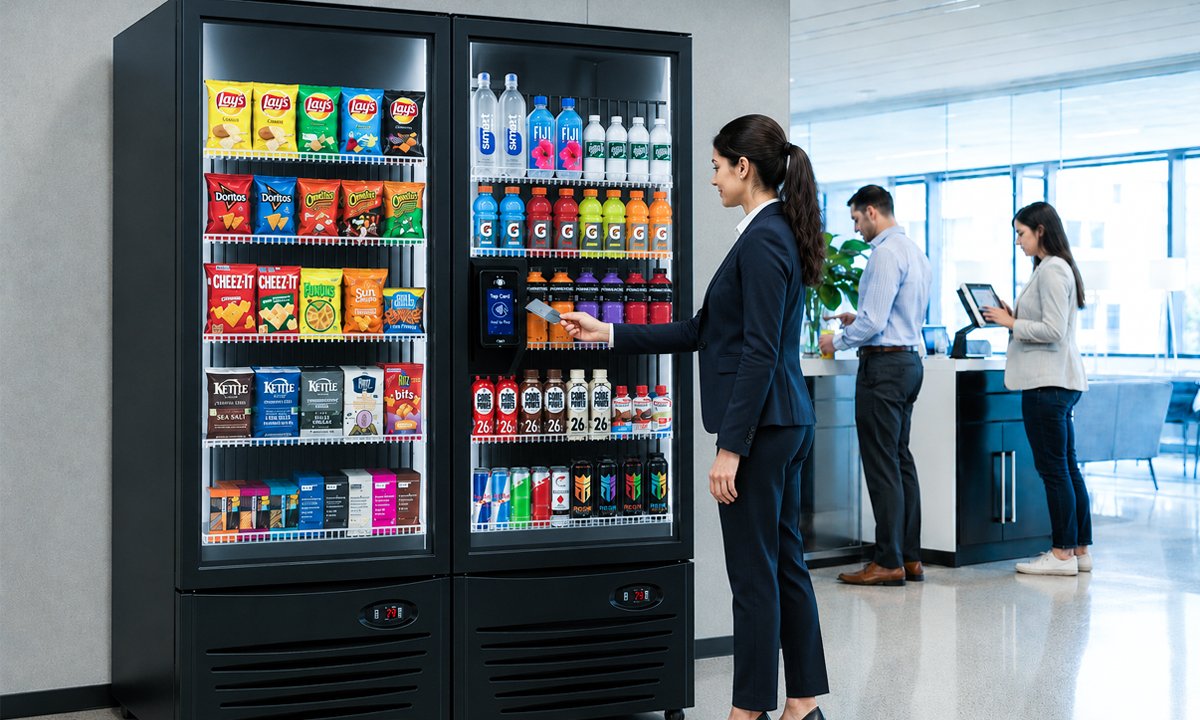
The modern workplace has undergone a significant transformation over the past decade. Employee expectations have changed, technology has advanced, and businesses are increasingly focused on creating better workplace experiences. As a result, many traditional office amenities are being reevaluated, including vending machines.
For years, vending machines were considered a convenient solution for providing snacks and beverages in offices. They required little space, operated independently, and offered quick access to refreshments. However, today’s employees expect far more than basic snack dispensers. They want healthier choices, frictionless purchasing, personalized experiences, and convenient access to fresh food.
As the evolving workplace continues to embrace innovation, traditional vending machines are struggling to keep up. New technologies, smarter retail systems, and employee-focused refreshment solutions are rapidly changing how offices provide food and beverages.
Why Traditional Vending Machines No Longer Meet Workplace Expectations
The modern workforce has different expectations than previous generations. Employees increasingly value convenience, wellness, flexibility, and technology-driven experiences.
Traditional vending machines often present limitations that make them less appealing in today’s office environment.
- Limited product variety and fresh food options
- Restricted payment methods in older systems
- Minimal personalization capabilities
- Inconsistent inventory visibility
- Lack of real-time product availability data
- Limited ability to adapt to changing employee preferences
These shortcomings have encouraged businesses to explore more advanced workplace refreshment solutions that better align with modern employee expectations.
The Evolving Workplace Demands Better Food Solutions
The concept of the evolving workplace extends beyond flexible schedules and digital collaboration tools. It also includes how organizations support employee well-being and daily convenience.
Employees increasingly expect workplaces to offer food and beverage options that match the quality and convenience they experience elsewhere. Quick access to healthy snacks, fresh meals, and beverages has become an important part of workplace satisfaction.
Organizations are responding by implementing modern office food solutions that provide greater flexibility and convenience. These solutions help employees remain productive while reducing the need to leave the workplace during breaks.
The shift reflects a broader focus on creating environments that support employee engagement and overall workplace experience.
Customer Experience Is Influencing Workplace Refreshments
Workplace amenities are increasingly being viewed through the lens of experience design. Businesses recognize that the same principles used to improve customer satisfaction can also improve employee satisfaction.
According to insights from Wikipedia’s overview of customer experience, organizations continuously seek ways to improve interactions and satisfaction throughout a user’s journey.
This concept applies directly to office refreshments. Employees expect purchasing food and beverages to be simple, convenient, and efficient. Traditional vending machines often struggle to deliver this level of experience due to outdated interfaces, limited selections, and payment restrictions.
Modern refreshment systems are designed to provide a smoother and more intuitive experience that better aligns with contemporary expectations.
How Cashless Vending Machines Changed Employee Expectations
One of the biggest developments in workplace refreshments has been the widespread adoption of cashless vending machines. Employees increasingly rely on digital payment methods and often carry little or no cash.
Cashless systems allow users to complete purchases quickly using contactless cards, mobile wallets, and digital payment applications. This convenience has become a standard expectation rather than a premium feature.
Businesses that continue relying on older vending systems may find that employees are less likely to use them due to payment limitations.
The popularity of cashless technology has accelerated the demand for more advanced refreshment solutions that prioritize convenience and accessibility.
Smart Retail Solutions Are Replacing Traditional Machines
Many organizations are moving beyond conventional vending models and adopting smart retail solutions that provide greater flexibility and functionality.
Unlike traditional vending machines, modern systems often include advanced inventory tracking, digital payment capabilities, real-time analytics, and expanded product selections. These features create a more engaging and efficient experience for employees.
Companies exploring modern workplace refreshment strategies frequently consider solutions such as ai smart stores, which offer a retail-like environment within the workplace.
These systems provide greater convenience while helping businesses improve operational efficiency and inventory management.
The Importance of Workplace Wellness
The connection between workplace amenities and employee well-being is becoming increasingly clear. Access to healthy refreshments can support productivity, energy levels, and overall job satisfaction.
Resources provided by the American Psychological Association highlight the importance of creating healthy workplace environments that support employee well-being.
Traditional vending machines have historically been associated with limited snack selections and highly processed products. In contrast, modern workplace refreshment programs often prioritize healthier choices and fresh food options.
This shift reflects broader organizational efforts to support wellness initiatives and improve workplace culture.
Retail Automation Is Transforming Office Refreshments
The rise of retail automation is one of the primary reasons traditional vending machines are becoming obsolete. Automated systems can now manage inventory, monitor product movement, and process transactions with minimal human involvement.
Advanced technologies allow businesses to provide a more efficient and reliable refreshment experience while reducing administrative burdens.
Organizations can integrate automation with solutions such as ai modern vending services to improve inventory accuracy and enhance product availability.
As automation technologies continue to evolve, businesses are discovering new ways to create smarter workplace environments.
Emerging Technologies Are Accelerating Change
Recent advancements in artificial intelligence and automation are creating new opportunities for workplace retail. Intelligent systems can analyze purchasing behavior, forecast demand, and optimize inventory management with remarkable accuracy.
Research discussed in arXiv’s work on AI-driven retail technologies highlights how emerging technologies are reshaping retail operations and consumer experiences.
These innovations are influencing workplace refreshments by enabling more personalized, responsive, and efficient systems. Traditional vending machines simply lack the technological capabilities required to support these advancements.
As a result, businesses seeking long-term solutions are increasingly investing in modern alternatives.
Advantages of Modern Workplace Refreshment Solutions
Organizations replacing traditional vending machines often experience several significant benefits.
- Improved employee satisfaction and convenience
- Greater product variety, including fresh food options
- Enhanced inventory visibility and management
- Support for cashless and contactless payments
- Better alignment with workplace wellness initiatives
- Increased operational efficiency through automation
These advantages make modern refreshment systems more attractive for businesses focused on employee experience and workplace performance.
Learning from the Future of Workplace Retail
The transformation of workplace refreshments is part of a larger shift toward intelligent retail environments. Organizations are increasingly adopting technologies that combine convenience, automation, and data-driven decision-making.
For additional insights into these developments, businesses can explore Future of Workplace Retail: Smart Stores, AI & Frictionless Checkout Explained, which examines how emerging technologies are reshaping workplace retail experiences.
Understanding these trends helps organizations make more informed decisions about their refreshment strategies and long-term workplace investments.
Conclusion
Traditional vending machines served workplaces effectively for many years, but changing employee expectations and technological advancements are driving a new era of workplace refreshments. The evolving workplace demands greater convenience, healthier choices, and more sophisticated experiences than conventional vending systems can typically provide.
The rise of cashless vending machines, retail automation, smart payment technologies, and advanced office food solutions is transforming how businesses support their employees. Modern refreshment systems deliver greater flexibility, improved inventory management, and a more engaging user experience.
As organizations continue investing in workplace innovation, traditional vending machines are increasingly being replaced by smarter, more connected solutions that better align with the needs of today’s workforce.