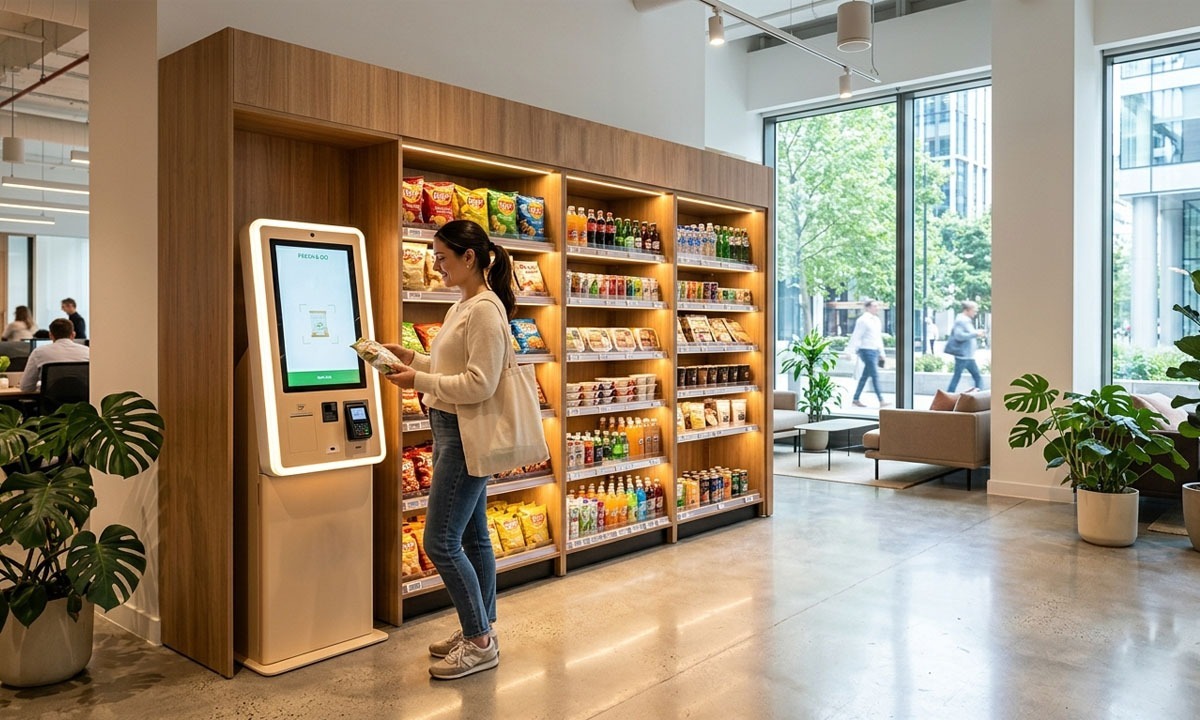
In modern workplaces, managing refreshments and breakroom services goes beyond simple convenience. Businesses are increasingly turning to workplace smart stores to streamline operations, enhance transparency, and reduce shrinkage. By integrating AI smart store technology and automation, offices can maintain a secure, efficient, and highly visible environment for employee refreshment solutions.
Smart stores combine advanced sensors, data analytics, and AI-powered automation to provide a frictionless shopping experience while addressing challenges like inventory shrinkage, product misplacement, and theft. For forward-thinking organizations, adopting these solutions is no longer optional, it’s a strategic move that improves efficiency and employee satisfaction.
The Problem of Shrinkage in Traditional Offices
Shrinkage, which refers to inventory loss due to theft, errors, or mismanagement, is a significant issue in retail and office environments. Even in controlled office settings, unmanaged breakrooms and traditional vending setups are vulnerable to untracked product removal and misuse.
According to Investopedia, shrinkage can account for several percent of total inventory, which translates into substantial costs over time. This loss not only impacts budgets but also reduces transparency and accountability in workplace refreshment solutions.
Traditional office refreshment models lack automated monitoring, making it difficult for facilities managers to track usage or identify unusual patterns. Without data, businesses struggle to detect theft or prevent discrepancies in inventory.
How AI Smart Store Technology Helps Prevent Theft
Modern AI smart stores address shrinkage through intelligent monitoring and automation. These systems use sensors, cameras, and AI-powered analytics to track every product in real time. Key features include:
- Automated Checkouts: Employees can pick items, and AI systems automatically charge their accounts. This reduces opportunities for manual theft.
- Inventory Alerts: AI detects unusual patterns, such as rapid product removal, triggering alerts for potential theft.
- Real-Time Reporting: Managers can monitor inventory levels remotely, ensuring transparency and accountability.
Implementing these measures drastically reduces theft while maintaining a seamless, user-friendly experience for employees. Businesses can also integrate these systems with smart workplace refreshment solutions to enhance operational efficiency and service reliability.
For more insights into AI-powered loss prevention, see Forbes.
Improving Transparency with Smart Stores for Offices
Transparency is essential in any office environment, especially when managing shared resources like snacks, beverages, or wellness products. Smart store technology enables a clear audit trail for every item, improving accountability:
- Detailed Usage Analytics: Managers can see what items are being consumed, by whom, and how frequently.
- Product-Level Insights: AI systems track stock levels and expiration dates, ensuring employees always have access to fresh, safe items.
- Automated Inventory Replenishment: Smart stores notify suppliers or facilities teams when stock is low, preventing shortages and overstocking.
By providing detailed data and actionable insights, smart stores create a workplace culture built on trust and fairness. Employees feel confident that inventory is managed transparently, and managers can optimize product selection based on real usage patterns.
For an overview of AI-enhanced retail security, check out Security Info Watch.
The Role of AI-Powered Retail Automation in Offices
Beyond theft prevention, AI-powered retail automation enables offices to optimize the overall refreshment experience. These systems:
- Offer self-checkout and frictionless purchasing, reducing wait times and enhancing convenience.
- Provide personalized recommendations based on consumption patterns, encouraging healthier choices like healthy food options in Memphis offices.
- Integrate with workplace management systems, offering insights that drive smarter procurement and inventory decisions.
Automation also reduces operational overhead. Facilities teams no longer need to manually track inventory or restock items blindly, AI monitors usage trends, alerts managers when refills are needed, and ensures data-driven decision-making.
Organizations looking to explore these solutions further can review our Smart Store Technology Page and learn more about how AI-powered retail and workplace automation can transform office operations.
Benefits of Workplace Smart Stores
1. Theft Reduction
The most obvious advantage of smart stores is theft prevention. AI monitoring, automated checkouts, and detailed reporting minimize the opportunity for both accidental and intentional inventory loss.
2. Improved Inventory Management
Managers gain a real-time view of stock levels, usage patterns, and product popularity. This insight ensures that items are replenished appropriately, reducing waste and increasing cost efficiency.
3. Enhanced Employee Satisfaction
Employees enjoy a frictionless, transparent shopping experience. Access to favorite snacks, beverages, and healthy options increases workplace satisfaction and wellness.
4. Streamlined Operations
Facilities teams save time and reduce errors through AI-driven reporting and automated replenishment notifications. Integration with broader workplace management systems allows seamless operational oversight.
5. Data-Driven Decision Making
Smart stores generate actionable insights, helping managers optimize product selection, pricing, and stock placement. Organizations can make informed decisions that balance employee preferences, cost control, and operational efficiency.
For more details on implementing smart stores in workplace operations, see our guide: The Role of Smart Stores in Streamlining Office Operations.
Healthy Food Options and Workplace Wellness
A modern workplace smart store isn’t just about convenience, it’s also a vehicle for promoting healthier choices. Integrating healthy food options in Memphis offices or other locations encourages employees to make better nutritional decisions without sacrificing accessibility or convenience.
Smart stores can feature:
- Fresh fruits and vegetables
- Low-calorie snacks
- Hydration options such as flavored water or natural juices
By combining transparency, AI monitoring, and healthier options, smart stores support overall employee wellness while maintaining robust inventory controls.
Integrating Smart Store Technology with Workplace Systems
To maximize the benefits of a workplace smart store, it’s important to integrate technology with other office systems:
- Facility Management Platforms: Align inventory alerts and maintenance schedules with office operations.
- Employee ID Systems: Enable personalized access, track usage, and maintain transparency.
- Reporting Dashboards: Generate analytics reports for management to review trends and adjust offerings.
This integration ensures that AI monitoring isn’t a standalone feature but a comprehensive part of office refreshment and operational strategy.
Conclusion
The modern office is evolving, and so are employee expectations for workplace amenities. Workplace smart stores powered by AI not only enhance the convenience and variety of workplace refreshment solutions but also prevent theft, reduce waste, and improve transparency.
By implementing AI-powered retail automation, offices gain insight into consumption patterns, optimize inventory, and support healthier food choices. Smart stores provide measurable benefits to employees, managers, and the organization as a whole, making them a strategic investment for modern workplaces.
For a broader perspective on AI in workplace retail, check out our blog on Future of Workplace Retail: Smart Stores, AI & Frictionless Checkout.