Picture your breakroom at three in the afternoon. Someone is digging through a bag for exact change, a snack machine has limited options, and employees are looking for something more substantial than another bag of chips.
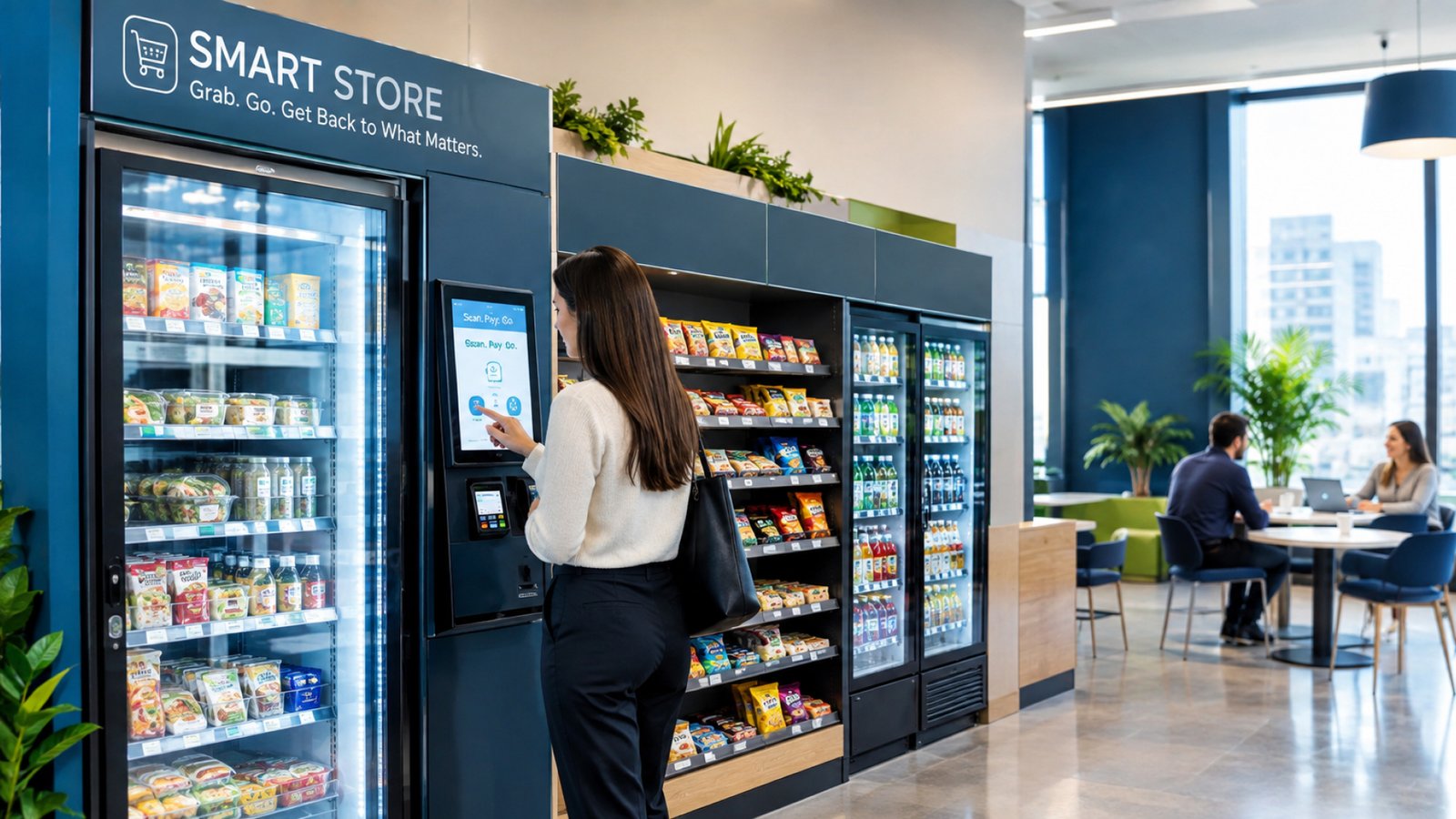
Now picture a breakroom with open product displays, cashless checkout, fresh food options, and around-the-clock access. That is the idea behind smart stores.
Smart stores are changing how Memphis businesses approach employee refreshments. They combine secure payment technology, inventory data, and a self-service shopping experience that feels more like a small convenience store than a traditional vending setup.
If you manage an office, warehouse, hospital, or other workplace in the Memphis area, exploring our AI smart store solutions is a good place to start when deciding what fits your team.
What Makes a Smart Store Different From Traditional Vending?
A smart store is a self-service retail space designed for the workplace. Instead of selecting an item from a traditional vending machine, employees can choose products from shelves or temperature-controlled coolers and complete their purchase through a cashless checkout system.
The experience gives employees more flexibility while allowing businesses to offer a wider mix of fresh food, snacks, and beverages.
Traditional vending machine services still make sense for many workplaces. However, vending machines generally have a more limited product capacity and shopping format. Smart stores expand the concept by combining open merchandising with technology that supports product monitoring, secure access, and convenient payment.
For a closer look at how the technology has evolved, our article on smart store technology beyond traditional vending explains the shift in more detail.
Why Cashless and Secure Payments Matter
Cash can create unnecessary friction in a modern workplace breakroom. Employees may not carry it, machines have to process bills and coins, and cash-based systems require additional handling.
Smart stores simplify the process with cashless payment options. Depending on the system, employees may be able to use cards, contactless payments, mobile wallets, or other supported digital payment methods.
The result is a faster shopping experience that fits the way many people already pay for products outside the workplace.
Security matters as well. Any business using connected technology should consider how digital systems and data are managed. The NIST Cybersecurity Framework provides organizations with guidance for identifying, managing, and reducing cybersecurity risk. Reputable technology providers can use established cybersecurity practices when developing and maintaining connected retail systems.
Food safety remains another important consideration. The CDC’s food service guidelines provide recommendations for creating healthier food environments in settings such as worksites and other institutions. Together, reliable food handling and secure technology can support more dependable breakroom solutions.
Real-Time Inventory Tracking Helps Keep Shelves Stocked
Few things frustrate employees more than finding that their favorite drink, snack, or lunch option is unavailable.
One of the biggest advantages of modern smart vending solutions is better inventory visibility. Smart-store technology can track product activity and provide service teams with data that helps them determine what needs to be replenished.
Instead of relying entirely on manual checks or fixed restocking assumptions, providers can use inventory information to make more informed stocking decisions.
This data-driven approach offers several practical benefits:
- Popular products can be identified more easily.
- Restocking decisions can reflect actual product demand.
- Slow-moving products can be replaced with options employees prefer.
- Service teams gain better visibility into inventory needs.
Equipment efficiency also deserves consideration when planning a breakroom. The U.S. Department of Energy provides guidance for selecting energy-efficient refrigerated beverage vending equipment and notes that appropriately sizing equipment can help avoid unnecessary energy use.
How Smart Stores Compare to an Office Micro Market
You may have heard the term office micro market used alongside smart stores. The two concepts have several similarities, but the technology and setup can differ.
A micro market typically creates a self-service retail area inside the workplace. Employees can browse shelves and coolers containing snacks, beverages, fresh food, and other products before completing their purchase through a self-checkout system.
Smart stores build on that self-service concept with additional connected technology. Depending on the system, this can include AI-powered product monitoring, secure access, inventory tracking, and technology designed to help deter theft.
That does not automatically make one option better for every workplace.
The right choice depends on factors such as employee count, available space, operating hours, product demand, budget, and the level of automation the business wants.
Some workplaces may find our micro market solutions provide exactly the right combination of variety and self-service convenience. Others may benefit from the additional technology offered by a smart store.
Who Benefits Most From Smart Store Technology?
Smart stores are not limited to traditional corporate offices.
The model can work particularly well in workplaces where employees need access to food and beverages outside standard business hours. Manufacturing facilities, healthcare environments, warehouses, campuses, and offices with multiple shifts may all benefit from 24/7 self-service access.
Consider a facility with employees working overnight. A traditional cafeteria may close hours before the night shift ends. A smart store can provide another way for those employees to purchase meals, snacks, and beverages without requiring a staffed retail counter.
The format can also support growing workplaces. As employee demand changes, inventory data can help service providers adjust the product mix rather than relying solely on assumptions about what employees want.
That flexibility makes smart stores particularly useful for businesses looking for breakroom solutions that can adapt to changing workplace needs.
What Should Memphis Businesses Consider Before Choosing a Smart Store?
Technology is only one part of the decision. Before installing a smart store, businesses should consider how employees actually use their breakroom.
Start with your workforce size and schedule. A small office operating from nine to five has different needs from a warehouse running three shifts.
Next, consider product demand. Do employees primarily want drinks and snacks, or is there demand for fresh meals and more substantial food options?
Available space matters too. Smart stores and micro markets need enough room for employees to comfortably browse products and complete purchases without disrupting normal breakroom traffic.
Businesses should also ask potential providers about restocking frequency, service response times, payment options, equipment maintenance, product selection, and inventory monitoring.
The goal is not simply to install more technology. It is to choose a system that makes the breakroom easier to use and manage.
Getting Started With Smart Stores in Memphis
If your current breakroom feels outdated, unreliable, or too limited for your team’s needs, a smart store may be worth considering.
The technology addresses several limitations associated with conventional workplace refreshment systems. Cashless checkout simplifies purchasing, open merchandising expands product variety, and inventory tracking gives service teams more information about what employees are actually buying.
It also helps to think about the decision as part of your broader workplace strategy.
A reliable breakroom may seem like a small detail, but employees interact with it throughout the workweek. Convenient access to food and beverages can be especially valuable for businesses operating long hours or multiple shifts.
Modern breakroom solutions can also reduce some of the day-to-day friction associated with managing workplace refreshments. Instead of treating the breakroom as an afterthought, businesses can create a space designed around employee convenience and actual purchasing habits.
Whether you are comparing a smart store with traditional vending or deciding between a smart store and a micro market, the right option depends on your workplace.
Consider your employee count, available space, operating hours, desired product variety, and level of automation. With cashless checkout, inventory visibility, 24/7 access, and a more flexible shopping experience, smart stores offer Memphis businesses another way to modernize the workplace breakroom.