
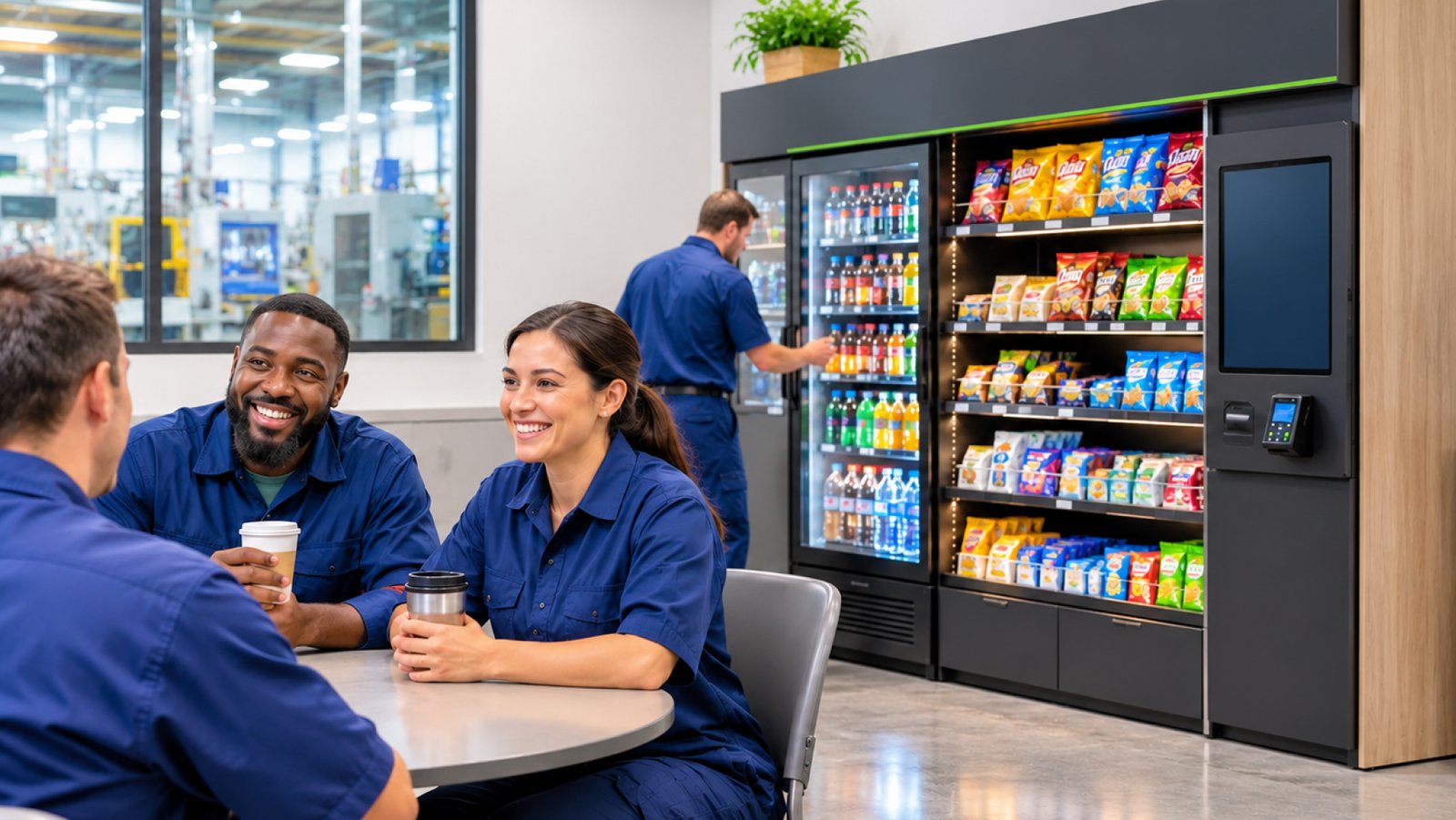
The Greater Memphis Chamber reported that 1,108 advanced manufacturers employed 43,356 people across the region in 2022. This highlights the scale of the local manufacturing workforce. For plant managers, serving employees can be challenging when older facilities have limited breakroom space and no room for a cafeteria or large micro market.
Smart store solutions offer another option. These compact, secured self-service units provide snacks, drinks, and selected fresh foods without requiring a dedicated room. They can make employee refreshments easier to access across several shifts.
The Challenges of a Cramped Manufacturing Breakroom
A crowded breakroom can make short breaks feel even shorter. Employees may wait for a microwave, queue at vending machines, or walk to another building for food. These delays matter when workers have limited time between production tasks.
The challenge grows in facilities operating multiple shifts. Evening, overnight, and weekend employees may have fewer food options than day-shift staff, particularly when refreshment services are unavailable or poorly stocked.
Manufacturing environments also have specific safety needs. A food area should not obstruct walkways, emergency exits, production routes, or forklift traffic. Businesses need breakroom solutions that fit the building without interfering with daily operations.
What Is a Smart Store?
A smart store is a compact, secured self-service retail unit. Customers use a payment card or mobile payment method to unlock a cabinet, select products, and leave. Depending on the model, cameras, scales, or product-recognition technology identify items and charge the customer. Features vary by provider.
Industry coverage from Vending Times describes smart stores as a format that combines vending-style security with a broader product selection. Unlike an open micro market, a smart store can offer access-controlled shopping in a smaller footprint.
That compact design can bring refreshments to a break nook, office area, or another suitable location without creating a full retail space.
Smart stores vary, so compare cabinet capacity, refrigeration, payment methods, product recognition, and reporting features. Some are designed for packaged snacks and drinks, while others can accommodate chilled meals.
Benefits for Plants with Limited Space
More Product Variety in a Smaller Footprint
Traditional vending machines offer a fixed selection. Depending on cabinet size and refrigeration, smart stores can carry a wider mix, including packaged sandwiches, salads, yogurt, fruit, protein snacks, bottled drinks, and everyday essentials.
This gives employees more choice without requiring a cafeteria or leaving the site during short breaks. Product selection should reflect workforce preferences and shift patterns.
For facilities with limited space, a curated selection in a compact area can be useful when several departments share a small break space.
Controlled Access and Better Inventory Insight
Unlike open micro markets, smart stores require a payment method or other authorization before the cabinet opens. Cameras, sensors, or scales may help record which products are taken.
These features may help reduce losses and provide sales information. Operators can review purchasing patterns and adjust replenishment. However, no unattended retail system is theft-proof; security depends on the equipment and operating procedures.
Ask how the system handles missed scans, disputed charges, or products it does not recognize. Clear procedures help employees use the store confidently and resolve transaction issues.
Convenient Choices for Different Shifts
A self-service unit can make refreshments available beyond staffed cafeteria hours, including overnight and weekends, provided it remains operational and is restocked appropriately.
The product mix can include fresh items, filling snacks, water, lower-sugar drinks, and familiar treats. Businesses should work with their provider to choose options that suit employees across departments.
Faster Shopping During Short Breaks
A self-service store removes the need to wait for a staffed counter. Employees unlock the unit, select items, and complete the transaction through the system. A well-positioned cabinet can make grabbing refreshments more convenient during short breaks.
Choosing the Right Smart Store Setup
Before selecting equipment, assess the available space and how employees will use it. A site walk-through can identify suitable locations and potential obstacles.
A local provider such as January Service Company’s smart store program can help businesses explore available equipment and placement options.
Space, Power, and Connectivity
Measure the location, cabinet dimensions, door clearance, and browsing space. Confirm access to an electrical outlet and the connectivity required for payments and inventory reporting. Installation requirements vary by model.
Placement and Workplace Safety
Choose a visible, well-lit location away from production areas, emergency exits, forklift routes, loading areas, and pedestrian paths. Leave enough room for employees to use the cabinet without blocking others.
Review placement with safety or facilities personnel to ensure it supports safe movement around the building.
Product Selection and Replenishment
Ask how often the unit will be restocked and how products approaching expiration dates are handled. Use sales information and employee feedback to choose a balanced mix of drinks, packaged meals, fruit, and snacks.
Cleaning and Service
Clarify who cleans the unit, checks refrigeration, handles payment issues, and responds to equipment faults. Ask about response times for overnight problems and get service responsibilities in writing.
Tennessee Requirements for Unattended Food Retail
Tennessee Public Chapter 289, enacted in 2021, defined micro markets for sales and use tax purposes and provided consolidated filing and registration procedures for operators with multiple locations. The Tennessee Department of Revenue’s legislative summary explains the provisions.
The legislation addresses micro markets, not every smart store design. Businesses should confirm applicable tax, food safety, and local requirements with the appropriate authorities before installation.
When to Add a Micro Market
A smart store may suit a small break area or remote department. If demand grows or more room becomes available, a larger micro market may provide additional shelving, refrigeration, and checkout space.
The two formats can serve different parts of one facility: a central micro market for the main workforce and a compact smart store for a remote department. The right mix depends on traffic, space, and servicing costs.
Review sales, stockouts, employee feedback, and service records after installation. If a cabinet is underused, its placement or product mix may need adjustment. Consistently high demand may justify additional capacity.
Make Every Breakroom Corner Count
Limited floor space does not have to mean limited refreshment options. Reviewing shift schedules, employee preferences, access, and safety requirements can help determine whether a smart store is a practical fit.
January Service Company can help Memphis businesses explore smart store options and workplace refreshment services that fit their facility’s layout and operations. For another look at technology-based refreshment options, read about AI smart coolers for manufacturing facilities.