
Picture a resident who wakes at 5 a.m. and wants yogurt and a cup of tea. The dining room is closed, and the nearest store is a drive away. Now picture a hotel guest arriving at midnight, hungry, when most nearby food options are closed.
Different people, same problem: food is needed when no one is serving it. That is why more properties are exploring smart store solutions. This guide explains how they work, why they suit senior living communities and hotels, and what to consider before choosing one.
What Are Smart Store Solutions?
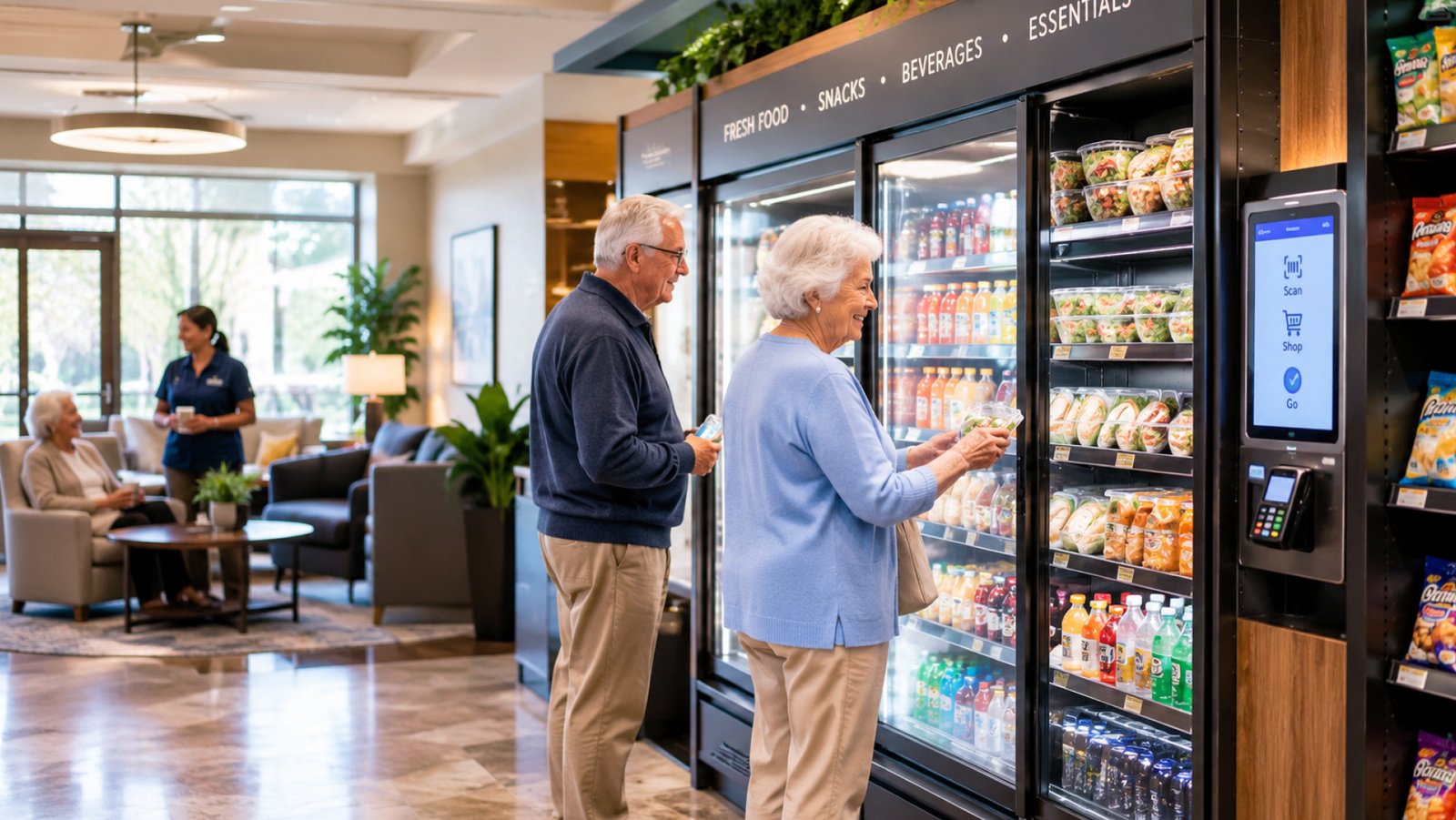
A smart store is a self-service shop inside a building. Think of it as a self-service convenience store in a lobby, common area, or hallway. People choose food, drinks, and snacks, then pay using supported payment methods without waiting for a cashier.
Behind the scenes, technology tracks purchases and helps providers monitor inventory. Refrigerated units keep suitable products chilled, while secure access and payment systems make shopping convenient.
For a closer look at available options, visit our smart store page.
For properties that need food access beyond regular dining hours, a smart store offers refreshments without requiring a dedicated cashier.
Why Senior Living Communities Need Easy Food Access
Food access is about more than hunger. It also involves choice, independence, and having suitable options available between scheduled meals.
Dining rooms provide an important service, but residents who wake early, stay up late, or want a snack between meals may have limited alternatives. Staff may also spend time fulfilling individual snack requests instead of supporting other resident needs.
A smart store gives residents another option to choose from at their own pace, subject to the community’s accessibility and payment arrangements. Families may also appreciate being able to pick up a drink or snack during a visit.
Cleanliness matters in shared spaces. The CDC’s guidance on cleaning and disinfecting facilities recommends regularly cleaning high-touch surfaces in community settings. Senior living facilities should also follow applicable healthcare, food-safety, and facility-specific requirements.
What Should a Smart Store Offer Senior Living Residents?
Older adults have different tastes and dietary needs, so product selection matters. The National Institute on Aging’s healthy meal planning tips highlights the importance of varied food choices and meeting nutritional needs.
A smart store can offer options such as:
- Fresh fruit and fruit cups
- Yogurt and other suitable refrigerated snacks
- Ready-to-eat meals and sandwiches
- Water, tea, and other beverages
- Soft snacks and products that are easy to open
Choose products according to residents’ preferences, dietary requirements, and the community’s food policies. Clear labels, accessible shelves, and easy-to-use payment options can make shopping more practical.
Reviewing purchasing patterns and asking residents for feedback can help keep the product selection relevant.
Why Hotels Are Adding Smart Stores
Hotel guests may arrive late, leave early, or want a quick bite between meetings. A full restaurant is not always open, and leaving the property to find food can be inconvenient.
As Hotel Management’s coverage of grab-and-go food options explains, grab-and-go offerings can combine convenience with food variety and a hotel’s identity.
A smart store can provide drinks, packaged snacks, sandwiches, and other suitable foods in a lobby or common area. Guests get another way to find refreshments without waiting for room service or travelling elsewhere.
It may also reduce routine snack requests handled by front-desk staff. Depending on the setup and agreement, the store can generate additional sales without requiring a dedicated cashier around the clock.
Smart Vending Solutions or a Smart Store?
Both options provide convenient access to snacks and drinks, but they serve different needs.
Smart vending solutions use machines with features such as cashless payment and inventory monitoring. They take up relatively little space and can suit smaller hotel lobbies or individual floors.
A smart store provides a more open shopping experience. Customers can browse shelves and refrigerated cases, potentially giving them a wider product selection than a traditional vending machine.
Some properties may prefer micro market vending services, which use open product displays and self-checkout. The best option depends on available space, budget, expected usage, and the types of food being offered.
A larger senior living community may benefit from a broader selection, while a small hotel may need only a compact setup. A provider should assess these requirements rather than assume every property needs the same equipment.
Why a Managed Setup Matters
Installing a store is only the beginning. Products must remain available, equipment needs maintenance, and the selection should reflect what residents or guests want.
With fully managed vending services, a provider can handle stocking, inventory monitoring, cleaning, and equipment maintenance, depending on the service agreement. This reduces the work property staff need to manage themselves.
Our article on automated breakroom solutions for hospitals explores how automated refreshment systems can support staff working long and overnight shifts. Similar convenience may benefit senior living employees and hotel teams.
Before signing an agreement, confirm which services are included and how quickly the provider responds to problems.
Questions to Ask Before Choosing a Smart Store
Before selecting a system, consider these practical questions:
- Product selection: Can the menu reflect residents’ dietary needs or hotel guests’ preferences?
- Restocking: How often will products be replenished, and how are shortages monitored?
- Freshness: How are refrigerated products stored and checked?
- Accessibility: Can residents and guests comfortably reach products and use the payment system?
- Maintenance: Who handles equipment faults, and what response time can you expect?
- Payment: Which payment methods are supported?
- Space: Will the setup fit without obstructing walkways?
- Reporting: Can the provider share sales or inventory information to improve product selection?
These questions help you compare providers based on everyday needs rather than equipment features alone.
Why Choose January Service Company?
January Service Company has served Memphis-area businesses since 1982. Its services include vending, coffee, water, micro markets, and smart stores designed around each property’s requirements.
For senior living communities and hotels, the goal is to find a setup that suits the people using it and the staff responsible for the building. Product variety, reliable maintenance, and a clear restocking plan all contribute to a better experience.
If you’re exploring options for your property, you can contact our team to discuss your needs.
Bring Food to Where People Are
Hunger does not follow a dining room schedule. Whether you manage a senior living community or a busy hotel, smart store solutions can make snacks, drinks, and selected fresh food available beyond regular dining hours.
Choose products that suit your residents or guests, plan for accessibility and maintenance, and work with a provider that can manage the day-to-day details. A well-planned store gives people another convenient option while allowing staff to focus on their main responsibilities.