
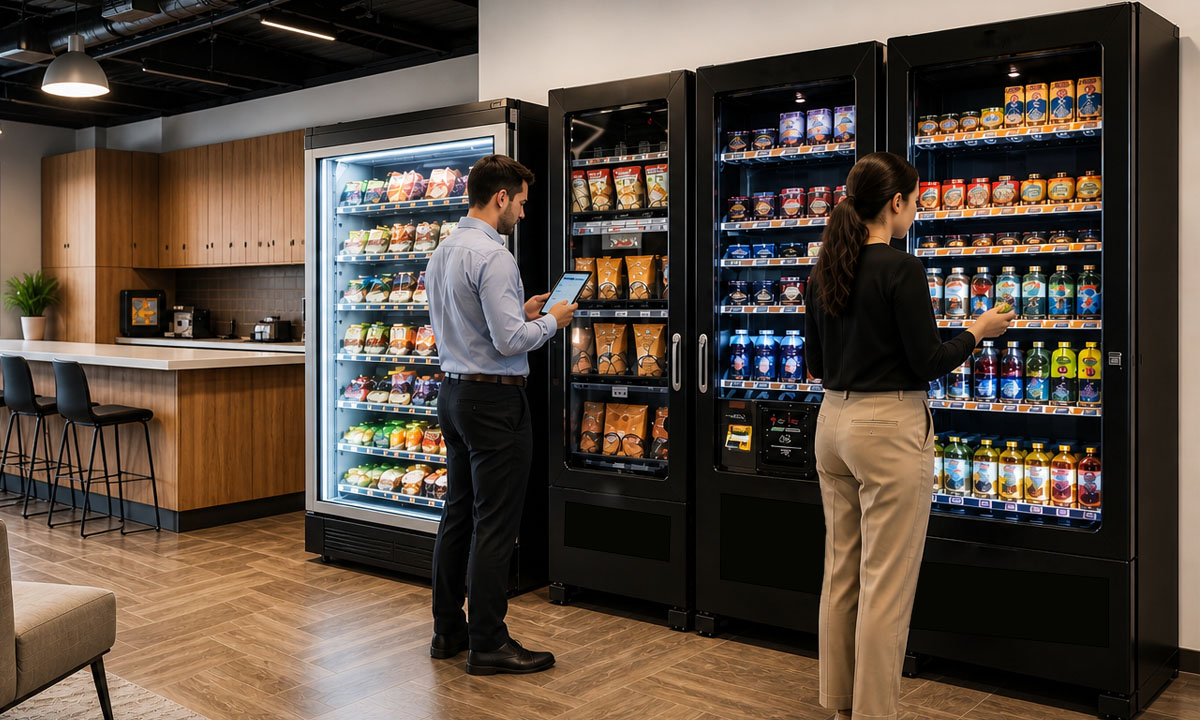
The expectations of today’s workforce have changed significantly. Employees no longer view workplace refreshments as a simple perk. Convenient access to beverages, healthy snacks, and breakroom essentials has become an important part of the overall employee experience. However, providing refreshments consistently requires more than simply stocking shelves. It requires smart inventory management.
Many organizations still rely on manual processes to monitor drinks and snack supplies. While this approach may work in smaller environments, it often creates inefficiencies as businesses grow. Missing products, overstocked items, expired inventory, and inconsistent replenishment can lead to unnecessary costs and employee frustration.
This is why modern organizations are increasingly investing in smarter systems. Through automation, analytics, and real-time inventory tracking, businesses can ensure that refreshments remain available while minimizing waste and operational challenges. As modern workplace technology continues to evolve, inventory management has become a strategic tool rather than an administrative task.
The Growing Importance of Workplace Refreshment Management
Workplace refreshments have a direct impact on employee satisfaction, productivity, and workplace culture. When employees have easy access to beverages and snacks, they spend less time leaving the office and more time staying engaged throughout the day.
However, managing refreshments efficiently is not always simple. Inventory levels fluctuate daily, employee preferences change, and demand can vary significantly from one week to the next. Without accurate monitoring, businesses often struggle to keep the right products available at the right time.
This challenge highlights the need for smart inventory management, which combines technology and data to improve inventory visibility and decision-making.
According to insights from IBM’s inventory management resources, modern inventory systems help organizations improve efficiency, reduce costs, and optimize resource allocation through better data utilization.
Common Challenges Businesses Face Without Smart Inventory Management
Many workplaces experience similar inventory-related issues when relying on manual processes.
- Frequent stock shortages of popular beverages and snacks
- Excess inventory leading to product waste and expiration
- Limited visibility into consumption patterns
- Time-consuming manual inventory checks
- Inefficient ordering and replenishment cycles
- Increased operational costs caused by inaccurate forecasting
These challenges not only affect budgets but also impact employee satisfaction. Workers expect refreshments to be consistently available, and recurring shortages can create a negative experience.
A structured retail inventory management approach helps eliminate these issues by providing accurate, real-time insights into inventory performance.
How Smart Inventory Management Works
At its core, smart inventory management uses technology to automate and improve inventory tracking. Instead of relying on manual counts, businesses gain access to real-time information about stock levels, product movement, and consumption trends.
Modern systems collect data continuously and use analytics to identify patterns. This allows organizations to make informed decisions about ordering, stocking, and replenishment.
Many businesses combine inventory automation with advanced workplace systems such as modern workplace technology solutions to create more efficient and connected operations.
The result is greater visibility, improved accuracy, and better control over workplace refreshments.
Why Real-Time Inventory Tracking Is Essential
One of the biggest advantages of smart systems is real-time inventory tracking. Instead of waiting for periodic audits or manual checks, businesses can see inventory changes as they happen.
This capability allows managers to respond immediately when stock levels change. Popular items can be replenished before they run out, while slow-moving products can be adjusted to reduce waste.
Real-time tracking also improves forecasting because businesses gain a clearer understanding of employee consumption habits. This leads to better purchasing decisions and more efficient inventory management.
As workplaces become increasingly data-driven, real-time visibility is becoming a critical component of modern workplace management.
Key Benefits of Smart Inventory Management
The value of smart inventory management extends far beyond inventory accuracy.
- Improved product availability for employees
- Reduced waste from expired or unused inventory
- Better forecasting and purchasing decisions
- Increased operational efficiency
- Lower labor requirements for inventory monitoring
- Enhanced reporting and data visibility
These benefits help organizations create a more reliable refreshment experience while controlling costs and improving resource utilization.
Supporting Employee Wellness Through Better Inventory Management
A well-managed refreshment program contributes directly to workplace wellness. Employees who have convenient access to beverages and nutritious snacks are more likely to stay hydrated, maintain energy levels, and remain productive throughout the day.
Research available through the National Library of Medicine highlights the relationship between workplace nutrition, health outcomes, and employee performance.
When inventory systems accurately track demand, businesses can ensure that healthier options remain consistently available. This supports both employee well-being and organizational productivity.
Smart Vending Solutions and Inventory Automation
One of the most effective applications of inventory technology is within smart vending solutions. Unlike traditional vending systems, smart vending environments provide real-time visibility into product availability and consumption.
These systems automatically record purchases and update inventory levels instantly. This reduces manual effort while improving accuracy.
Organizations can further enhance these capabilities through solutions such as ai micro markets, which combine self-service convenience with advanced inventory tracking technologies.
By integrating smart vending and inventory automation, businesses gain a more efficient and responsive refreshment program.
The Connection Between Inventory Control and Workplace Efficiency
Inventory management is often viewed as a logistical function, but it has a direct influence on workplace efficiency.
When products are unavailable, employees spend time searching for alternatives or leaving the workplace to purchase refreshments elsewhere. This interruption can affect productivity and employee satisfaction.
Proper inventory control ensures that refreshments remain accessible without creating unnecessary administrative burdens. Businesses can focus on strategic priorities while automated systems manage day-to-day inventory operations.
According to insights from Wikipedia’s overview of inventory control, effective inventory management aims to balance availability and cost while minimizing waste and inefficiency.
This balance is particularly important in modern workplaces where convenience and operational efficiency go hand in hand.
How Data Improves Inventory Decisions
One of the most powerful advantages of smart systems is their ability to transform raw inventory data into actionable insights.
Businesses can analyze:
- Product popularity trends
- Seasonal demand fluctuations
- Consumption patterns by department or location
- Inventory turnover rates
- Restocking frequency and timing
These insights help organizations make smarter purchasing decisions and improve overall inventory performance.
Companies seeking deeper automation strategies can also explore automated inventory alert systems, which further enhance visibility and replenishment accuracy.
The Future of Smart Inventory Management in Modern Workplaces
As technology continues to advance, inventory systems are becoming increasingly intelligent. Artificial intelligence, predictive analytics, and automation are transforming how businesses manage workplace refreshments.
Future developments will likely include more advanced forecasting tools, automated replenishment systems, and deeper integration with workplace platforms. These innovations will help organizations reduce waste, improve efficiency, and provide a better employee experience.
The rise of modern workplace solutions is making inventory management a key part of broader workplace optimization strategies.
Businesses that embrace these technologies today will be better positioned to adapt to future workplace demands.
Conclusion
The modern workplace requires more than basic inventory monitoring. Employees expect consistent access to refreshments, while organizations need efficient systems that minimize waste and control costs.
By implementing smart inventory management, businesses gain real-time visibility, better forecasting, and improved operational efficiency. Combined with real-time inventory tracking, smart vending solutions, and advanced workplace technologies, these systems create a more reliable and productive environment.
As organizations continue investing in modern workplace technology, inventory management will remain a critical component of workplace success. Companies that prioritize smarter inventory strategies will not only improve refreshment services but also strengthen employee satisfaction and overall operational performance.