
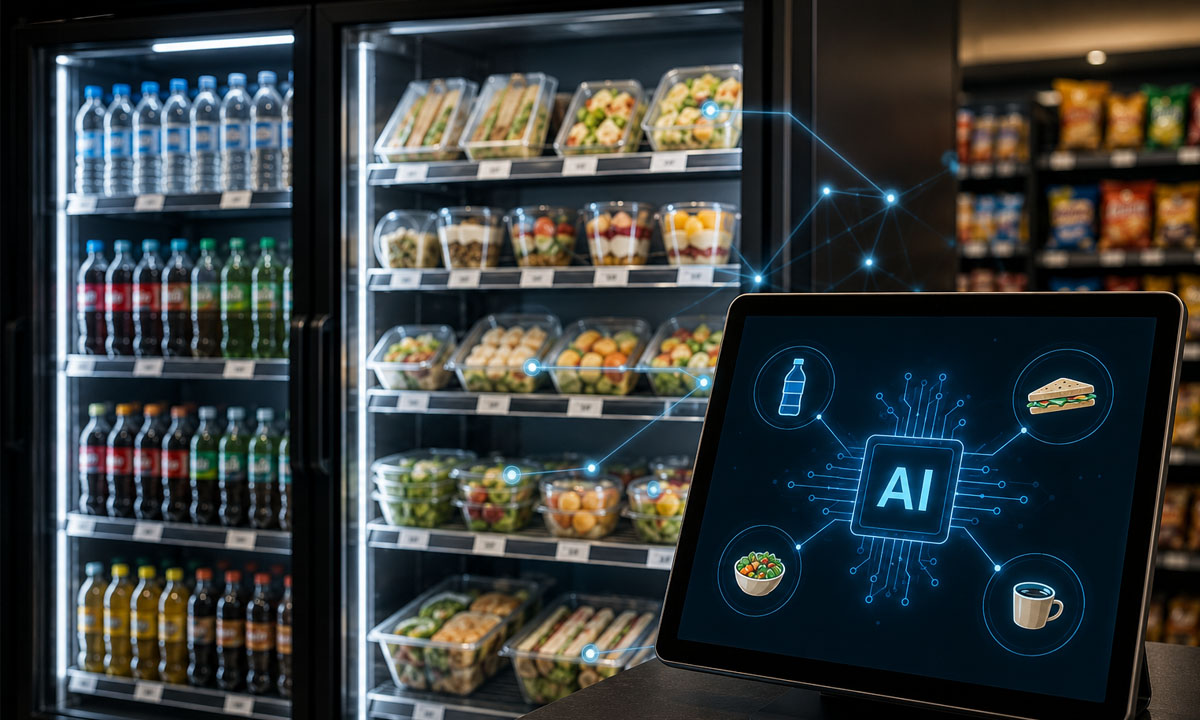
Modern workplaces and smart retail environments are evolving rapidly, and one of the biggest drivers of this transformation is artificial intelligence. Businesses no longer rely solely on manual stock counts or delayed reporting systems to manage refreshments and inventory. Instead, advanced AI systems are now capable of tracking beverages and food items instantly through a real time inventory tracking system.
From smart stores to automated office refreshment stations, AI is helping organizations improve accuracy, reduce waste, and streamline inventory operations. These technologies provide businesses with instant visibility into stock movement, allowing them to respond quickly to changing demand patterns.
As inventory management becomes more data-driven, companies are increasingly adopting inventory management using AI to improve efficiency and create smarter retail environments.
Why Real-Time Inventory Tracking Matters
Traditional inventory systems often suffer from delays, human errors, and inaccurate reporting. In environments where products move quickly, such as office breakrooms and smart stores, even small inventory gaps can create operational problems.
A real time inventory tracking system eliminates these issues by continuously monitoring product movement. Every item added, removed, or sold is automatically recorded and updated within the system.
This level of visibility helps businesses maintain optimal stock levels, avoid shortages, and reduce overstocking. It also improves customer and employee experience by ensuring products remain consistently available.
According to insights from Investopedia on inventory management, accurate inventory control is one of the most important factors in operational efficiency and cost reduction.
How AI Tracks Food and Beverage Items
Artificial intelligence uses multiple technologies to monitor and manage inventory in real time. These systems combine machine learning, sensors, cameras, and predictive analytics to automate tracking processes.
Core capabilities of AI inventory systems include:
- Real-time monitoring of stock movement
- Automated alerts for low inventory levels
- AI-driven demand forecasting
- Product recognition through smart cameras and sensors
- Automated reporting and inventory synchronization
- Reduction of waste through optimized replenishment
These features make ai-powered inventory management far more accurate and efficient than traditional inventory methods.
Inventory Management Using AI in Smart Stores
Smart stores depend heavily on automation and data-driven systems to operate efficiently. AI plays a central role in tracking products, processing transactions, and updating inventory instantly.
In modern retail environments, every interaction with a product can be tracked automatically. When a beverage or snack is removed from a shelf, the system immediately updates inventory records. This creates a seamless and highly responsive retail ecosystem.
Businesses implementing smart store technology often combine AI tracking systems with automated checkout and digital monitoring tools to improve operational performance.
The Role of Artificial Intelligence in Inventory Tracking
Artificial intelligence enables systems to analyze large volumes of data and make decisions without constant human input. In inventory management, AI identifies patterns, predicts future demand, and optimizes stock movement.
According to insights from Wikipedia’s overview of artificial intelligence, AI systems are designed to simulate human intelligence processes such as learning, reasoning, and decision-making.
This capability is especially valuable in fast-paced retail environments where inventory changes constantly throughout the day.
AI systems can learn from:
- Purchasing trends
- Seasonal demand fluctuations
- Employee or customer consumption patterns
- Product popularity over time
- Restocking frequency and supply cycles
This makes the ai inventory management system more adaptive and efficient over time.
How Automated Inventory Tracking Systems Work
An automated inventory tracking system operates through connected devices and intelligent software platforms. These systems continuously collect and analyze data from different points within the retail environment.
For example, sensors and cameras can detect when products are picked up or removed from shelves. This information is instantly processed and reflected in inventory dashboards.
Unlike traditional methods, automated systems require minimal manual intervention. This reduces errors while increasing speed and transparency.
Businesses can integrate these systems with advanced workplace technology solutions to create fully connected inventory ecosystems.
Benefits of AI-Powered Inventory Management
- Improves inventory accuracy in real time
- Reduces manual labor and human error
- Prevents stock shortages and overstocking
- Enhances forecasting and purchasing decisions
- Improves operational efficiency and cost control
- Supports data-driven inventory optimization
These advantages explain why businesses are rapidly adopting inventory management using AI across retail and workplace environments.
AI and Supply Chain Visibility
Inventory tracking is not limited to shelves and storage areas. AI also improves visibility across the broader supply chain.
Supply chain management involves coordinating inventory flow from suppliers to end users. AI systems can analyze supply patterns, delivery schedules, and consumption trends to improve overall efficiency.
According to insights from Britannica’s explanation of supply chain management, efficient supply chains depend heavily on accurate information and coordinated logistics.
When integrated with a real time inventory tracking system, businesses gain complete visibility into product movement and replenishment cycles.
Reducing Waste Through Real-Time Tracking
One of the biggest benefits of AI inventory systems is waste reduction. Businesses often lose money due to expired products, inaccurate ordering, or inconsistent stock management.
AI helps solve these problems by analyzing consumption behavior and predicting future demand more accurately. This allows businesses to order only what is needed and replenish products at the right time.
Real-time tracking also ensures that products nearing expiration are identified quickly, reducing unnecessary waste.
These capabilities are especially important in environments where beverages and fresh food items move rapidly throughout the day.
AI Inventory Systems in Workplace Refreshment Services
Modern office environments increasingly rely on automated retail systems to provide refreshments efficiently. AI-powered systems ensure that snacks and beverages remain available without constant manual monitoring.
For example, businesses can integrate advanced tracking systems with AI beverage inventory management solutions to improve refreshment operations and maintain accurate stock levels.
This creates a more reliable experience for employees while reducing operational inefficiencies.
The Future of Real-Time Inventory Tracking
The future of real time inventory tracking systems will be shaped by advancements in AI, automation, and predictive analytics.
Future trends in AI inventory tracking include:
- Fully autonomous inventory monitoring systems
- AI-powered predictive restocking
- Enhanced computer vision for product recognition
- Integration with robotics and automated fulfillment
- Advanced analytics for personalized inventory planning
As AI technology continues to evolve, businesses will gain even greater control over inventory operations and supply chain efficiency.
Conclusion
AI is transforming how businesses manage beverages and food inventory in real time. Through advanced tracking technologies, machine learning, and automation, a real time inventory tracking system provides accurate visibility into stock movement and consumption patterns.
By adopting ai-powered inventory management and automated inventory tracking systems, organizations can reduce waste, improve efficiency, and create smarter retail and workplace environments.
As technology continues to advance, inventory management using AI will become an essential part of modern business operations, helping companies stay competitive in increasingly data-driven industries.