
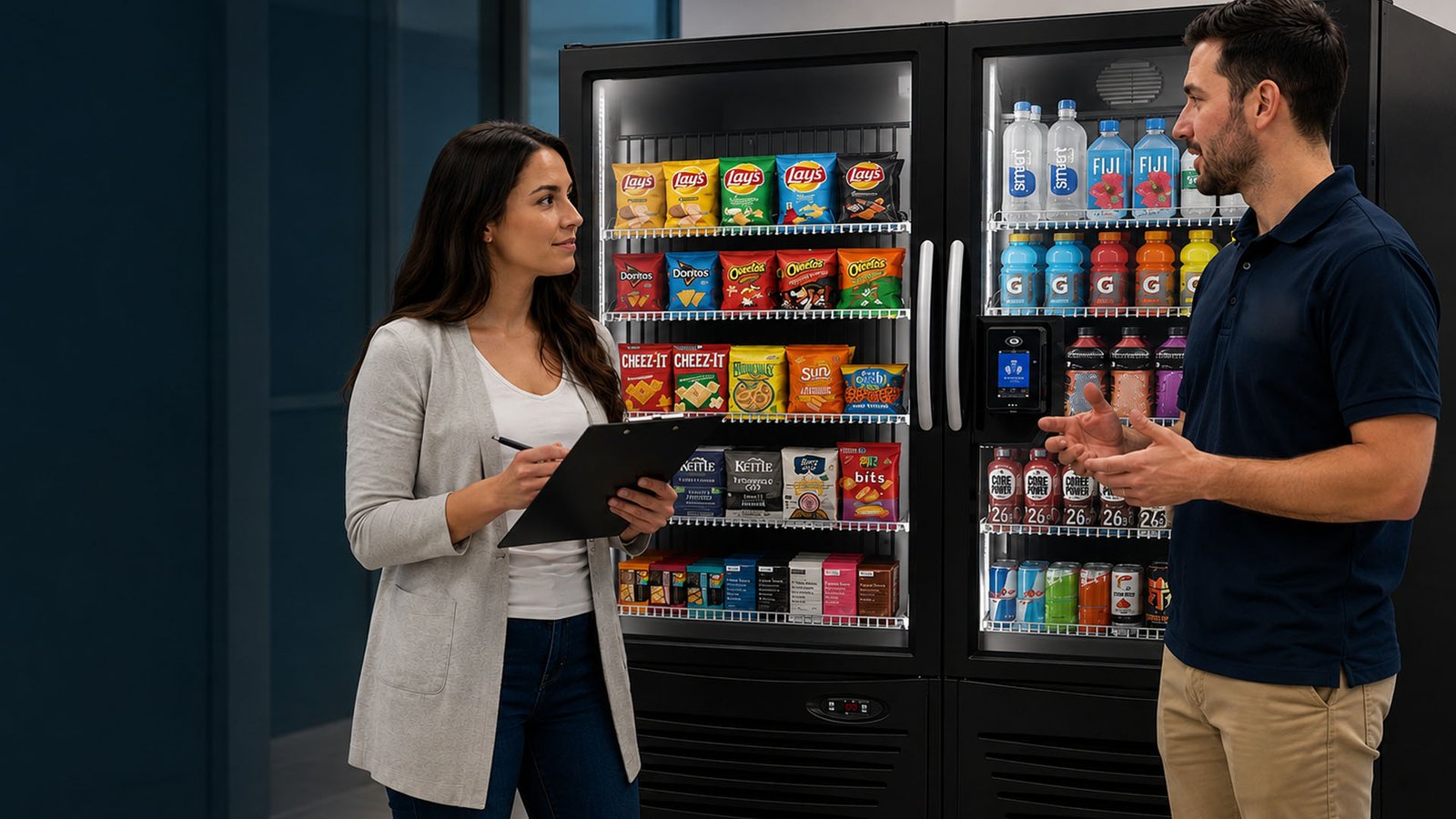
Signing with the wrong vending machine company rarely announces itself right away. The machine looks fine on day one. The paperwork gets signed. Then the real problems show up weeks later. A snack row runs empty, and nobody answers the phone. Asking the right questions upfront can save your business a lot of trouble. It takes far less time than dealing with a bad partnership after the contract is signed.
Most businesses know they need vending or breakroom service. Few walks into the first conversation knowing what separates a dependable provider from an unreliable one. Price is usually the first thing discussed, but it rarely predicts how a vendor will behave once the ink is dry. The questions below cover the areas that matter most, drawn from what actually causes vending relationships to succeed or fail in practice.
Start With Product Availability and Selection
The first real test of a vending machine provider is whether they can actually stock what your employees want to eat and drink. A generic snack lineup might work for a small office, but larger teams with dietary preferences, health-conscious staff, or a diverse workforce need a provider willing to customize selections rather than offering a one-size-fits-all machine.
Ask how often the product mix can be adjusted and whether the provider tracks which items sell and which sit untouched. A good provider treats this as an ongoing conversation, not a one-time setup, and can point to how they have adjusted offerings for other clients in the past. Ask about product availability during high-demand periods. Some providers struggle to keep popular items in stock once vending becomes part of the daily routine. If your organization operates 20 or more machines, ask about FDA calorie labeling requirements. Does the provider comply with the applicable rules? A provider that understands these requirements is more likely to take compliance seriously.
Ask About Response Time Before You Need It
Nothing exposes a weak vending partner faster than a broken machine. Response time is one of the most revealing questions in the vetting process. It shows how the company operates once the sales pitch is over.
A few direct questions cut through vague promises:
- How is a service request submitted, and is there a published response window measured in hours rather than days?
- Does the same technician handle both restocking and repairs, or are those separate teams that require extra coordination?
- What happens if a machine breaks down outside normal business hours or on a weekend?
Providers who hesitate on these answers, or who cannot commit to a specific time frame, are telling you something important about how they prioritize existing customers once a new contract is signed. It is worth reviewing how a provider describes their own vending services in detail before signing, since the specifics of restocking frequency and technician coverage are usually spelled out there. A company built around fast, local support tends to answer these questions immediately, since they already have the systems in place to back it up.
Clarify Maintenance Responsibilities Upfront
Maintenance is one of the most overlooked areas in vending contracts, largely because it rarely comes up until something breaks. Businesses should ask exactly who is responsible for what before signing anything, since assumptions here lead to disputes later.
Find out whether maintenance responsibilities include routine cleaning, software updates for card readers, and mechanical repairs, or whether some of those fall back on the business hosting the machine. Ask how the provider tracks machine downtime. Also find out whether you receive credit or compensation when a machine stays broken for an extended period. This becomes even more important for businesses considering a self-serve micromarket setup rather than traditional vending, since a micromarket typically involves more equipment, including coolers, shelving, and payment kiosks, each with its own maintenance needs. Getting clarity on who owns each piece of that equipment upfront prevents the vague finger-pointing that happens when a contract never specifies who owns a problem.
Understand Contract Terms and Flexibility
A vending contract should protect the business as much as the provider. Before signing, ask about contract length, exit terms, and what happens if the service consistently underdelivers. Some providers lock businesses into multi-year agreements with steep penalties for early termination, which can trap a company with a provider that never meets expectations.
It is reasonable to ask for a trial period or a shorter initial term, especially with a new vendor relationship. This approach also aligns with vendor vetting advice from Forbes. Its guide emphasizes setting clear expectations and building flexibility into a new vendor relationship. A business should never feel pressured to sign a lengthy contract on the first meeting, and a provider confident in their service quality generally has no issue offering a shorter trial window to prove it.
Ask If a Machine Is For Sale or Leased
Some businesses assume every vending arrangement is a service contract, but this is not always the case. It is worth clarifying early whether a vending machine for sale is even an option versus a fully serviced lease model, since the two come with very different responsibilities. Purchasing a machine outright shifts maintenance and restocking onto the business itself, while a leased or serviced machine keeps that burden with the provider.
Neither option is inherently better, but knowing which one you are actually signing up for prevents confusion down the line. A business with in-house maintenance staff and the ability to manage its own inventory might prefer ownership, while most offices are better served by a fully managed arrangement that removes the day-to-day workload entirely.
Evaluate the Provider Like Any Other Vendor
A vending company is a supplier in every practical sense, and it deserves the same scrutiny a business would apply to any other vendor relationship. A provider who answers questions clearly, offers specifics instead of vague reassurances, and has a track record of keeping machines stocked and running is far more likely to be a partner worth keeping long term.
It also helps to think beyond the snack itself. Many employers now treat breakroom offerings as one piece of a broader employee wellbeing effort, and research tied to the CDC’S Worksite Health ScoreCard identifies nutrition environment changes, including what food and drink options are available at work, as one of the evidence-based strategies employers use to support healthier teams. Ask whether the provider can support those goals rather than simply fill the machine. The answer can reveal whether they view the breakroom as part of the workplace or just another transaction.
Bringing It All Together
Choosing a vending provider does not need to be complicated, but it does require asking the right questions before you sign a contract rather than after a machine breaks down. Product selection, response time, maintenance, and contract flexibility all affect the relationship. A provider willing to answer these questions clearly is usually worth considering.
For businesses weighing whether a local provider is the better fit, our earlier piece on why local vending outperforms national chains goes deeper into how service quality tends to differ by provider size and location, particularly in a market like Memphis where response time and community ties still matter. Asking these questions upfront costs nothing, but skipping them can cost months of frustration with a provider that never quite delivers.