
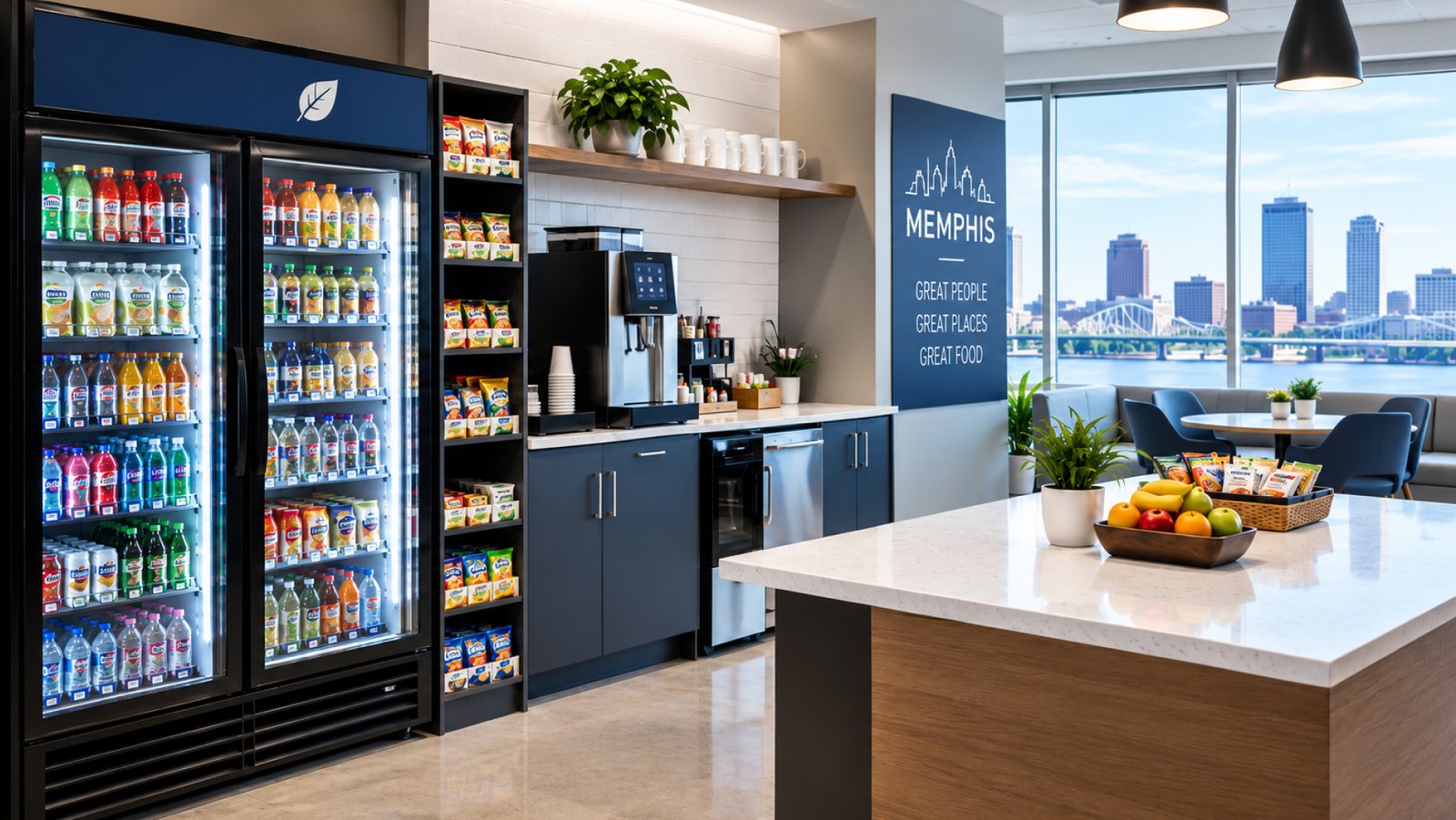
Managing an office pantry across several Memphis locations can become complicated faster than expected. Each site has its own headcount, work schedule, storage space, and employee preferences. Without a shared plan, one breakroom may have too many snacks while another runs out of drinks before the next delivery. Different ordering habits can also make spending difficult to track and service quality harder to maintain.
A consistent pantry program gives businesses a practical way to manage these differences without treating every location exactly the same. By setting common standards, tracking demand, and planning restocking around each site’s needs, companies can provide a dependable employee benefit while reducing the work placed on office managers and facilities teams.
Workplace refreshments can also contribute to the overall employee experience. The SHRM discusses how workplace benefits and perks can help employers encourage employees to return to the office.
Create One Pantry Standard Across All Locations
Start by deciding what should remain consistent throughout the company. This might include product quality, food safety expectations, service communication, stock rotation, and the way employees request changes. A shared standard helps employees receive a comparable experience, whether they work at a downtown office, a warehouse, or another Memphis-area site.
Consistency does not mean every pantry must contain identical products. A location with a large production team may need more hydration options and quick snacks, while a smaller administrative office may use more coffee, tea, and individual servings. Keep the core standards the same, but let the product mix reflect local demand.
Match the Product Mix to Each Workplace
A pantry works best when its contents reflect the people using it. Before setting up service, review the number of employees at each location, typical shift times, break patterns, and products employees already request. If a site operates early mornings or overnight shifts, its refreshment needs may differ from those of a standard nine-to-five office.
Offer a balanced selection of familiar snacks, beverages, coffee and tea supplies, and fresh food where appropriate. Include options that account for a range of preferences, such as lower-sugar drinks, individually packaged items, and products that fit common dietary requests. Ask employees for feedback periodically rather than assuming the original menu will remain suitable.
For fresh meals and other perishable items, plan quantities carefully and follow appropriate storage and rotation practices. January Service Company prepares fresh food locally through its Memphis culinary center, which can support workplace refreshment programs that include fresh options.
Set Restocking Schedules Around Actual Demand
A single delivery schedule may not work for every location. A high-traffic office might need frequent visits, while a smaller site may need less frequent replenishment. The aim is to keep commonly used products available without overfilling shelves or allowing items to sit unused.
Use headcount as a starting point, then adjust based on consumption. Track how quickly popular products run out, which items remain untouched, and whether demand changes on particular days or during seasonal busy periods. These patterns help determine which sites need more frequent restocking and which can operate efficiently with a lighter schedule.
A managed office pantry service in Memphis can help businesses coordinate product selection, delivery, restocking, and ongoing support. Clarify the scope of service during setup so location teams know which tasks are handled by the provider and which remain their responsibility.
Track Inventory and Control Spending
Multi-location pantry management is easier when purchasing decisions are based on records rather than guesswork. Set a budget for each location and decide how spending will be reviewed. Depending on company size, budgets may be based on headcount, usage, or a combination of both.
Keep a simple record of products supplied, quantities delivered, restocking dates, and items that frequently run out. If available, use inventory reporting to identify fast-moving products and slow sellers. These records can help the business adjust orders, reduce duplicate purchases, and spot unusual changes in demand.
Review costs at a regular interval, such as monthly. Compare spending with employee numbers and product use, not just with the previous month’s total. An increase may reflect higher attendance or a change in shift patterns rather than poor control. On the other hand, recurring waste or repeated emergency orders may indicate that the product mix or delivery schedule needs attention.
Maintain Food Safety and Pantry Cleanliness
A reliable pantry program needs clear rules for cleanliness, storage, and product rotation. Assign responsibility for wiping counters, keeping shelves organized, removing expired items, and reporting spills or equipment problems.
Store products according to their label instructions and ensure refrigerated items remain at appropriate temperatures. Use a first-in, first-out approach where suitable, placing older products at the front so they are used first. Check dates and packaging during regular pantry reviews, and remove products that are damaged, expired, or otherwise unsuitable.
For guidance on safe food storage, businesses can consult the FoodKeeper.
Establishing straightforward procedures helps different locations follow the same expectations. Businesses can also refer to the CDC Food Service Guidelines for recommendations on creating healthier food environments through food service operations.
Give Each Location a Clear Point of Contact
Even a well-designed pantry plan can fall short if nobody knows how to report an issue. Assign a contact at each site who can flag low stock, communicate employee feedback, and report access or storage concerns. The contact should not have to manage every order; their role is to provide useful information and help resolve local issues quickly.
Review performance with the service provider at planned intervals. Discuss missed items, delivery timing, product quality, waste, spending, and requests from employees. Use these conversations to agree on specific adjustments rather than making changes informally at each site.
Companies looking for ideas on planning workplace refreshments can also read January Service Company’s article on what an office pantry service includes. A clear understanding of the service makes it easier to set expectations before expanding the program.
Build a Pantry Program That Can Grow
As a company adds employees or opens another Memphis-area location, its pantry system should be easy to extend. Keep product standards, budget rules, supplier contacts, and reporting methods documented so a new site does not require the entire process to be reinvented.
Before launching service at an additional location, confirm its headcount, available space, storage needs, delivery access, and expected consumption. Start with a practical product range, then review usage after the first few weeks and adjust quantities or delivery frequency. This avoids over-ordering before real demand is clear.
Simplify Multi-Site Pantry Management with Local Support
Managing pantry service across multiple locations does not require every site to operate identically. The most effective approach combines shared standards with flexibility for each workplace. A thoughtful product mix, demand-based restocking, clear inventory records, food safety procedures, and reliable communication can help businesses reduce waste and deliver a more consistent employee experience.
January Service Company provides office pantry solutions for Memphis-area workplaces, with service that can be tailored to product preferences and business needs. To discuss a program for your locations, identify the headcount, budget, and refreshment needs at each site before planning the next steps.