
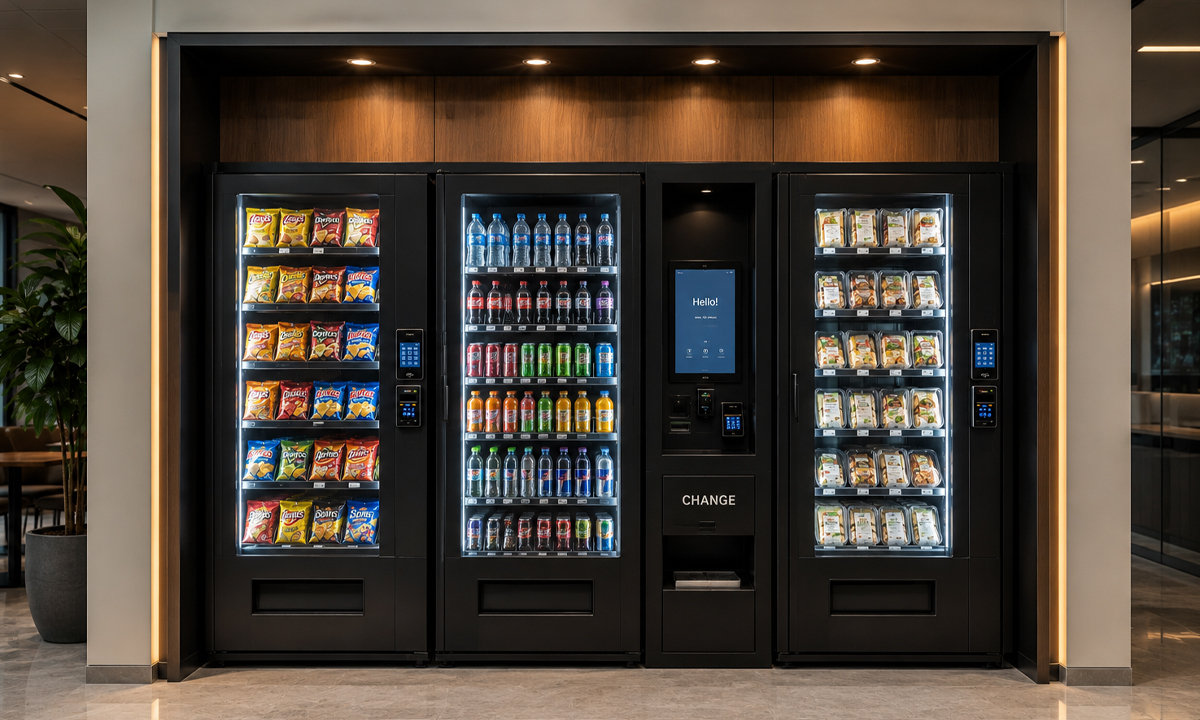
In large office environments, even small inefficiencies can have a significant impact on employee productivity. One often-overlooked challenge is the amount of time employees spend waiting for refreshments during breaks. Whether it’s purchasing a snack, grabbing a beverage, or accessing quick meal options, long lines can create unnecessary delays that affect both employee satisfaction and workplace performance.
This is where the modern vending machine has become a valuable workplace solution. Unlike traditional vending systems, today’s vending technologies are designed to provide faster transactions, better inventory management, and a more seamless user experience.
By leveraging automation, cashless payments, connected devices, and advanced workplace technology, modern vending systems help organizations reduce queue times while improving overall workplace efficiency. As businesses continue seeking smarter ways to optimize employee experiences, vending technology is becoming an increasingly important part of workplace operations.
Why Queue Times Matter in Large Offices
Large organizations often have hundreds or even thousands of employees sharing common break areas. During peak periods such as morning arrivals, lunch breaks, and afternoon pauses, refreshment stations can quickly become congested.
Long queues not only frustrate employees but can also reduce productivity by increasing the amount of time workers spend away from their primary responsibilities.
According to insights from Wikipedia’s overview of Queueing Theory, managing wait times and service efficiency is a critical component of operational performance across many industries.
In workplace environments, reducing wait times contributes directly to smoother daily operations and a better employee experience.
Organizations increasingly recognize that efficient refreshment systems play an important role in supporting productivity and workplace satisfaction.
How Modern Vending Machine Technology Speeds Up Service
Traditional vending machines often created bottlenecks due to slow payment processing, limited product selection, and occasional mechanical issues.
Today’s modern vending machine systems address these challenges through advanced technology that enables faster transactions and improved reliability.
Features such as digital payment options, touchscreen interfaces, and cloud-based monitoring allow employees to complete purchases quickly and efficiently.
Modern systems also reduce delays associated with out-of-stock products by providing real-time inventory visibility and automated replenishment alerts.
These improvements help create a faster and more convenient user experience while minimizing interruptions during employee breaks.
Businesses implementing modern vending solutions are increasingly seeing benefits in both employee satisfaction and operational performance.
Workplace Technology Is Transforming Refreshment Access
The evolution of workplace refreshments is closely connected to broader advancements in workplace technology. Modern vending systems are no longer isolated machines; they are part of connected digital ecosystems.
Advanced software platforms provide operators with real-time data about inventory levels, purchasing patterns, and machine performance.
This connectivity allows businesses to optimize product availability while reducing downtime and service interruptions.
According to insights from IBM’s explanation of the Internet of Things, connected devices can communicate and exchange data to improve automation and operational efficiency.
In vending environments, IoT-enabled systems help ensure products remain available when employees need them most.
The result is a smoother and more reliable workplace refreshment experience.
Features That Help Reduce Employee Queue Times
Modern vending systems incorporate several technologies specifically designed to minimize waiting periods and improve transaction speed.
Key queue-reduction features include:
- Cashless and contactless payment options
- Touchscreen product selection interfaces
- Real-time inventory monitoring
- Automated restocking notifications
- Faster transaction processing systems
- Remote diagnostics and maintenance alerts
Together, these innovations help streamline the purchasing process and reduce bottlenecks during peak usage periods.
Employees can access refreshments quickly without spending unnecessary time waiting in line.
Office Vending Machines Support Workplace Productivity
Efficient breakroom services contribute directly to workplace productivity. Employees who can quickly access refreshments are able to return to work faster and maintain better focus throughout the day.
Long waits for snacks, beverages, or meals can disrupt workflows and create unnecessary frustration, particularly in large offices where break periods are often limited.
Modern office vending machine systems help eliminate these delays by providing convenient and reliable access to refreshments at all times.
Organizations increasingly view workplace amenities as an important component of employee experience strategies.
By reducing time spent waiting, businesses can create more productive and employee-friendly environments.
Data Analytics Improves Operational Efficiency
One of the biggest advantages of modern vending technology is access to operational data. Connected vending systems collect information about purchasing trends, inventory movement, and machine performance.
This data enables businesses to make smarter decisions regarding product selection and replenishment schedules.
According to research published through ScienceDirect’s study on technology and operational performance, data-driven decision-making plays an important role in improving efficiency and service quality.
Modern vending operators can identify peak demand periods, monitor inventory trends, and adjust stocking strategies to better meet employee needs.
These insights help reduce stockouts and improve service consistency.
Operational Efficiency Benefits Businesses and Employees
Reducing queue times is not only beneficial for employees, it also improves operational efficiency for organizations.
When refreshment services operate smoothly, businesses experience fewer disruptions, lower maintenance requirements, and improved resource utilization.
Operational efficiency advantages include:
- Reduced downtime caused by equipment issues
- Better inventory planning and forecasting
- Faster service during peak demand periods
- Improved employee satisfaction
- More consistent product availability
- Lower administrative oversight requirements
These benefits help organizations maximize the value of their workplace refreshment investments while creating a more positive employee experience.
Modern Vending Systems and Workplace Experience
Employee expectations continue evolving as workplace environments become more technology-driven. Workers increasingly expect convenience, speed, and flexibility in every aspect of their daily experience.
Modern vending systems help organizations meet these expectations by delivering efficient self-service access to refreshments.
Businesses interested in broader workplace retail innovations can also explore how modern vending machines adapt to employee preferences through intelligent inventory and data-driven product selection.
These advancements demonstrate how vending technology is evolving beyond simple product dispensing into a strategic workplace amenity.
As organizations compete to attract and retain talent, convenient workplace services are becoming increasingly valuable.
The Future of Queue-Free Workplace Refreshments
The next generation of vending systems will continue focusing on speed, automation, and personalization. Future innovations may include AI-powered product recommendations, frictionless checkout experiences, and predictive inventory management.
These technologies will further reduce transaction times while creating more personalized refreshment experiences.
As workplaces become increasingly digital, vending systems will play a larger role in supporting employee convenience and operational performance.
Businesses that invest in advanced workplace refreshment technology today will be better positioned to meet future workforce expectations.
Conclusion
Modern vending technology is transforming how employees access refreshments in large office environments. Through connected systems, cashless payments, real-time inventory visibility, and intelligent automation, the modern vending machine significantly reduces queue times while improving service quality.
By supporting workplace efficiency, enhancing workplace productivity, and improving operational efficiency, modern vending systems provide value for both employees and employers.
As workplace technology continues advancing, organizations that embrace smart vending solutions will create more efficient, convenient, and employee-focused environments capable of meeting the demands of the modern workforce.