Walk into a Memphis office breakroom today, and you may notice a change. Traditional vending machines are no longer the only option. More businesses are adding micro markets, which are self-service spaces that work like small convenience stores.
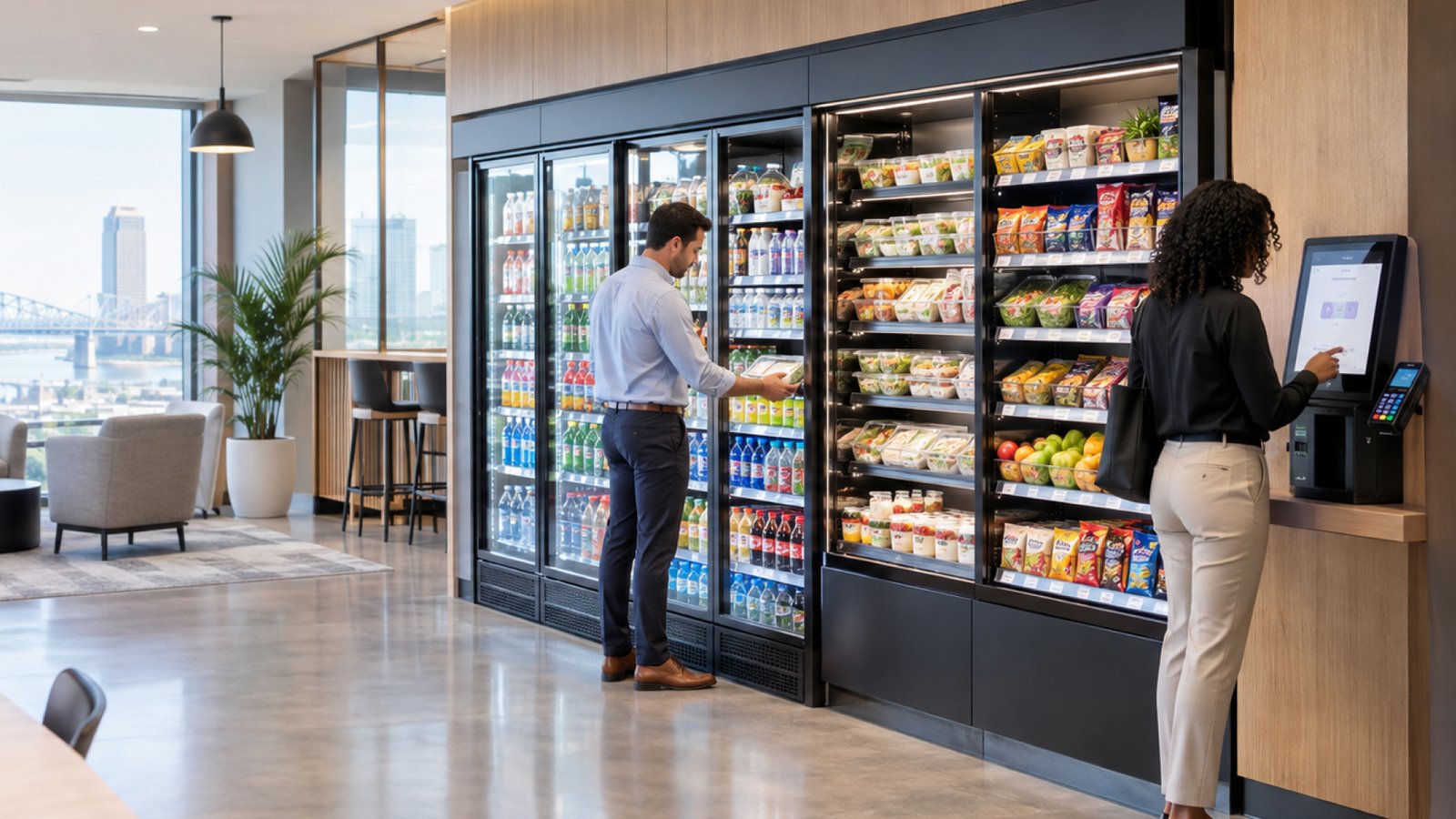
Instead of choosing from a few items behind glass, employees can browse open shelves, coolers, and fresh food displays. They can select what they want and pay at a self-checkout kiosk.
This shift reflects changing workplace expectations. Employees want more choice and convenient payment options. Employers also want breakroom services that can support different schedules and changing demand.
For Memphis businesses, a micro market can provide easier access to food and drinks while giving employees more flexibility during the workday.
What Makes Micro Markets Different
A traditional vending machine has limited space. It can only hold a certain number of snacks and drinks. Product choices also depend on the available slots inside the machine.
Office micro markets offer a different experience. Employees can browse open shelves and refrigerated displays. They can find snacks, drinks, fresh meals, and other workplace essentials in one place.
The payment process is also different. Most micro markets use self-checkout kiosks. Employees can pay with cards or mobile wallets instead of relying on coins or cash.
This cashless approach fits the way many consumers already shop. Research from the Federal Reserve shows that cash use continues to decline while cards and digital payments play a larger role in everyday purchases, according to the 2025 Diary of Consumer Payment Choice.
Micro markets can also give businesses better insight into purchasing habits. Modern systems record transactions and track inventory. Providers can use this information to understand which products sell quickly and which need to be replaced.
That data can improve restocking decisions. Providers can adjust product selections based on actual demand instead of relying only on a fixed schedule.
Micro Markets vs. Traditional Vending Machines
The choice between a micro market and a vending machine often comes down to variety, convenience, and space.
Traditional vending machines are simple and familiar. They require little floor space and can work well for smaller workplaces. Businesses can also choose machines based on their available products and budget.
Micro markets offer a broader shopping experience. Employees can browse products instead of making a quick selection from a machine. Open shelves can accommodate more snacks, drinks, meals, and workplace essentials.
This makes breakroom vending solutions more flexible. Businesses can create a refreshment area that better matches employee needs.
Maintenance works differently as well. A micro market needs more space than a single vending machine. It may also require refrigeration and an area for the self-checkout system.
Modern technology can make inventory management easier. Many systems track purchases automatically. Providers can use sales information to identify popular products and restock based on demand.
For a closer look at this technology, our guide on how smart micro markets help businesses operate 24/7 without staff explains how automated systems support workplace refreshment services.
Cost should also be considered. A vending machine needs less space and planning, making it practical for smaller offices. A micro market needs more space and equipment, but larger workplaces may gain more value from the wider product range.
The right choice depends on workplace size, employee needs, operating hours, and available space. A provider should help you compare these factors instead of simply recommending the most expensive option.
Why Memphis Businesses Are Making the Switch
Memphis has many types of workplaces, including corporate offices, manufacturing facilities, warehouses, healthcare organizations, and distribution centers.
These businesses do not always operate on a traditional nine-to-five schedule. Some teams work early mornings, late evenings, or overnight shifts.
That creates a challenge for workplace food services. A breakroom may need to serve employees when a cafeteria or staffed food service area is closed.
Office snack solutions can help fill that gap. Micro markets give employees access to food and drinks without requiring a staffed counter.
This can be especially useful for businesses with multiple shifts. An employee working overnight can still access refreshments when other workplace services are unavailable.
Smart vending solutions can also support workplaces with extended operating hours. Automated payment systems allow employees to purchase products without waiting for an attendant.
Before choosing a provider, businesses should ask:
- How often are products restocked?
- Does the provider use sales data to plan inventory?
- What happens if the payment system stops working?
- How are refrigerated and fresh products monitored?
- What food safety procedures does the provider follow?
- How quickly can the provider respond to service issues?
Food safety deserves particular attention when fresh food is included. Businesses should work with providers that understand proper handling, storage, and consumer protection requirements.
The FDA’s retail food protection guidance provides information on food safety practices and regulations for retail food operations.
What to Look for in a Micro Market Service Provider
Choosing the right equipment is only part of the decision. The provider behind the service can have an even greater impact on the employee experience.
A micro market service for employee break rooms needs regular attention. Shelves must stay stocked, equipment must work properly, and fresh products need appropriate handling.
Local support is important for Memphis businesses. A provider with a local team may be able to respond more quickly when an issue affects the breakroom.
Ask potential providers about their service schedule. Find out how they handle restocking, equipment problems, product shortages, and maintenance requests.
Product selection also matters. A good provider should understand employee preferences and offer a mix of snacks, beverages, fresh meals, and everyday essentials.
Businesses comparing micro markets with traditional options can also review our vending services to see whether a conventional vending setup may better fit their space and needs.
Technology should also be part of your evaluation. Ask whether the system provides sales data, inventory tracking, cashless payments, and alerts for operational issues.
Compliance is another area worth checking before installation. Vending and micro market operators need to follow food labeling and consumer protection requirements.
The Association of Food and Drug Officials provides information on vending laws and guidance that can help businesses understand important requirements.
A reliable provider should explain how it handles these responsibilities. Ask how fresh products are stored, monitored, and removed when they expire.
If you are ready to explore whether a micro market fits your workplace, our micro markets service explains setup options, product selection, and ongoing support.
Making the Right Choice for Your Workplace
A small office with one shift may work well with a traditional vending machine. A smart cooler can also be practical when space is limited.
Larger facilities may benefit more from a full micro market. This is especially true when employees work multiple shifts or need access to food outside normal business hours.
Start by looking at your available space and operating schedule. Then consider employee preferences, product variety, payment options, and service requirements.
Your current vending performance can also provide useful information. Look at which products employees buy most often and when stockouts happen. This can help you decide whether a larger setup makes sense.
A provider can then use this information to create a more useful product mix from the start. Ask about restocking data, food safety, equipment support, and local service before making your decision.
For many Memphis workplaces, a micro market offers more than snacks and drinks. It gives employees greater choice and convenient access to refreshments throughout the workday.
When the setup matches your workplace needs, the breakroom becomes a practical employee amenity that supports convenience across different schedules and work environments.