
Every business owner in Memphis has felt the sting of a late shipment, an empty shelf, or a vendor three states away who cannot answer a same-day request. These are symptoms of a supply chain too far removed from the people it serves. Local distribution solves this by placing inventory, decision-making, and service response closer to the businesses that depend on them.
For Memphis companies, the shift toward local distribution services is not a trend. It is a practical response to rising freight costs, unpredictable national supply chains, and customers who expect consistency without excuses. This article breaks down what local distribution means, why it matters operationally, and how Memphis businesses can use it to build a more resilient, cost-effective operation.
What Local Distribution Really Means for Memphis Companies
Local distribution refers to sourcing, storing, and delivering goods through a nearby distribution center rather than relying solely on regional or national warehouses. A truck that once traveled hundreds of miles to restock a location can instead make that trip in a single day.
This proximity changes the operational equation. Businesses gain shorter lead times, more predictable delivery windows, and a partner who understands the specific rhythms of the Memphis market, from seasonal demand shifts to local road conditions that can affect scheduling. Memphis distribution services also tend to be more flexible than large national providers, since a local partner can adjust routes, quantities, or delivery frequency based on direct conversations rather than layers of corporate logistics.
The Operational Efficiency Advantage of a Nearby Distribution Center
Operational efficiency is often talked about in abstract terms, but local distribution makes it concrete. Shorter distances mean shorter replenishment cycles. A business that restocks weekly from a distant warehouse might restock every two or three days from a local center, reducing the risk of stockouts and allowing leaner inventory levels without the anxiety of running out.
Transportation is one of the largest variable costs in any supply chain. According to the U.S. Department of Agriculture’s local and regional food systems toolkit, shorter supply chains reduce transportation expenses and the environmental impact associated with long-haul shipping. Fewer miles traveled means lower fuel spend, less wear on delivery vehicles, and fewer opportunities for delays caused by traffic or mechanical issues on long routes.
Working with a local partner also simplifies communication. Instead of navigating a call center, Memphis businesses can build direct relationships with the people managing their inventory, cutting the back-and-forth that slows down problem resolution. This is especially true for outsourced programs like ai vending services, where a direct point of contact keeps restocking on schedule.
Inventory Optimization Through Local Distribution Services
Inventory optimization means keeping just enough stock on hand to meet demand without overspending on excess inventory or storage. Local distribution makes this easier because it removes much of the guesswork that comes with long supply lines. When a distribution center is close by, businesses do not need to hold as much buffer stock to protect against delays, which frees up capital that would otherwise sit idle on a shelf. It also reduces waste, particularly for perishable goods, since replenishment can happen more frequently in smaller, more accurate quantities.
Local providers are also better positioned to use real inventory data rather than broad regional estimates, tracking what is actually moving in Memphis facilities instead of applying a one-size-fits-all model. Many providers now support this with dedicated workplace ai technology solutions that monitor stock levels in real time and flag issues before they affect availability.
How Demand Forecasting Improves With Local Data
Demand forecasting depends heavily on the quality of the data behind it. National distributors often rely on aggregated data across dozens of markets, which can smooth out important local patterns. A distribution partner working specifically within Memphis and the surrounding Mid-South region has direct visibility into local demand trends tied to seasonality, local events, and workforce schedules, allowing businesses to anticipate needs instead of reacting to a shortage after it happens.
The Forbes Business Council recently outlined strategies leaders are using to strengthen supply chain resilience, many of which center on improving visibility and building stronger regional partnerships rather than depending solely on distant, centralized systems. Local distribution is a direct, practical application of that advice.
Reliability Distribution: Why Proximity Reduces Risk
Reliability distribution is about consistency, counting on inventory to show up when it is supposed to without constant follow-up. Distance is one of the biggest threats to reliability, since the farther goods travel, the more points of failure exist along the way.
A local distribution model reduces that exposure. Fewer transit points mean fewer opportunities for delays, damage, or miscommunication, and if an issue does arise, a local partner can typically resolve it same-day rather than requiring a multi-day escalation through a national logistics network. This keeps employees from waiting on supplies and gives facilities managers more time for core priorities instead of troubleshooting.
Why Memphis Is a Strategic Hub for Distribution
Memphis has long served as a logistics hub because of its central location and strong transportation infrastructure. That same advantage makes Memphis attractive for national shipping and benefits local businesses. Distribution centers in the city can efficiently serve Memphis and surrounding areas across the Mid-South, including parts of Eastern Arkansas and North Mississippi.
Real-World Application: Workplace Refreshment and Local Distribution
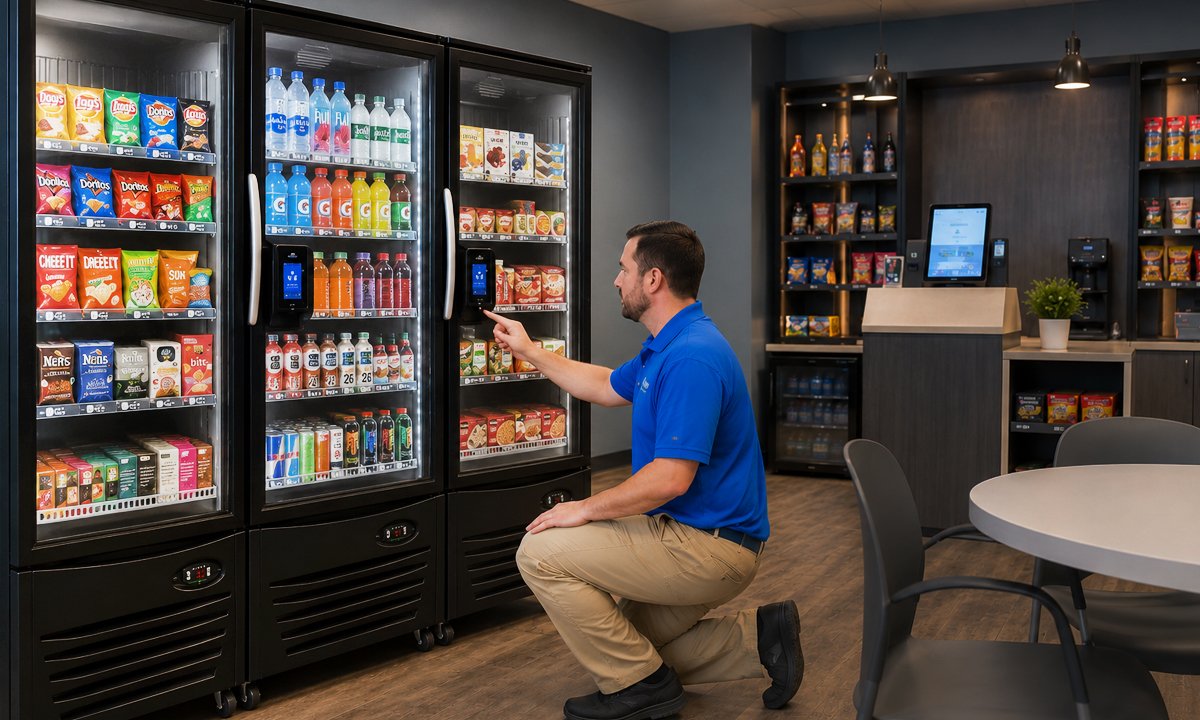
One practical example of local distribution in action is workplace refreshment, including vending, micro-markets, and pantry programs. These services depend on consistent, timely restocking, and a local distribution model lets providers respond quickly to demand changes, whether that means restocking a break room more often during a busy season or adjusting product selection based on what employees actually purchase.
Businesses interested in how this applies to workplace environments can learn more through resources like vending machine service in Memphis, which explains how local restocking routes support consistent product availability across Memphis-area breakrooms.
Choosing a Local Distribution Partner in Memphis
When evaluating a local distribution partner, Memphis businesses should look beyond price alone. Key factors include:
- Proximity of the distribution center to your facility or facilities
- Flexibility in adjusting delivery frequency based on actual demand
- Transparency around inventory tracking and reporting
- A track record of reliability within the Memphis market specifically
- Direct communication with local account managers rather than a distant call center
According to insights shared by GEP, a global supply chain research and technology firm, localized supply chains tend to offer stronger resilience and faster response times compared to centralized models, particularly when disruptions occur. This reinforces why proximity should be treated as a strategic priority rather than a minor convenience.
What This Means for Memphis Businesses Moving Forward
Local distribution has become a practical strategy for improving operational efficiency, optimizing inventory, strengthening demand forecasting, and building the reliability that keeps daily operations running smoothly. Businesses that prioritize local partners respond faster, spend less on unnecessary buffer inventory, and reduce the risks that come with long, unpredictable supply chains. As Memphis continues to grow as a logistics hub, companies that build their supply chain strategy around local partnerships will be better equipped to handle both everyday operations and unexpected disruptions.