
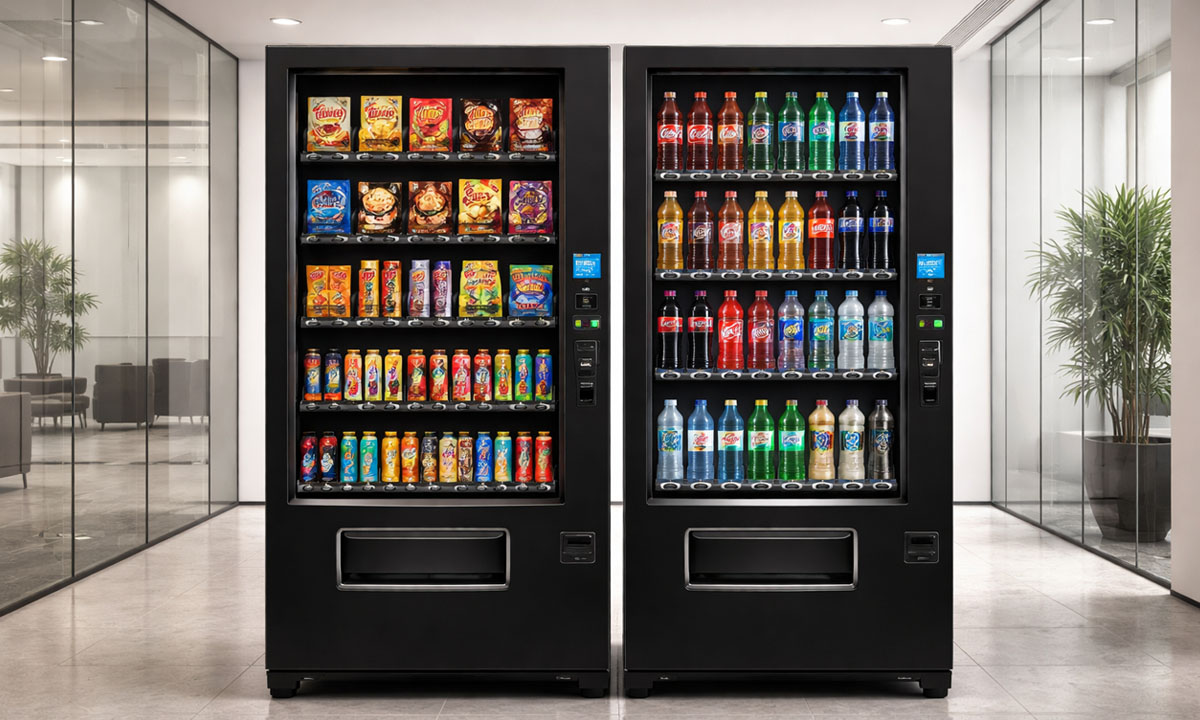
When businesses evaluate vending partners, the choice often comes down to a national brand versus a local provider. At first glance, large national chains may seem appealing because of their scale and name recognition. However, many Memphis businesses are discovering that local vending companies consistently outperform larger competitors in reliability, customization, and service quality.
In this Memphis-focused case study, we explore why locally operated vending companies provide stronger value through faster response times, better supply chain efficiency, and a deeper understanding of community needs.
Understanding the Difference Between Local and National Vending Providers
National vending companies typically operate across multiple states, managing thousands of machines through centralized systems. While scale can offer consistency, it often limits flexibility.
In contrast, locally owned vending machines are managed by teams who live and work in the same community as their clients. Decisions are made locally, service routes are shorter, and communication is more direct.
For Memphis businesses, that difference often translates into measurable operational advantages.
Faster Response Times Make a Real Difference
One of the most common frustrations with large vending chains is delayed service. When issues must pass through regional call centers or multi-state dispatch systems, response times can suffer.
Local providers offer significantly faster response times because:
- Technicians operate within the same city
- Inventory is stored locally
- Service routes are optimized for proximity
If a machine malfunctions in a Memphis office, a local team can often address the issue the same day. That level of responsiveness directly impacts employee satisfaction and workplace productivity.
Companies using vending services in Memphis frequently prioritize response time as a key reason for choosing a local partner over a national chain.
Better Supply Chain Efficiency at the Local Level
Supply chain performance has become a critical factor in vending operations. National providers rely on centralized distribution networks, which can be efficient at scale but slow to adapt to local demand shifts.
Local vending operators often maintain closer relationships with regional suppliers. This creates stronger supply chain efficiency, especially when responding to seasonal trends or product shortages.
Insights into the evolving role of technology in food distribution, as discussed by the Greater Memphis Chamber on food supply chain technology, show how localized logistics can improve reliability and reduce delays.
For Memphis workplaces, that means machines stay stocked with relevant products rather than generic, nationally distributed inventory.
Customization That Reflects Community Preferences
National chains tend to standardize product selections across markets. While this ensures uniformity, it often ignores local tastes.
Memphis workplaces have unique preferences influenced by regional culture and employee demographics. Local vending companies can adapt product mixes accordingly, including:
- Regional snack brands
- Specific beverage preferences
- Expanded fresh food vending machines offerings
- Health-focused options tailored to workplace needs
Because locally owned operators interact directly with clients, feedback loops are shorter and adjustments happen quickly.
Integration With Smart Technology
Some assume that only national chains have access to advanced vending technology. That is no longer the case.
Modern vending machine service providers in Memphis now deploy connected systems that track usage patterns, monitor inventory, and improve servicing efficiency. Technology-focused solutions such as those outlined in Advanced technology services enable local providers to match or exceed the digital capabilities of larger corporations.
Emerging research on intelligent retail automation, including work published on arXiv exploring AI-driven retail systems, highlights how data modeling and predictive analytics are reshaping unattended retail. Local providers adopting these tools can operate with the precision of national chains while maintaining personalized service.
Relationship-Driven Service Matters
With national chains, account management is often centralized. Clients may rarely interact with the same representative twice.
Local vending providers build long-term relationships. This creates:
- Direct communication channels
- Faster problem resolution
- Greater accountability
In Memphis, businesses often value the ability to speak directly with decision-makers rather than navigating corporate layers.
Providers like January Service Company operate within the same community as their clients, which fosters trust and long-term partnership rather than transactional service.
Flexibility in Scaling Services
As businesses grow or shift workplace models, vending needs evolve. A company expanding into hybrid work may need to adjust machine placement or product variety.
Local operators can quickly reconfigure service models, including integrating newer formats such as Smart Store solutions alongside traditional vending machines.
National chains may require extended approval processes before implementing similar changes.
Case Study: A Memphis Office Transition
Consider a mid-sized Memphis logistics company that previously worked with a national vending provider. Common challenges included:
- Delayed machine repairs
- Limited product customization
- Generic product selections
- Inconsistent restocking
After transitioning to a local vending provider, the company reported:
- Noticeably improved restocking accuracy
- Quicker service calls
- Increased employee satisfaction with product variety
- Greater confidence in inventory reliability
The difference was not in machine type alone. It was in proximity, accountability, and understanding of local demand.
Cost Considerations
National chains often negotiate large supplier contracts that may reduce unit costs. However, hidden costs can appear in the form of:
- Longer downtime
- Missed service windows
- Reduced product relevance
- Lower employee engagement
Local vending providers balance competitive pricing with operational reliability. When downtime decreases and machines remain consistently stocked, overall value improves.
Supporting the Memphis Economy
Choosing January Service Company also keeps business investment within the local economy. Working with locally owned vending machines supports regional employment and strengthens the broader business ecosystem.
For many Memphis organizations, this community impact is an added benefit beyond operational performance.
Final Thoughts
While national vending chains offer scale, scale alone does not guarantee superior service. In Memphis, local vending providers consistently outperform national competitors through:
- Faster response times
- Stronger supply chain efficiency
- Better customization
- Closer client relationships
- Comparable or superior technology integration
For businesses seeking reliability, flexibility, and community-driven service, local vending remains a strategic advantage.