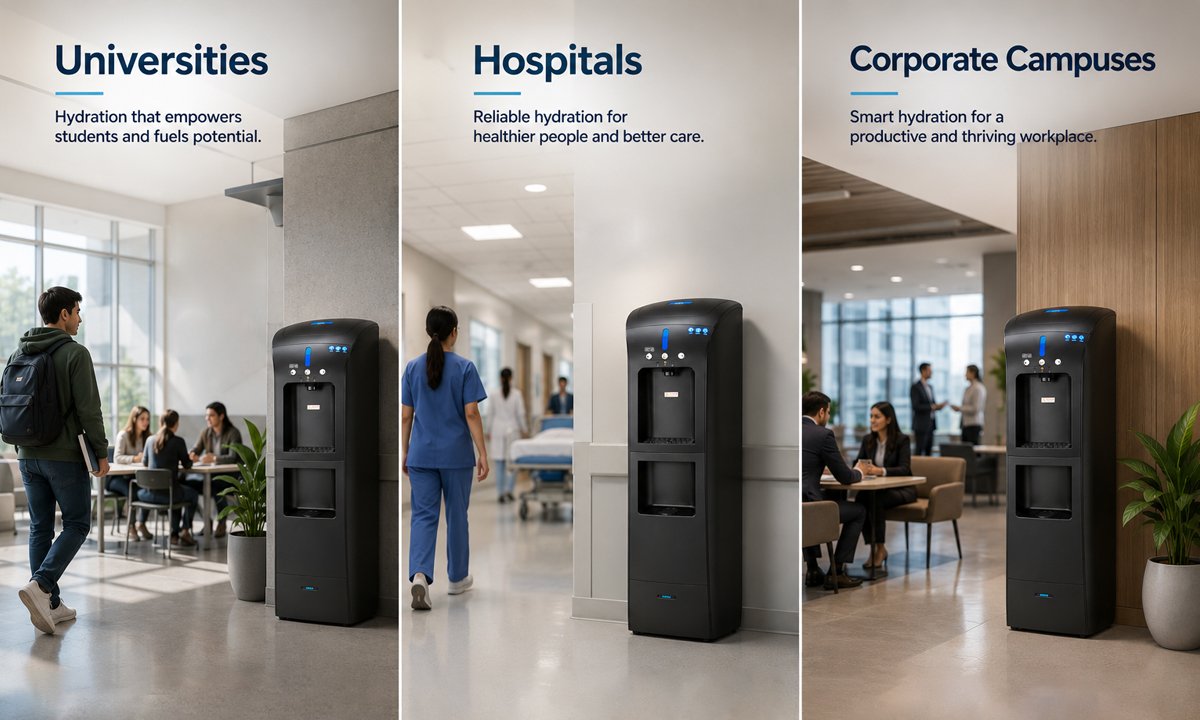
Access to clean, refreshing drinking water is no longer viewed as a simple workplace convenience. Universities, hospitals, and corporate campuses now recognize that reliable hydration solutions play an important role in supporting health, productivity, sustainability, and overall user experience. Large facilities serve thousands of students, employees, patients, and visitors every day, making dependable access to drinking water a critical part of daily operations.
Traditional bottled water programs are gradually being replaced by advanced hydration technologies that provide filtered tap water, reduce plastic waste, and improve operational efficiency. Modern hydration systems combine high-quality filtration, touchless dispensing, and smart monitoring to ensure consistent access to safe drinking water while lowering long-term operating costs.
Whether serving students between classes, healthcare professionals during long shifts, or employees throughout the workday, organizations are investing in systems that deliver reliable hydration without compromising convenience or sustainability.
Why Modern Facilities Need Better Hydration Solutions
Universities, hospitals, and corporate campuses operate continuously, with many providing services around the clock. High visitor volumes create significant demand for accessible drinking water, making outdated water dispensers or bottled water deliveries less practical than they once were.
Installing modern hydration solutions allows organizations to provide fresh, filtered drinking water across multiple locations while reducing maintenance requirements. Instead of relying on frequent bottle replacements, facilities can use advanced filtration systems connected directly to existing water supplies.
According to MedlinePlus, maintaining proper hydration supports normal body functions and helps regulate temperature, digestion, and physical performance. Easy access to clean drinking water encourages healthier hydration habits throughout the day.
For large campuses where thousands of people move between buildings, reliable water access becomes an important part of creating a healthier and more comfortable environment.
Benefits of Modern Hydration Systems
- Provide continuous access to clean filtered tap water.
- Reduce dependence on single-use plastic bottles.
- Support sustainability initiatives through reusable bottle programs.
- Improve convenience with touchless dispensing technology.
- Lower long-term operating and delivery costs.
- Promote healthier hydration habits across large facilities.
These benefits make advanced hydration systems an attractive investment for organizations seeking both operational efficiency and environmental responsibility.
Water Filtration Systems Improve Water Quality
One of the primary reasons organizations are upgrading hydration infrastructure is the growing demand for higher-quality drinking water. A modern water filtration system removes many impurities while improving taste and consistency, giving users greater confidence in the water they consume.
Facilities also benefit from reduced maintenance compared with traditional bottled water programs. Connected filtration equipment can operate continuously while supplying multiple dispensing stations throughout a building or campus.
Many organizations complement these systems with smart monitoring technology that tracks performance and helps maintenance teams identify service requirements before they become operational issues. Facilities looking for advanced monitoring capabilities can also explore AI Smart Coolers, which demonstrate how connected technologies improve equipment management and operational visibility.
Sustainability Is Driving New Water Solutions
Environmental responsibility has become a major priority for educational institutions, healthcare providers, and businesses. Replacing disposable bottles with refillable hydration stations supports sustainability goals while reducing waste generated across large facilities.
Research published by Taylor & Francis highlights the importance of adequate hydration in supporting overall health and daily performance. When drinking water is readily available and easy to access, individuals are more likely to maintain healthy hydration habits throughout the day.
These improvements benefit both facility operators and users by creating practical, long-term sustainable water solutions that align with modern environmental initiatives.
As organizations continue advancing their sustainability initiatives, many also take a broader approach to workplace refreshment. Facilities evaluating vending service memphis often choose providers that can integrate sustainable hydration solutions with coffee, vending, and food services, creating a more convenient experience for employees and visitors while simplifying ongoing service and support.
Choosing the Best Filtered Water Systems for Large Facilities
Selecting the best filtered water systems requires more than comparing equipment specifications. Universities, hospitals, and corporate campuses should evaluate building size, daily water consumption, user traffic, maintenance requirements, and long-term sustainability goals before making an investment.
Modern hydration infrastructure can be customized to serve cafeterias, breakrooms, patient waiting areas, lecture halls, fitness centers, and common spaces. By placing hydration stations where people naturally gather, organizations improve accessibility while encouraging healthier drinking habits throughout the day.
Facilities that invest in scalable water filtration system technology can also expand their networks as campuses grow, ensuring consistent service without replacing existing equipment.
Features to Look for in Hydration Solutions
- High-performance filtration for clean, great-tasting drinking water.
- Convenient bottle filling stations that encourage reusable bottles.
- Touchless dispensing for improved hygiene.
- Energy-efficient equipment that lowers operating costs.
- Durable designs suitable for high-traffic environments.
- Smart monitoring features that simplify maintenance and performance tracking.
These capabilities help organizations provide dependable hydration while reducing maintenance demands and supporting long-term sustainability initiatives.
Bottle Filling Stations Support Health and Sustainability
The growing popularity of bottle filling stations reflects changing expectations among students, employees, patients, and visitors. Instead of purchasing bottled beverages, people increasingly prefer refilling reusable containers throughout the day. This simple change helps reduce plastic waste while providing immediate access to fresh drinking water.
According to the Harvard T.H. Chan School of Public Health, water is the healthiest choice for hydration and should be consumed regularly throughout the day. Providing convenient refill stations makes healthy hydration easier while supporting environmental initiatives across large campuses.
Modern hydration systems also improve operational efficiency by eliminating many of the logistical challenges associated with bottled water deliveries. Facility managers spend less time coordinating deliveries and replacing empty bottles, allowing maintenance teams to focus on other priorities.
As organizations continue investing in healthier and more sustainable workplace environments, hydration systems are often implemented alongside other employee refreshment solutions. Businesses researching vending supply memphis frequently look for providers that can integrate bottle filling stations with coffee services, vending equipment, and healthy food options, creating a more convenient experience for employees, students, patients, and visitors while simplifying ongoing service and maintenance.
Planning for Long-Term Water Accessibility
Successful hydration programs continue to evolve as facilities expand and user needs change. Regular maintenance, filter replacement schedules, and periodic reviews of water usage help ensure systems continue performing efficiently over time.
Organizations should also evaluate whether portable or permanently connected systems are the best fit for their environment. While smaller offices may benefit from flexible equipment, larger campuses often achieve greater efficiency through plumbed filtration systems that deliver continuous access to drinking water.
For organizations evaluating different installation options, our guide on Portable vs. Plumbed Water Coolers: Pros and Cons for Offices explains the advantages of each approach and helps businesses choose the solution that best matches their operational needs.
As organizations invest in long-term workplace amenities, hydration planning often becomes part of a broader refreshment strategy. Companies researching vending for sale memphis should consider providers that offer comprehensive workplace refreshment services alongside hydration solutions. Integrating filtered water systems with vending and coffee services creates a more convenient employee experience while simplifying installation, maintenance, and ongoing support through a single trusted partner.
Conclusion
Reliable hydration solutions have become an essential part of modern universities, hospitals, and corporate campuses. By providing access to filtered tap water, advanced water filtration systems, and convenient bottle filling stations, organizations support healthier lifestyles while improving operational efficiency and reducing environmental impact.
Today’s best filtered water systems deliver more than clean drinking water. They contribute to sustainable water solutions, reduce reliance on disposable plastic bottles, and create healthier environments for students, employees, patients, and visitors alike. As campuses continue to modernize, investing in dependable hydration infrastructure remains a practical strategy for promoting wellness, supporting sustainability goals, and enhancing the overall user experience.