
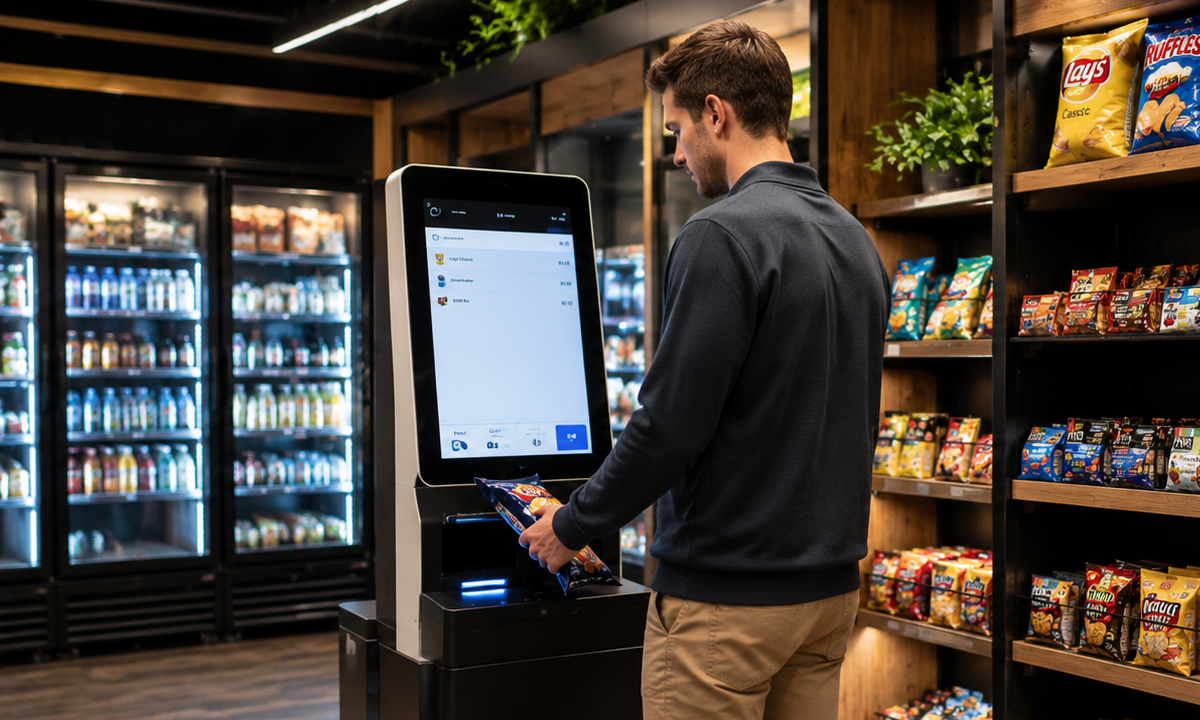
Workplace retail is undergoing a major transformation driven by artificial intelligence, automation, connected devices, and evolving employee expectations. Traditional vending machines and basic breakroom services are rapidly being replaced by intelligent retail environments designed to provide greater convenience, personalization, and efficiency.
One of the most significant innovations shaping this evolution is frictionless checkout. Employees increasingly expect workplace purchasing experiences to be as seamless as the digital services they use in everyday life. Long checkout lines, manual transactions, and outdated retail systems are becoming less acceptable in modern workplaces.
As organizations continue investing in digital transformation, workplace retail environments will become smarter, faster, and more personalized. By 2030, AI-powered technologies are expected to reshape how employees access food, beverages, and workplace essentials, creating highly automated retail experiences that operate with minimal friction.
The Rise of Frictionless Checkout Technology
Frictionless checkout eliminates many of the traditional barriers associated with retail transactions. Rather than waiting in line or manually scanning products, employees can select items and complete purchases through automated systems that require little or no direct interaction.
The popularity of contactless transactions has accelerated the adoption of these technologies. According to insights from Wikipedia’s overview of contactless payment systems, consumers increasingly prefer payment methods that offer speed, convenience, and minimal physical interaction.
In workplace environments, frictionless checkout systems improve convenience while reducing transaction times. Employees can quickly purchase snacks, beverages, or meals without disrupting their workday.
As AI and sensor technology continue advancing, frictionless checkout is expected to become a standard feature of workplace retail by the end of the decade.
How Retail AI Technology Will Shape Workplace Retail
Artificial intelligence is becoming the foundation of modern workplace retail innovation. AI systems can analyze purchasing behavior, predict demand patterns, optimize inventory, and personalize product recommendations.
Rather than relying solely on manual oversight, businesses can use intelligent systems to continuously improve retail operations.
Retail AI technology is expected to support:
- Personalized product recommendations
- Automated inventory optimization
- Demand forecasting and planning
- Real-time customer behavior analysis
- Dynamic product assortment adjustments
- Automated restocking decisions
These capabilities allow workplace retail environments to become more responsive to employee preferences while reducing operational inefficiencies.
Organizations investing in advanced workplace technology solutions are already laying the foundation for this AI-driven future.
Smart Retail Technology Will Create Personalized Experiences
One of the biggest workplace retail trends expected by 2030 is the growth of smart retail technology. Future retail environments will use AI, sensors, cloud platforms, and machine learning algorithms to create highly personalized employee experiences.
Instead of offering the same products to every employee, smart systems will adapt inventory selections based on workplace consumption patterns.
Employees may receive product recommendations based on previous purchases, dietary preferences, or wellness initiatives supported by their employer.
These personalized experiences will improve satisfaction while helping businesses make more efficient inventory decisions.
The result will be retail environments that feel more intuitive and responsive than traditional vending or pantry systems.
Retail Transformation Is Already Underway
Many of the innovations predicted for 2030 are already appearing in workplace environments today. Organizations are increasingly replacing conventional vending systems with self-service retail spaces, smart coolers, and micro market solutions.
Modern micro market environments provide a glimpse into the future of workplace retail by combining self-service convenience with advanced inventory tracking and cashless transactions.
These systems allow businesses to gather valuable operational data while creating more engaging employee experiences.
As technology costs continue decreasing and AI capabilities become more accessible, adoption is expected to accelerate significantly over the next several years.
The transformation of workplace retail is no longer a future concept, it is actively happening today.
Predictive Retail Analytics Will Improve Efficiency
Data will play an increasingly important role in workplace retail operations. Organizations that can accurately forecast demand and understand employee preferences will be better positioned to optimize inventory and reduce waste.
According to insights from IBM’s research on predictive analytics, predictive models help businesses anticipate future outcomes by analyzing historical data and identifying patterns.
In workplace retail environments, predictive retail analytics can forecast:
- Product demand fluctuations
- Seasonal purchasing trends
- Inventory replenishment requirements
- Employee consumption patterns
- Product performance metrics
- Potential inventory shortages
These insights help organizations improve operational efficiency while ensuring employees consistently have access to desired products.
Automation Will Reduce Operational Complexity
Automation will become increasingly important as workplace retail environments continue evolving.
According to insights from Britannica’s explanation of automation, automated systems improve efficiency by reducing the need for manual intervention and repetitive tasks.
Future workplace retail environments will likely automate many operational functions, including inventory monitoring, replenishment scheduling, maintenance alerts, and transaction processing.
This automation reduces administrative workload while improving consistency and accuracy.
Organizations will be able to manage larger retail environments with fewer resources while maintaining higher service quality.
Automation will also support scalability, making advanced retail technologies more practical for businesses of various sizes.
AI Technology for Retail Will Support Employee Wellness
Employee wellness is becoming an increasingly important workplace priority. By 2030, workplace retail systems may play a much larger role in supporting organizational wellness initiatives.
AI-powered retail systems could recommend healthier food choices, highlight nutritional information, and encourage balanced consumption habits.
Organizations may use retail analytics to better understand employee preferences and adjust product offerings accordingly.
These capabilities create opportunities to align workplace retail programs with broader health and wellness objectives.
As businesses continue focusing on employee experience, wellness-focused retail technology is expected to become a significant area of innovation.
The Future of Workplace Retail Environments
The workplace retail environment of 2030 will likely look very different from today’s breakrooms and vending areas.
Employees may enter smart retail spaces where products are automatically detected, purchases occur instantly through frictionless checkout systems, and inventory updates happen in real time without manual intervention.
Businesses can already explore emerging workplace retail trends through our guide to smart stores and AI-powered checkout technology, which highlights many innovations currently shaping the industry.
As retail technologies continue advancing, workplace retail will become increasingly integrated into broader workplace experience strategies.
The combination of automation, personalization, and data-driven decision-making will create more efficient and employee-focused environments.
Conclusion
The future of workplace retail will be defined by frictionless checkout, artificial intelligence, automation, and advanced analytics. As organizations seek more efficient and employee-centered solutions, traditional retail systems will continue giving way to intelligent environments powered by retail AI technology and smart retail technology.
From predictive inventory management to personalized product recommendations, the next generation of workplace retail will deliver greater convenience while reducing operational complexity.
By 2030, businesses that embrace retail innovation, predictive retail analytics, and AI-powered automation will be better positioned to create engaging workplace experiences that meet the evolving expectations of modern employees.