Break rooms rarely get much strategic thought from busy managers. Someone restocks the vending machine, adds a few drink choices, and considers the job done. However, a workplace break room can offer more than a convenient place to grab a snack.
Thoughtful breakroom vending solutions bring snacks and beverages together in ways that give employees more useful choices throughout the day. Instead of filling machines or shelves at random, businesses can consider flavor, variety, convenience, and actual employee demand.
For Memphis offices considering an upgrade, even a modest refreshment program can feel more intentional when the selection reflects how employees really use the break room.
Why Smart Pairings Matter
A break room can contain plenty of products and still feel limited if the selection does not work well together.
Research published in Scientific Reports explored why certain ingredients are commonly paired, identifying patterns in the flavor compounds they share. A workplace does not need a complicated food-pairing system, but complementary flavors can provide a useful starting point.
For example, salty pretzels or popcorn can sit alongside sparkling water or a citrus-flavored drink. Sweeter snacks may work well with coffee, tea, or an unsweetened beverage. These are not strict rules. The aim is simply to make the selection feel less random and give employees combinations they may genuinely enjoy.
Choosing the Right Vending Setup
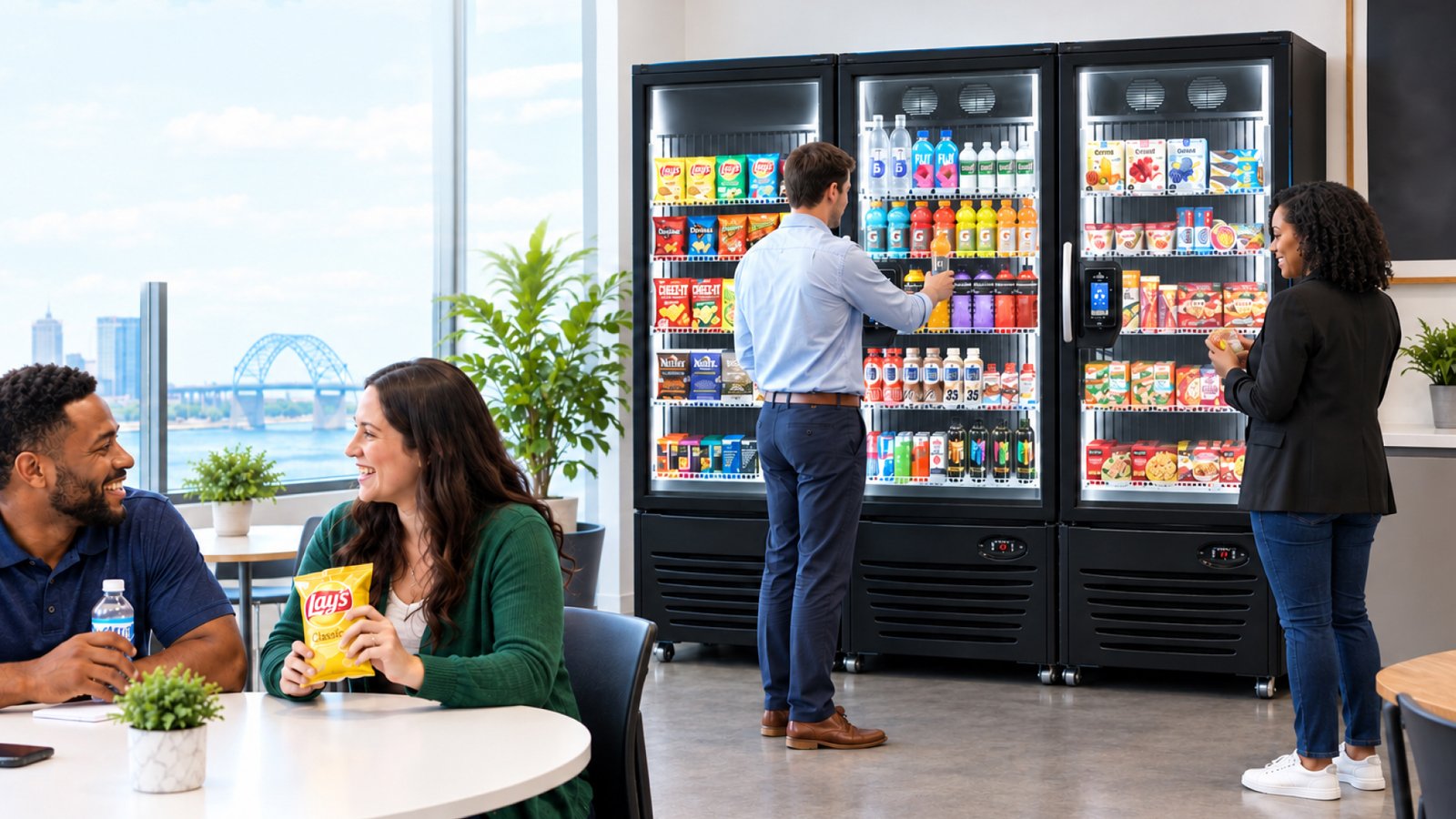
Modern breakroom vending solutions can extend beyond a single machine filled with candy bars and canned soda. Businesses can choose traditional vending machines, micro markets, smart coolers, coffee programs, or a combination of services.
The right setup depends on employee count, workplace schedule, available space, and product demand. Traditional vending works well where employees need quick access to snacks and drinks. Workplaces that want fresh food or a larger selection may benefit from refrigerated options or a market-style setup.
Modern systems can also provide inventory and sales information, helping providers make better restocking decisions. A well-planned Memphis vending machine service can offer traditional favorites alongside alternative snacks, cold drinks, and products selected around workplace demand.
The best setup is not necessarily the one with the most products. It is the one employees consistently use.
Snack and Beverage Pairing Ideas
Once the basic setup is in place, businesses can consider which snacks and beverages work naturally together.
Salty options such as pretzels, popcorn, chips, nuts, and trail mix can be offered with sparkling water, flavored water, or other refreshing drinks. Sweeter snacks can sit alongside coffee, tea, or plain water, giving employees more ways to combine their choices.
The CDC’s guidance on healthier drinks recommends choosing water over sugary beverages and identifies plain coffee, unsweetened tea, and sparkling water as lower-calorie options. That does not mean removing favorite sodas or sweetened drinks. A more practical strategy is to provide different categories so employees can choose according to their preferences.
The same principle applies to food. Familiar favorites can remain available alongside nuts, protein-focused snacks, fruit, breakfast products, and other alternatives.
Make Grab-and-Go Choices Easy to Find
Product selection is only one part of a useful break room. Employees also need to find what they want quickly.
Visibility and placement can affect food choices. Harvard Business Review describes how Google changed the visibility and placement of workplace foods to encourage different choices without removing products.
In a break room, that might mean making water, fruit, nuts, protein-focused products, and popular grab-and-go snacks easy to see. Clear organization is especially useful for employees who only have a few minutes between meetings or shifts.
Coordinate Coffee and Snack Options
A workplace refreshment area does not always need to resemble traditional vending. Some businesses may prefer open shelving, refrigerated storage, or a micro market that accommodates more products and portion sizes.
Coffee can also play an important role, particularly during the morning. Pairing it with breakfast bars, oatmeal, pastries, nuts, or other grab-and-go foods creates a more complete selection without requiring a cafeteria.
Businesses using office coffee services can coordinate hot beverages with the food already available. Planning these categories together makes the break room feel cohesive instead of like a collection of unrelated products.
Planning for Different Shifts
Not every employee uses the break room at the same time. A traditional office may see its highest demand in the morning and around lunch. Warehouses, manufacturing facilities, healthcare environments, and other multi-shift workplaces may need refreshments throughout the day and overnight.
Morning demand may support coffee, breakfast snacks, or lighter grab-and-go foods. Later shifts may need more substantial snacks and cold beverages when other food options are less convenient.
Staffing levels can also change during seasonal or busy periods. Rather than assuming one product mix will work permanently, the refreshment program should be flexible enough to respond to actual usage.
Using Sales Data to Improve the Product Mix
Pairing ideas provide a starting point, but sales data shows what is actually working. A product that sounds like a good addition may sit untouched, while another may sell faster than expected.
Purchasing patterns help providers decide which products should remain, which quantities need adjusting, and where new options may be worth testing. Employee feedback adds useful context. If a product disappears quickly every week or employees regularly request a category, stocking more of it makes more sense than guessing.
For additional insight, January Service Company’s guide to what employees actually eat from office vending explains how product selection can reflect real purchasing behavior rather than assumptions.
Choosing a Workplace Refreshment Provider
Before choosing a provider, ask how products are selected, how inventory is monitored, how often the mix is reviewed, and whether choices can change with demand. Businesses should also understand how restocking needs, refunds, and equipment problems are handled.
A dependable provider should pay attention to purchasing patterns and communicate when workplace needs change. Clear answers about service schedules, product flexibility, and ongoing support make it easier to compare options.
Why Choose January Service Company?
January Service Company has served Memphis-area workplaces since 1982. Its team supports vending and coffee programs with product planning, regular restocking, equipment service, and options shaped around employee demand.
Because every workplace is different, JSC can consider workforce size, operating hours, available space, and purchasing patterns when recommending a refreshment setup. This local support helps businesses maintain a break room that remains practical as their needs change.
Build a Break Room Employees Will Use
A Memphis break room does not need a complete overhaul to become more useful. Start with a varied snack and beverage selection, make grab-and-go products easy to find, and consider how different shifts use the space. Then review what actually sells.
The strongest breakroom vending solutions combine thoughtful planning with real purchasing patterns and enough flexibility to adjust over time.
Ready to improve your Memphis workplace break room? Talk with January Service Company about creating a refreshment program built around your employees and schedule.