
Most employees do not skip breakfast on purpose. Mornings simply get busy. A rushed commute, an early meeting, or a late start can leave someone arriving at work with nothing but coffee.
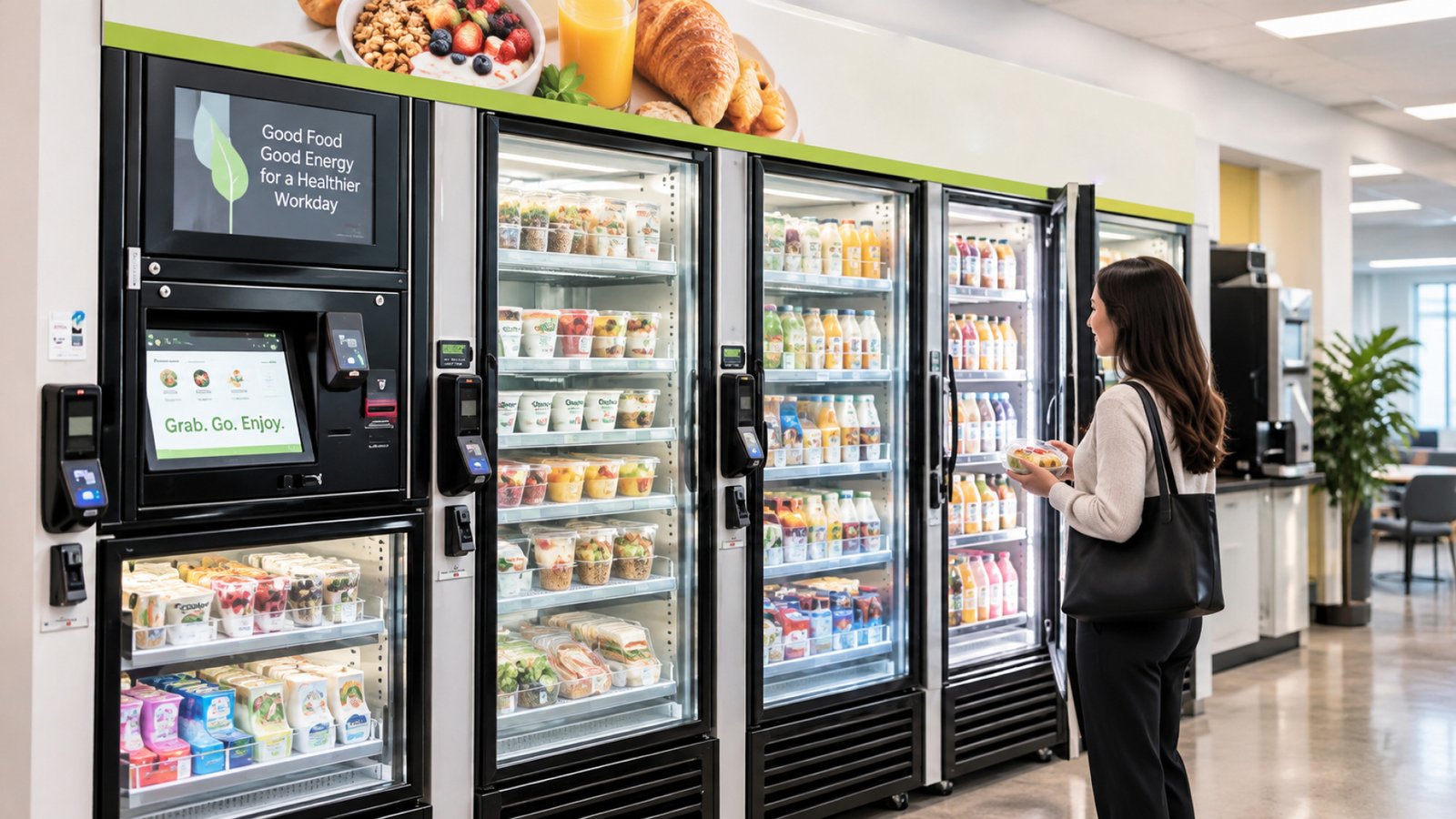
A well-stocked micro market gives employees another option. Instead of relying only on traditional vending snacks, employees can choose from yogurt, fruit, oatmeal, breakfast sandwiches, protein boxes, and other convenient foods.
For employers, improving breakfast choices does not require running a cafeteria. A thoughtfully stocked workplace market can make grab-and-go breakfast easier to access while giving employees enough variety to choose what works for them.
Why Mornings Matter for Workplace Nutrition
Breakfast preferences vary, and not everyone needs or wants the same morning meal. However, employees who do eat breakfast can benefit from having more balanced options available at work.
Harvard Health recommends building breakfast around foods that provide nutrients such as protein and fiber rather than relying heavily on refined carbohydrates and added sugar.
For workplaces, the practical takeaway is straightforward: variety matters.
A breakroom stocked only with pastries, candy, and highly processed snacks gives employees limited choices. Adding yogurt, fruit, oatmeal, eggs, and other breakfast foods creates more options without dictating what anyone should eat.
Why Businesses Are Rethinking Traditional Vending
Traditional vending still has a place in workplace refreshment programs, particularly when businesses need a compact and convenient solution. However, modern workplaces have more options than the familiar snack-and-soda machine.
A micro market creates an open, retail-style space where employees can browse products and complete purchases through self-checkout. More shelf and refrigerated space also means businesses can offer foods that may not fit traditional vending equipment.
Companies comparing different workplace refreshment formats can explore January Service Company’s vending services to understand how modern vending can fit alongside other breakroom solutions.
The goal does not have to be replacing vending entirely. Instead, businesses can choose the combination of services that best matches their workforce, available space, and daily traffic.
What Makes a Great Micro Market Breakfast Menu?
A good breakfast lineup does not need dozens of choices. It needs enough variety to serve different appetites and schedules.
Employees rushing into an early meeting may want something they can eat immediately. Someone with more time may prefer a larger breakfast sandwich or oatmeal. Others may simply want fruit, yogurt, or a protein-focused snack.
A balanced selection might include:
- Greek yogurt with granola or fruit
- Whole-grain breakfast wraps or sandwiches
- Overnight oats or oatmeal cups
- Hard-boiled eggs and protein boxes
- Fresh fruit cups and whole fruit
- Breakfast bars with lower added sugar
Product rotation can help too. Keeping core favorites while occasionally introducing seasonal or new items gives employees familiar choices without allowing the selection to become repetitive.
Make Grab-and-Go Breakfast Actually Convenient
The biggest advantage of grab-and-go breakfast is convenience.
Employees should not need to prepare food, wait in line, or leave the workplace to find something to eat. Products that are ready to purchase and easy to carry fit naturally into short breaks and busy morning schedules.
Convenience also includes placement.
The CDC Food Service Guidelines include strategies for making healthier food and beverage choices more available and accessible in food-service environments.
Inside a workplace market, businesses can apply the same general idea by making a range of choices easy to see. Fresh fruit, yogurt, water, and other options should not be hidden behind less nutritious products.
Employees still decide what they want. The breakroom simply gives them more choices.
Pair Breakfast With Coffee and Other Beverages
Breakfast and beverages naturally go together.
For many employees, the morning starts with coffee or tea. Pairing those beverages with a well-stocked breakfast selection can create a more complete breakroom experience.
Classic drip coffee may work for some workplaces, while others may want specialty coffee, tea, or additional beverage choices. Breakfast sandwiches, oatmeal, fruit, yogurt, and similar foods can then be positioned nearby.
This setup is also convenient for employees who would otherwise make separate stops for coffee and food before work.
January Service Company’s coffee services can complement a workplace breakfast program by giving employees convenient beverage choices alongside the food available in a micro market.
Building a Breakfast Program Employees Actually Use
Stocking breakfast products is only the beginning. Businesses should also pay attention to what employees actually purchase.
Sales data can reveal which foods consistently move and which products remain on the shelf. Employee feedback adds another layer by identifying options people would like to see but that may not currently be available.
A few practical habits can help:
- Keep popular staples consistently available
- Rotate selected items to maintain variety
- Collect employee feedback periodically
- Review sales before changing the menu
- Offer different portion sizes and food categories
- Keep prices clearly displayed
Demand may also change throughout the year. A workplace may see stronger interest in hot or filling options during colder months and more demand for fruit, yogurt, or lighter foods during warmer weather.
The menu should be flexible enough to respond.
Breakfast Choices and Workplace Wellness
A better breakfast selection can complement broader workplace wellness efforts without turning the breakroom into a nutrition program.
The goal is not to tell employees what they should eat. It is to make a wider variety of foods available when they need them.
Research indexed by PubMed has examined meal-skipping and diet quality among workers in relation to cardiometabolic risk factors. Research like this provides useful context for why access to food choices at work can be part of broader conversations about employee nutrition.
Employers should still avoid assuming that one breakfast style works for everyone. Individual dietary needs, schedules, preferences, and health considerations vary considerably.
Offering choice is more practical than trying to create one supposedly perfect workplace breakfast.
Choosing the Right Micro Market Setup
The right breakfast program depends on the workplace itself.
A manufacturing facility with early shifts may see heavy breakfast traffic before the workday begins. A traditional office may experience more demand between morning meetings. A workplace operating around the clock may need breakfast-style foods available well beyond typical morning hours.
Headcount matters too. Smaller workplaces may benefit from a compact setup, while larger facilities may need more refrigerated storage and a wider product selection.
January Service Company’s micro market services can be tailored around workplace size, available space, and product demand rather than relying on the same setup for every business.
That flexibility is important because a breakfast program should reflect how employees actually use the breakroom.
Where Better Mornings Start
A workplace micro market gives employees convenient access to breakfast without requiring the space, staffing, and complexity of a traditional cafeteria.
The strongest programs do not depend on having the biggest menu. They focus on availability, variety, convenience, and actual employee demand.
Start with familiar foods people are likely to purchase. Add fresh and more nutrient-dense choices alongside traditional favorites. Pay attention to what sells, collect feedback, and adjust the product mix over time.
When breakfast is easy to find and easy to purchase, the breakroom becomes more useful for employees who need something before starting their day or between early-morning responsibilities.