Picking the right office coffee machine sounds simple until you start comparing pod machines, bean-to-cup systems, traditional brewers, and commercial equipment. Each can work well, but not for the same workplace.
The best office coffee machines depend on team size, daily demand, available space, budget, and how employees actually drink coffee. A machine that easily serves ten people may create long lines in a Memphis workplace with a few hundred employees.
What to Consider Before Choosing an Office Coffee Machine
Start with expected use rather than the machine itself. An office with 15 employees who drink several cups a day may need more capacity than a 30-person workplace where only a few people regularly drink coffee.
Water quality should be part of the decision as well, especially for machines connected directly to a water line. The EPA’s drinking water resources provide information about public drinking water standards and common water-quality issues.
Brew speed matters too. Several employees may arrive or take breaks at the same time, so a machine that performs well during quiet periods can still become a bottleneck during the morning rush.
Compare:
- Water and coffee capacity
- Brewing and recovery speed
- Number of drink options
- Available counter space
- Cleaning requirements
- Noise level
- Maintenance and repair support
The budget should include more than the equipment price. Coffee, filters, cleaning products, repairs, and replacement parts all contribute to the long-term cost.
Best Office Coffee Machines for Small Offices
For a smaller team, simplicity usually matters more than maximum capacity.
A single-serve coffee machine takes up relatively little space and lets employees choose their own drinks without brewing an entire pot. A pod coffee machine offers similar convenience, while individually portioned pods make inventory easier to track.
The tradeoff is speed. One machine brewing one cup at a time can become frustrating if several people want coffee simultaneously. Small offices should consider how concentrated their morning demand is before choosing a single-serve system.
Businesses that do not want employees managing equipment and supplies can use an office coffee service for machines, products, restocking, and ongoing support.
Best Office Coffee Machines for Medium-Sized Businesses
As headcount and daily consumption increase, capacity becomes more important.
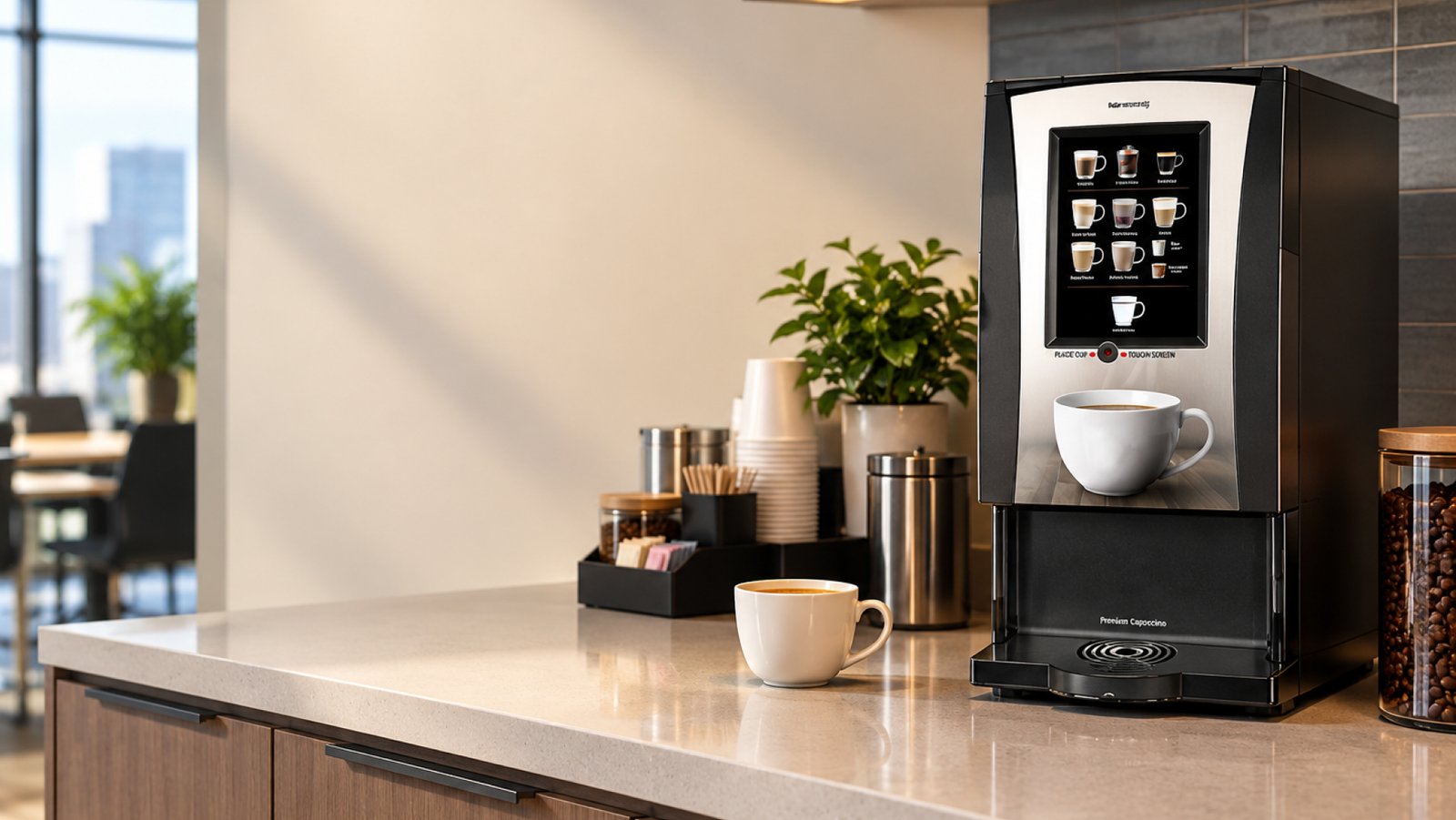
A bean-to-cup coffee machine can be a strong option for a medium-sized workplace. These systems grind whole beans for individual drinks and may offer different strengths, cup sizes, and beverage choices.
Look beyond the menu. Check how quickly the machine prepares consecutive drinks, how often beans and water need refilling, and what daily cleaning the unit requires. If queues regularly form during peak periods, adding a second machine may help more than buying one with additional drink choices.
Placement also affects use. A central break room or shared space usually serves employees better than a machine hidden in a small kitchen at the opposite end of the office.
For practical setup ideas, see these office coffee station ideas for organizing equipment, supplies, and traffic flow.
Best Office Coffee Machines for Large Businesses
Large offices and workplaces with multiple shifts need equipment designed for heavier use.
A commercial coffee machine may provide larger capacities, faster brewing or recovery, durable components, and configurations intended for repeated use throughout the workday.
Traffic patterns should guide the setup. A headquarters with several floors may benefit more from multiple coffee stations than one large machine in a single location. Multiple units reduce lines and give employees another option while one machine is being cleaned or serviced.
Large Memphis workplaces should also confirm how quickly a provider can respond to breakdowns. When hundreds of employees depend on the program, dependable service matters as much as machine capacity.
If the coffee equipment uses a direct water connection, a managed office water system can help coordinate filtration, installation, and ongoing maintenance alongside the coffee program.
Pod vs. Bean-to-Cup vs. Commercial Coffee Machines
Each type solves a different workplace problem.
Pod and single-serve machines prioritize convenience and individual choice. They generally suit smaller teams where demand remains manageable.
Bean-to-cup machines combine individual drinks with freshly ground beans. They can work for medium-sized workplaces that want more capacity and variety without moving to a high-volume brewer.
Commercial machines prioritize output and durability. They are better suited to workplaces where many employees need coffee throughout the day or where demand peaks sharply around shifts and breaks.
Think About the Coffee, Not Just the Machine
Equipment is only one part of an office coffee program. Consider whether employees prefer regular and decaf coffee, lighter or darker roasts, or alternatives such as tea and hot chocolate.
Harvard’s Nutrition Source notes that caffeine content and individual responses can vary. Offering decaf and non-coffee choices gives employees more control over what they drink.
Cups, lids, sweeteners, creamers, stirrers, and filters also need consistent restocking. A machine is not useful if the supplies around it repeatedly run out.
Office Coffee Machine Maintenance and Water Quality
Coffee machines handle electricity, heat, and water, making routine care important. The U.S. Consumer Product Safety Commission provides general appliance safety guidance for electrical products. Offices should follow the manufacturer’s instructions and address damaged cords or other electrical problems promptly.
Cleaning needs depend on the machine. Removable components may require frequent washing, while internal systems can need scheduled cleaning or descaling. Follow the manufacturer’s maintenance schedule rather than applying one interval to every machine.
Water also affects machine performance and coffee taste. Ask whether filtration is recommended for the selected equipment and whether filter replacement is included in the maintenance plan.
Should You Buy, Lease, or Use an Office Coffee Service?
Buying gives the business direct ownership, but it also makes the company responsible for maintenance, repairs, products, and replacement.
Leasing may reduce the initial expense, although contract length, service coverage, and total long-term cost should be compared carefully.
A managed office coffee service can combine equipment, products, restocking, and maintenance. This approach may be practical for workplaces that want reliable coffee without giving facilities staff another program to manage.
Why Choose January Service Company?
January Service Company has served Memphis and the Mid-South since 1982. Its team can recommend a coffee program based on headcount, demand, floor plan, drink preferences, and budget rather than using the same setup for every workplace.
Local service also gives businesses a clear contact for product delivery, equipment maintenance, and changing needs. Programs can be adjusted as teams grow, shifts change, or coffee preferences become clearer.
Choose a Coffee Setup That Fits Your Workplace
Small teams may prioritize a single-serve or pod machine. Medium-sized workplaces may benefit from bean-to-cup equipment, while large businesses often need commercial brewers or several coffee stations.
Start with how many people drink coffee, when demand peaks, which drinks employees want, and who will maintain the equipment. The best setup is one that stays stocked, keeps lines manageable, and does not create another maintenance headache.
Call January Service Company at (901) 373-4433 to discuss an office coffee program for your Memphis workplace.