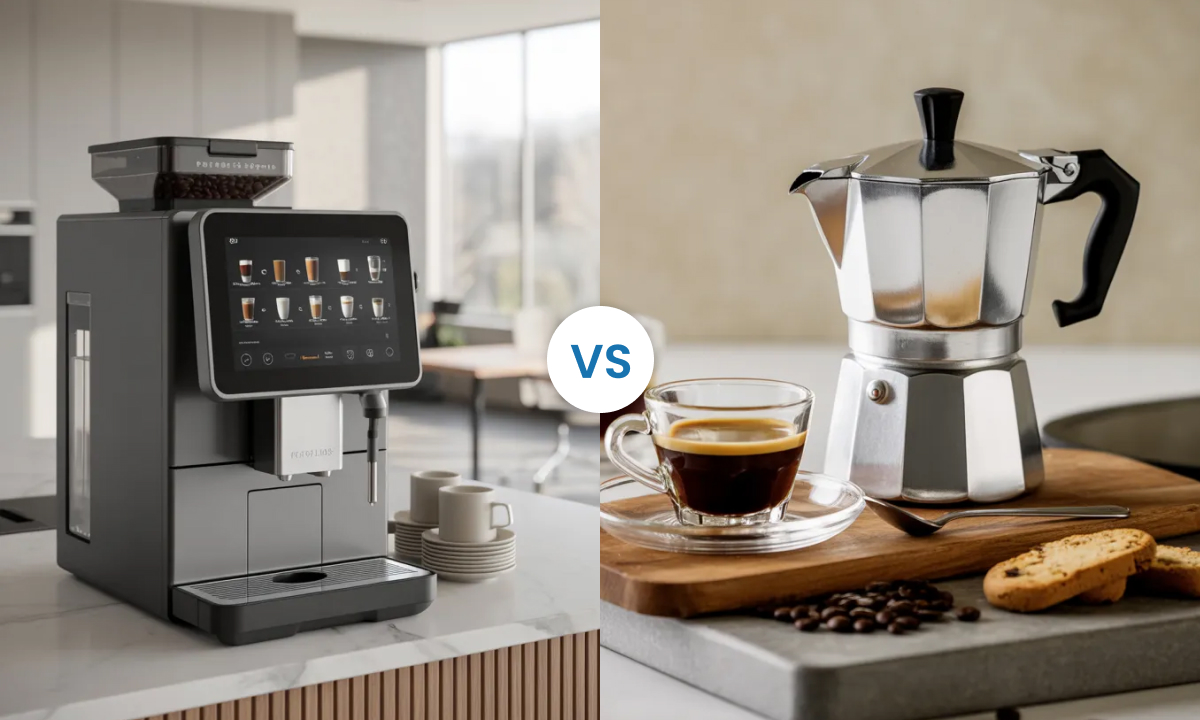
The coffee pot has been a workplace staple for decades. That familiar gurgle of the drip coffee maker signals the start of countless workdays across Memphis offices. But as employee expectations evolve and workplace culture becomes a competitive advantage, many businesses are questioning whether the traditional 12-cup coffee maker still serves their needs.
66% of American adults drink coffee daily, higher than any other beverage except bottled water with workplace consumption representing a significant portion of this usage. The answer increasingly points toward bean-to-cup technology, and understanding the difference between these two approaches can transform your Office Coffee Experience.
The Traditional Office Coffee Pot: The Familiar Standard
Walk into most Memphis offices, and you’ll find a familiar scene: a drip coffee maker sitting on the breakroom counter, a half-empty carafe on the burner, and that distinctive aroma of coffee that’s been warming for who knows how long. The traditional coffee pot has dominated office breakrooms because it’s simple, familiar, and handles batch brewing efficiently.
The advantages are straightforward:
- High-capacity brewing: Perfect for morning rushes when everyone arrives simultaneously
- Low upfront cost: Basic drip coffee makers cost under $100
- Simple operation: Anyone can press the brew button
- Familiar routine: No learning curve for employees
The drawbacks become apparent as the day progresses. Coffee sitting on a burner develops that burnt, bitter taste within 30 minutes. The last cup from the pot never tastes like the first. Employees who arrive late get stale coffee or face brewing an entire pot for one cup, leading to significant waste.
What is Bean-to-Cup Coffee?
Bean-to-cup technology represents a fundamental shift in how offices approach coffee service. These automated machines combine multiple steps into one seamless process, delivering cafe-quality beverages at the touch of a button. Research on Coffee Oxidation & Flavor Loss demonstrates that aromatic compounds in coffee begin to oxidize immediately after grinding, with significant flavor degradation occurring within minutes of exposure to air. The technology eliminates the time gap between grinding and brewing, preserving the aromatic oils that give coffee its rich flavor.
The bean-to-cup process includes:
- Whole beans stored in an integrated hopper
- Built-in grinder produces fresh grounds per cup
- Automated brewing extracts optimal flavor
- One-touch operation delivers consistent results
- Many models include milk frothers for specialty drinks
Available varieties expand beyond basic coffee:
- Espresso, cappuccino, and latte options
- Customizable strength and temperature settings
- Multiple drink sizes from single shot to large cup
- Some models offer 20+ beverage combinations
Head-to-Head: Bean-to-Cup vs. Traditional Pot
Coffee Quality and Freshness
The taste difference between bean-to-cup and traditional pot coffee is immediately noticeable. Pre-ground coffee used in traditional pots begins losing flavor within minutes of grinding due to oxidation. Scientific studies from Science Direct have shown that ground coffee loses volatile compounds rapidly during storage, with oxidation processes leading to rancid odors and massive flavor losses. The aromatic compounds that create coffee’s complex flavor profile dissipate quickly once the bean’s protective structure is broken.
Bean-to-cup machines grind beans seconds before brewing, capturing the full spectrum of flavors. The result is richer, more aromatic coffee with a fuller body and better crema on espresso drinks. Memphis employees accustomed to stopping at local coffee shops before work find bean-to-cup office coffee comparable to their favorite cafe.
Convenience and Speed
Traditional pots require someone to measure grounds, fill the reservoir, and wait for the full brew cycle. If the pot is empty, you’re looking at 5-10 minutes before coffee is ready. Bean-to-cup machines deliver individual servings in 30-60 seconds with zero preparation time. The self-service nature eliminates the awkward “who made the last cup” dynamic and ensures everyone gets exactly what they want without waiting.
Variety and Customization
Traditional pots offer limited options:
- Regular or decaf
- Maybe a flavored blend
- One strength setting
- Black or add your own cream and sugar
Bean-to-cup machines provide personalization:
- Multiple roast options
- Adjustable strength from mild to bold
- Temperature preferences
- Automatic milk frothing for specialty drinks
This variety matters in modern Memphis offices where employee preferences range from simple black coffee to elaborate lattes. Organizations exploring comprehensive Technology Solutions find that bean-to-cup machines integrate seamlessly with other modern amenities.
Cost Comparison
The cost analysis surprises most office managers. Traditional pots have minimal upfront costs but higher per-cup expenses due to pre-ground coffee pricing and significant waste. A 12-cup pot that sits for hours wastes 40-60% of its contents on average.
Bean-to-cup economics include higher initial equipment cost (often offset through service agreements), lower per-cup cost using whole beans (typically 30-40% less expensive than pre-ground), zero waste since each cup is brewed individually, and reduced coffee shop runs where employees save $4-6 per purchased beverage. Memphis businesses typically see ROI within 12-18 months when factoring reduced waste and eliminated coffee shop purchases. Research indicates that coffee breaks can enhance workplace productivity by 23%, making quality office coffee a strategic investment rather than merely an operational expense.
Waste and Sustainability
Traditional pots generate substantial waste through discarded coffee, paper filters, and the energy required to keep warmers running all day. Bean-to-cup machines brew only what’s consumed, and spent grounds are easily composted. The environmental impact difference becomes significant across hundreds of cups monthly.
Which is Right for Your Memphis Office?
For Small Offices (10-25 Employees)
Small teams benefit most from bean-to-cup technology. The low volume doesn’t justify constant pot brewing, and individual preferences vary widely. A compact bean-to-cup machine eliminates waste while providing variety that keeps everyone satisfied.
For Mid-Size Offices (25-75 Employees)
Mid-size operations often benefit from a hybrid approach during transition periods, but most Memphis businesses this size find that a commercial-grade bean-to-cup machine handles demand efficiently. Peak morning hours move quickly when employees can brew individual cups in under a minute.
For Large Offices (75+ Employees)
Large operations require multiple coffee stations regardless of technology choice. Bean-to-cup machines positioned strategically throughout the facility reduce crowding and ensure nobody waits more than a few steps for quality coffee. Businesses exploring complete Micro-Markets Breakroom Solutions often integrate bean-to-cup machines as part of comprehensive workplace amenity upgrades.
The Memphis Advantage: Local Coffee Service Matters
Choosing equipment is only part of the equation. Memphis businesses need reliable local support to keep coffee service running smoothly. January Service Company brings 40+ years of family-owned expertise to office coffee solutions across the Mid-South.
Our Memphis-specific advantages include:
- 3-hour service guarantee for equipment issues
- Local technicians who understand Memphis business needs
- Regular maintenance included in service agreements
- Premium bean selection from quality roasters
- Custom solutions for businesses from 10 to 500+ employees
We manage the entire coffee experience, from equipment installation and employee training to ongoing bean delivery and maintenance. No long-term contracts required because we’re confident our service speaks for itself.
Making the Upgrade Decision
The shift from traditional pot to bean-to-cup represents more than an equipment change. It signals investment in employee experience and workplace culture. Studies show that 43% of Workers Worldwide see coffee as the top drink for enhancing work performance, and skipping coffee breaks leads to a 94% drop in office enjoyment and 77% decrease in productivity. Memphis businesses competing for talent recognize that small perks like quality coffee contribute to overall job satisfaction and retention.
If your current coffee situation involves complaints about taste, frequent runs to local coffee shops, or the 3 p.m. slump when the last pot tastes burnt, bean-to-cup technology solves these problems while potentially reducing overall costs.
Contact January Service Company for a free taste test and equipment demonstration. Call our Memphis team today or request a quote for your office coffee service needs.