
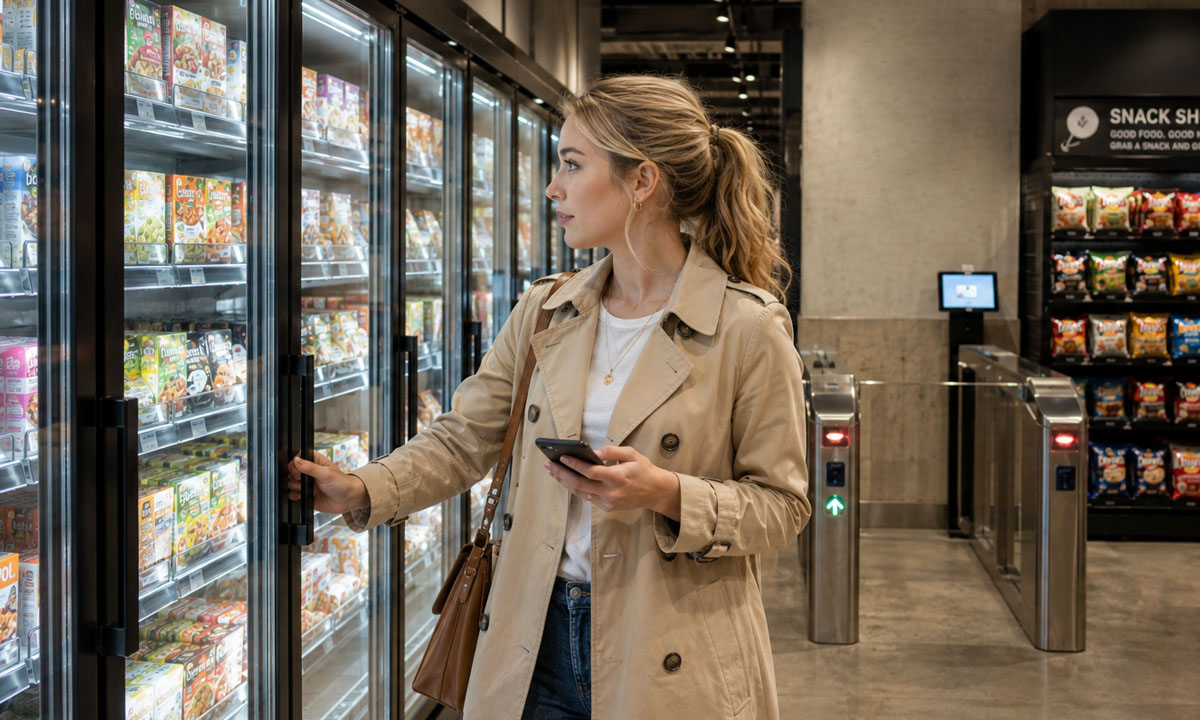
Retail is changing faster than ever, and one of the biggest drivers of this transformation is artificial intelligence. Traditional stock counting and manual inventory audits are being replaced by intelligent systems that track products in real time. At the center of this shift is the ai inventory management system, which is helping smart stores operate with higher accuracy, lower waste, and improved efficiency.
In modern smart retail environments, every product movement can be tracked automatically. From shelf to checkout, AI ensures that inventory data is always updated, reducing human error and improving decision-making. This is where ai-powered inventory management becomes a critical advantage for businesses that want to scale efficiently.
How AI Inventory Management System Is Transforming Smart Stores
An ai inventory management system uses advanced algorithms, sensors, and visual recognition technologies to monitor stock levels and product movement in real time. Instead of relying on manual scanning or periodic stock checks, these systems continuously update inventory data.
The integration of automated tracking ensures that businesses always know what is available, what is running low, and what needs replenishment. This reduces stockouts and prevents overstocking, which are two of the biggest challenges in retail operations.
Modern systems are also connected with automated inventory tracking systems, allowing seamless synchronization between physical stores and digital dashboards.
Key capabilities of AI inventory systems include:
- Real-time stock monitoring across multiple store locations
- Automated alerts for low or excess inventory levels
- Predictive demand forecasting based on customer behavior
- Integration with POS and smart retail systems
- Reduced dependency on manual inventory audits
- Faster decision-making through data-driven insights
These capabilities are reshaping how businesses approach ai in retail inventory management, making operations more intelligent and responsive.
The Role of AI in Modern Inventory Intelligence
Artificial intelligence is not just about automation. It is about understanding patterns, predicting outcomes, and improving efficiency across the entire supply chain. In retail, AI is now a core part of inventory decision-making systems.
According to insights from PwC on AI transformation, businesses that adopt artificial intelligence in operations are seeing major improvements in productivity, cost reduction, and forecasting accuracy.
AI helps inventory systems by:
- Analyzing customer purchasing behavior
- Predicting demand fluctuations
- Optimizing stock levels in real time
- Reducing waste through smarter replenishment cycles
- Improving supply chain coordination
These advancements are especially important in smart stores, where fast-moving inventory requires constant monitoring and adjustment.
Computer Vision and Automated Inventory Tracking
One of the most powerful technologies behind modern ai inventory management systems is computer vision. This technology allows machines to interpret and understand visual data from cameras, enabling real-time tracking of products inside stores.
In retail environments, computer vision plays a major role in identifying products, monitoring shelf activity, and detecting anomalies. You can explore more about this foundational technology through Wikipedia’s explanation of computer vision.
Benefits of computer vision in inventory tracking:
- Detects product movement without manual scanning
- Identifies empty shelves instantly
- Tracks customer interaction with products
- Reduces shrinkage and improves accuracy
- Supports real-time automated reporting
When combined with AI, computer vision creates a powerful automated inventory tracking system that minimizes human involvement while maximizing precision.
AI in Inventory Management Software and Smart Stores
Modern ai in inventory management software is designed to integrate seamlessly with smart store ecosystems. These systems combine analytics, automation, and machine learning to provide a complete view of inventory performance.
Smart stores rely heavily on these systems because they operate with minimal human supervision. Every transaction, product movement, and stock update is recorded and analyzed automatically.
For example, businesses can integrate these systems with smart store solutions to create fully connected retail environments.
Key Features of AI-Powered Inventory Management
- Continuous real-time inventory updates
- Smart restocking recommendations based on demand
- Integration with cloud-based dashboards
- Automated alerts for stock shortages or overstocking
- AI-driven insights for purchasing decisions
- Reduced operational errors and manual labor
These features make ai-powered inventory management essential for businesses aiming to scale efficiently in competitive retail environments.
Why Automated Tracking Is Replacing Manual Systems
Traditional inventory systems depend heavily on human input, which increases the risk of errors. Manual counting, delayed updates, and inaccurate records can lead to poor decision-making and financial losses.
In contrast, automated tracking eliminates these issues by providing real-time accuracy and consistency.
Advantages of automated tracking systems:
- Eliminates human error in inventory recording
- Provides instant updates on stock movement
- Improves supply chain visibility
- Reduces time spent on manual audits
- Enhances operational efficiency
Businesses are increasingly adopting automated inventory tracking systems to improve reliability and reduce operational costs.
AI and Smart Store Integration
Smart stores represent the future of retail, where physical and digital systems work together seamlessly. AI plays a central role in managing inventory, tracking customer behavior, and optimizing store performance.
These systems are often supported by backend technologies that connect inventory tracking with automation platforms. Businesses can further enhance efficiency by integrating solutions like advanced retail technology systems.
The Future of AI in Inventory Management
The future of ai inventory management system technology is driven by continuous innovation in machine learning, automation, and predictive analytics. Retail systems will become more intelligent, self-regulating, and efficient over time.
Future trends include:
- Fully autonomous inventory systems with zero manual input
- Advanced predictive analytics for demand forecasting
- AI-driven personalization of product availability
- Integration with robotics for warehouse automation
- Real-time global inventory synchronization
According to Britannica’s overview of artificial intelligence, AI continues to evolve as a foundational technology shaping industries like retail, logistics, and supply chain management.
Challenges and Considerations in AI Inventory Systems
While AI offers significant benefits, businesses must also consider implementation challenges. These include data integration complexity, initial setup costs, and system training requirements.
However, the long-term benefits far outweigh these challenges, especially when it comes to efficiency, accuracy, and scalability.
Additionally, automated alerts ensure that inventory levels are always maintained properly. Learn more about this through automated inventory alert systems, which help prevent stock issues before they occur.
Conclusion
The rise of AI inventory management systems is transforming how smart stores operate. With the help of ai-powered inventory management, businesses can achieve higher accuracy, better forecasting, and fully automated inventory tracking systems that eliminate manual inefficiencies.
From computer vision to predictive analytics, AI is reshaping retail inventory into a fully intelligent ecosystem. As smart stores continue to evolve, adopting these technologies will no longer be optional, it will be essential for staying competitive.
Businesses that embrace ai in retail inventory management today are building the foundation for a more efficient, automated, and data-driven future.