
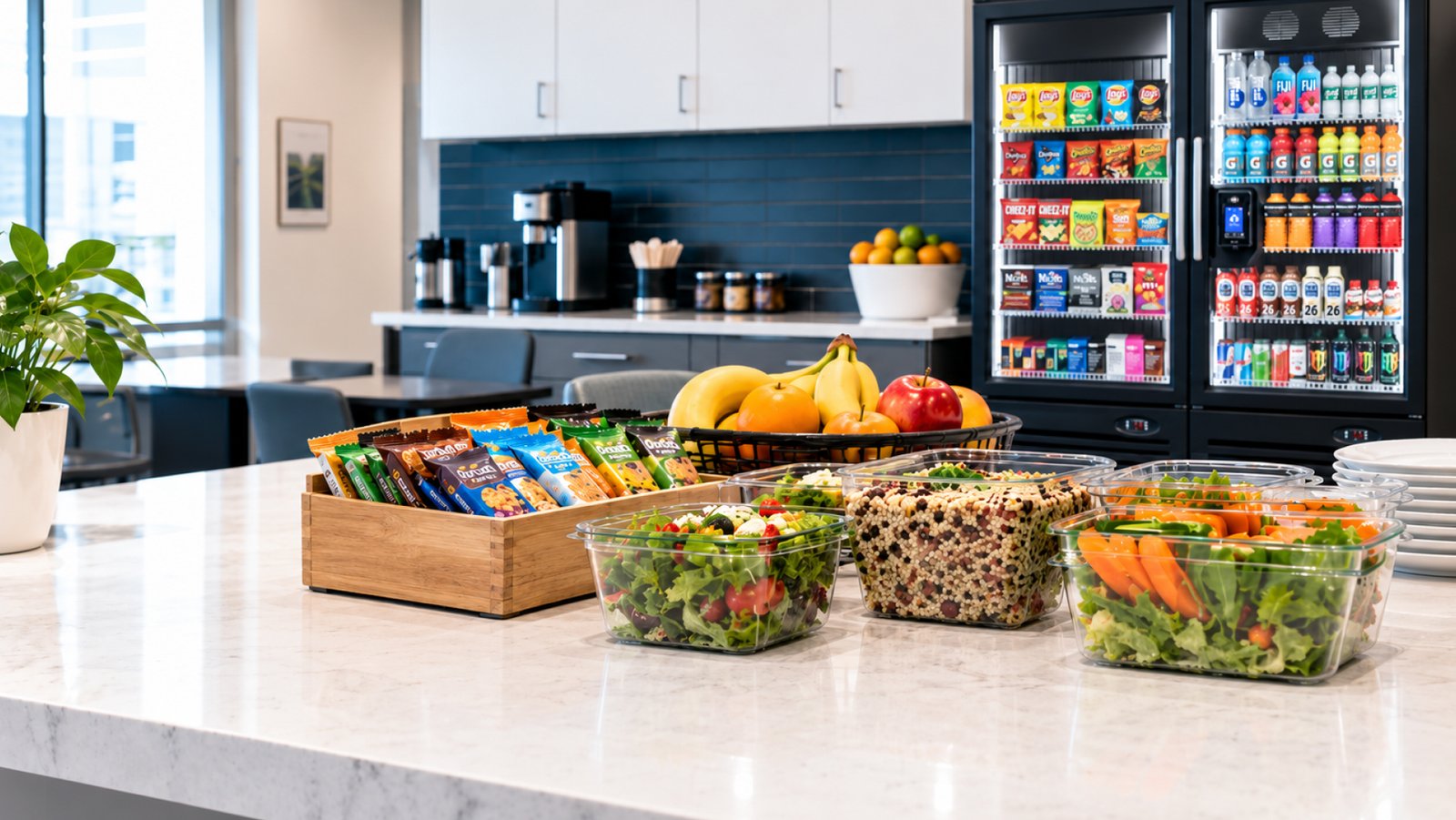
An office breakroom should be a comfortable place where employees can take a break, enjoy a snack, and prepare meals. However, accommodating different dietary needs can be challenging when employees have food allergies, intolerances, medical restrictions, or religious and cultural food preferences.
Creating an inclusive breakroom involves more than stocking popular snacks. It requires thoughtful product selection, clear food labeling, safe storage, and consideration for employees who need specific accommodations. A well-organized space can make refreshments more accessible while helping employees feel respected.
Understand Different Dietary Needs in the Workplace
Employees do not all have the same dietary requirements. Some avoid ingredients because of food allergies, while others follow diets for medical, religious, cultural, or personal reasons. Understanding these differences helps create a breakroom that works for everyone.
Food allergies can cause reactions ranging from mild symptoms to serious, potentially life-threatening emergencies. Major food allergens include milk, eggs, peanuts, tree nuts, fish, shellfish, wheat, soy, and sesame. Even small amounts may create a risk for someone with a severe allergy.
Food intolerances and dietary preferences also deserve consideration. Employees may avoid lactose, gluten, certain ingredients, or animal products. Although these needs differ from food allergies, suitable alternatives make shared facilities more welcoming.
Employers do not need to offer every possible food option. Instead, understand workforce needs, communicate with employees, and provide a variety of clearly identified choices where practical.
Choose Office Breakroom Supplies with Clear Allergen Labels
Product selection is an important part of allergen awareness. When purchasing office breakroom supplies, prioritize packaged foods with readable ingredient lists and clear allergen information.
The U.S. Food and Drug Administration explains that avoiding foods responsible for an allergic reaction is an important prevention measure. Its labeling requirements help consumers identify major food allergens in packaged products.
Businesses can consult the FDA’s Food Allergies guidance when selecting pantry products. The guidance explains how major allergens must be identified on packaged food labels.
Check ingredient lists rather than relying only on product names or packaging colors. A product that appears suitable may contain an unexpected ingredient in a flavoring, coating, or other component. Keep packaging available so employees can review ingredient information themselves. If details are unclear, do not present a product as safe for someone with an allergy.
Businesses looking to provide a wider selection of snacks and beverages can explore January Service Company’s office pantry service, which offers customizable product selections based on workplace preferences and budgets.
Prevent Cross-Contact in Shared Breakroom Spaces
Even when products have clear labels, shared kitchens can create additional risks. Cross-contact occurs when an allergen is unintentionally transferred from one food, surface, or utensil to another. For employees with serious allergies, this can make otherwise suitable food unsafe.
Keep shared counters clean, wash utensils after use, and avoid using the same serving equipment for different foods without proper cleaning. Encourage employees to close food containers and clean up crumbs, spills, and food residue after preparing meals.
Where possible, provide separate storage areas or clearly designated containers. Label shared shelves and explain how to clean refrigerators, microwaves, and other equipment.
Food Allergy Research & Education (FARE) provides practical advice through its Creating Food Allergy-Aware Workplaces resource. Its guidance addresses shared office kitchens, workplace events, and ways to reduce cross-contact when employees share food and facilities.
Display reminders near sinks and preparation counters about cleaning surfaces, washing hands, and covering food.
Businesses can also learn more about planning workplace refreshments in this guide to what an office pantry service includes.
Consider Religious and Cultural Dietary Requirements
Dietary accommodations may also be connected to religious or cultural practices. Some employees may avoid particular meats, require halal or kosher food options, observe fasting periods, or follow other dietary rules associated with their beliefs.
Consider these needs when planning shared refreshments, workplace lunches, celebrations, and catered events. Suitable alternatives help employees participate without repeatedly explaining their choices.
For example, a workplace event could include vegetarian options alongside other meals, while packaged refreshments could be selected with relevant dietary requirements in mind. When ordering food, ask catering providers about ingredients and preparation methods rather than assuming a dish meets a particular requirement based on its name.
Religious dietary practices can also be relevant to workplace accommodation responsibilities. The EEOC’s Religious Discrimination guidance explains that Title VII protects employees’ sincerely held religious beliefs and practices and requires reasonable accommodation unless doing so would cause a substantial burden in the overall context of the employer’s business.
Listen respectfully when employees communicate their needs. Open communication can prevent misunderstandings and support inclusive food arrangements.
Maintain Safe Food Storage and Breakroom Organization
Safe food storage is essential to an inclusive breakroom. Incorrect storage can cause food spoilage, while poor organization can make it difficult for employees to identify products or keep different foods separate.
Keep refrigerated items at appropriate temperatures and avoid leaving perishable food at room temperature for extended periods. Encourage employees to label personal food containers with their names and storage dates. Check shared refrigerators regularly and remove expired or spoiled items.
Store packaged snacks in clean, dry areas according to product instructions. Keep food away from cleaning chemicals and other non-food supplies. Use sealed containers where possible to protect products from contamination and prevent accidental mixing.
A consistent cleaning schedule also helps. Assign responsibility for checking refrigerators, wiping counters, cleaning appliances, and disposing of waste. Clear procedures help maintain a hygienic shared environment.
Make Dietary Accommodations Part of Your Breakroom Planning
Dietary needs should be considered when establishing or updating a breakroom program, rather than treated as occasional requests. Ask employees about general preferences and the refreshments they would like to see. Keep the process voluntary and avoid asking employees to disclose unnecessary personal or medical information.
Review the product selection regularly. If certain snacks are consistently unused while alternatives are frequently requested, adjust future orders. A mix of familiar products and labeled alternatives gives employees flexibility.
For larger workplaces, organize products into clearly marked categories. Separate allergen-conscious options where practical, identify vegetarian products, and keep ingredient information accessible. Avoid guaranteeing that a product is allergy-safe unless its ingredients and preparation conditions have been verified.
For workplaces that need more variety and space for different food options, January Service Company’s micro market solutions provide open shelving, refrigerated displays, and a wider selection of workplace refreshments.
Create a More Inclusive Office Breakroom with Better Planning
Accommodating dietary restrictions and allergies does not have to make breakroom management complicated. Clear labels, thoughtful product selection, safe storage, and consistent cleaning practices can make shared food spaces more comfortable for employees with different needs.
By treating dietary accommodations as part of everyday workplace planning, businesses can create a more welcoming environment and reduce confusion around shared refreshments. A well-managed office breakroom should give employees convenient choices while encouraging everyone to respect the needs of their colleagues.