In a busy Memphis workplace, employees rarely think about the water cooler until something goes wrong. A dispenser that stops working, a leak, or a filter that needs replacing can interrupt access to drinking water and create another task for the facilities team. When nobody notices the issue straight away, a small equipment problem can become a service request and an avoidable disruption.
A pure water technology dispenser can make workplace hydration more convenient. Depending on the model, connected monitoring may also help identify performance issues or notify a service team when selected readings need attention.
Understanding these options can help Memphis businesses compare water cooler services and choose equipment that suits their daily needs.
Why Traditional Water Coolers Can Cause Service Delays
Traditional water coolers often rely on employees or facility managers to notice problems and report them. Someone might discover that water flow has slowed, notice an unusual taste, or find that the dispenser is no longer cooling properly. The issue then needs to be reported, assessed, and assigned to a technician.
Several factors can make this process slower:
- Unreported faults: Minor changes in flow or temperature may go unnoticed until the dispenser becomes difficult to use.
- Fixed maintenance schedules: Replacing filters at set intervals may not account for differences in water consumption between locations.
- Limited equipment visibility: Facility managers may have to inspect individual units or wait for employee complaints to identify problems.
- Unprepared service visits: Without a clear description of the fault, a technician may need extra time or another visit to diagnose it.
A documented maintenance plan and clear provider communication can help address these problems. Employees should also know who to contact when they notice a leak, unusual taste, or change in dispensing performance. A simple reporting process can help facilities teams respond before a minor issue affects the whole workplace.
What Makes a Smart Water Cooler Different?
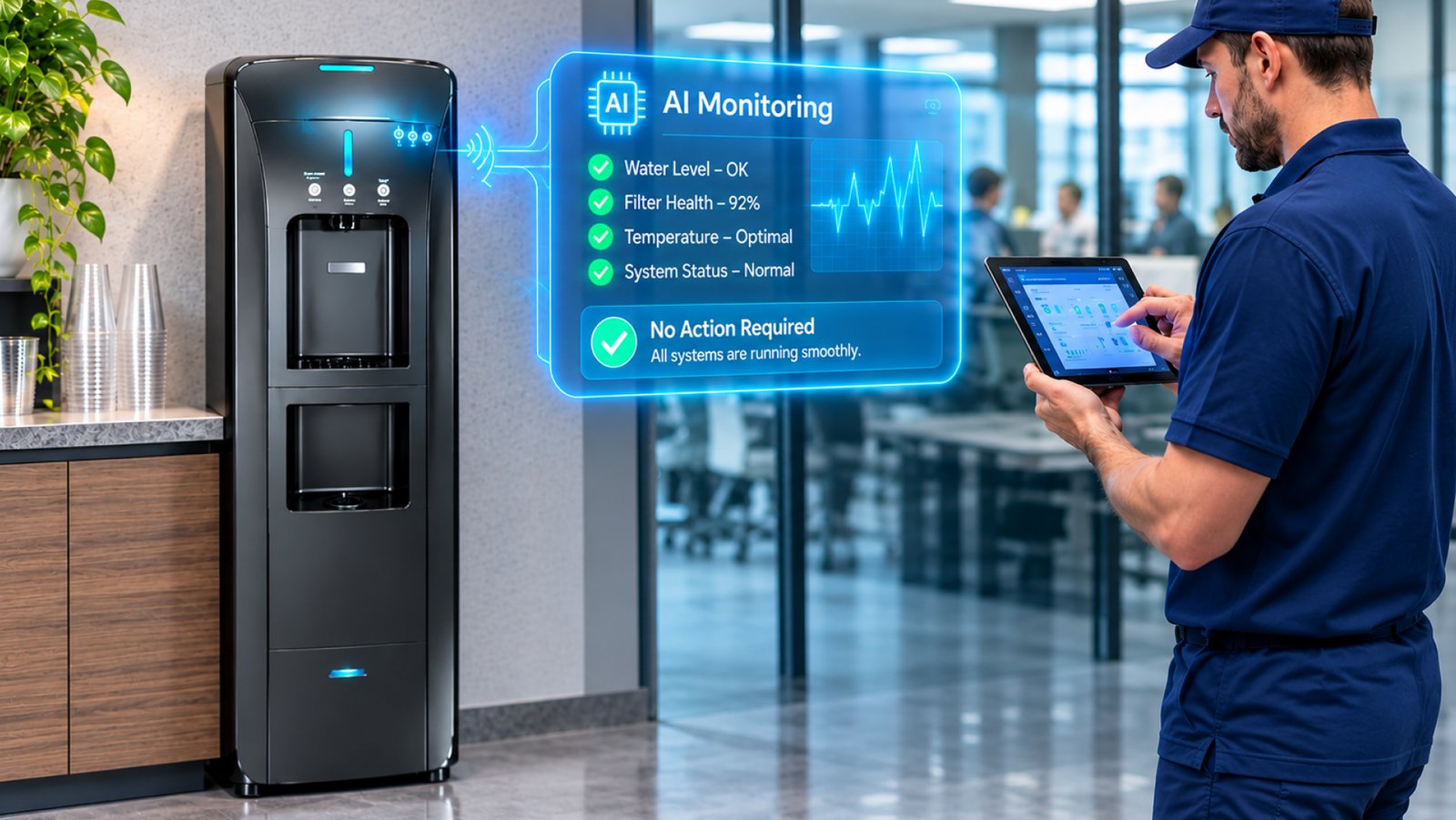
Some smart water coolers use sensors and connect software to report equipment performance. Depending on the model, monitoring may cover usage, water flow, cooling performance, or filter indicators.
This information can help a provider assess equipment condition. A connected unit may record an unusual reading or display a filter warning, allowing someone to investigate before a complete outage.
An IoT overview of beverage cooler monitoring explains how connected equipment supports asset visibility and maintenance planning. It is a general context, not proof that every water cooler has AI features.
How AI Monitoring Can Help Prevent Downtime
With suitable sensors and connected software, a dispenser may help service teams identify issues earlier.
Earlier alerts: Changes in monitored conditions may signal that a component needs attention. Alerts can help a provider investigate before the dispenser stops working.
More informed maintenance planning: Usage information can help providers distinguish the needs of a high-traffic workplace from those of a small office. Where available, consumption data can inform service planning alongside manufacturer recommendations.
Better-prepared technician visits: Diagnostic information may help a technician identify what to inspect and prepare relevant tools or parts before arriving.
Improved equipment visibility: For businesses with several dispensers, monitoring can help facility teams identify units needing attention without relying only on employee reports.
January Service Company’s technology and equipment-monitoring approach describes smart sensors and proactive monitoring for vending machines and micro-markets. Businesses should confirm separately whether the same features are available for a particular water dispenser.
Better Water Quality Through Smarter Filtration
Reliable hydration also depends on water quality, taste, and timely filter replacement.
A water filtration service can help businesses follow manufacturer recommendations. Some systems include filter indicators; others rely on scheduled servicing and the filter maker’s guidance.
Businesses should check what a filter is certified to reduce rather than assuming every filter removes every possible contaminant. The NSF guide to water treatment standards explains how different standards relate to specific filtration claims. Checking the certification and stated contaminant-reduction performance can help businesses evaluate whether a system meets their needs.
For example, a filter certified for chlorine reduction should not automatically be assumed to address other contaminants. Businesses should match the filter’s documented capabilities to their water quality requirements and the specifications of the dispenser.
Water Cooler Maintenance That Happens Before Problems Do
Monitoring does not replace cleaning, sanitizing, inspections, or filter changes.
A dependable water cooler maintenance plan should follow the equipment manufacturer’s instructions and account for workplace usage. Common maintenance activities include:
- Cleaning and sanitizing the dispenser and its water-contact components.
- Replacing filters according to manufacturer guidance and applicable system indicators.
- Inspecting fittings, connections, seals, and drip trays for leaks or wear.
- Checking dispensing and cooling functions.
- Keeping records of service visits, replacements, and reported issues.
The U.S. Environmental Protection Agency offers general operation and maintenance resources for drinking-water systems, including schedules, checklists, and service logs. They are not office-cooler instructions but show the value of documented maintenance.
For a workplace, the practical goal is to address maintenance consistently instead of waiting until an equipment problem interrupts the day. Keeping a record of filter replacements and service visits also helps facility managers identify recurring issues and plan future maintenance.
What Memphis Businesses Should Ask Their Provider
Providers differ in equipment, monitoring, and service. Businesses should clarify what is included before choosing a system.
Useful questions include:
- Does the dispenser include connected monitoring, and what conditions can it track?
- Who receives equipment alerts, and how are potential problems investigated?
- Are filter replacements based on manufacturer recommendations, usage information, or a fixed schedule?
- What does routine water cooler maintenance include?
- How quickly can a local technician respond when a dispenser needs attention?
- Are service visits and filter replacements documented?
- Can the provider support additional dispensers if the workplace grows?
Local service matters when employees rely on a dispenser throughout the day. Businesses can also review how office water filtration systems work to understand filtration options before discussing equipment with a provider.
For example, a facility manager overseeing several floors may want a provider to set out which tasks are handled during routine visits and which issues require a separate call. Clear expectations around response times, replacement filters, and service records make it easier to plan around busy periods. They also help businesses compare proposals on more than the equipment’s advertised features.
The Business Case for Reliable Workplace Hydration
A dependable water system makes the breakroom more convenient and helps facility managers coordinate installation, maintenance, and service.
For workplaces considering bottleless systems, January Service Company offers office water filtration and delivery solutions. Its water service includes bottleless equipment, installation, and ongoing maintenance, supported by a Memphis-based team.
A pure water technology dispenser with appropriate monitoring capabilities may offer additional visibility into equipment performance. However, the right solution depends on the workplace’s water requirements, equipment specifications, and the provider’s actual service commitments.
Businesses should consider more than the initial equipment cost. Ask about installation, filter replacements, routine maintenance, service response arrangements, and any additional charges. Understanding these details makes it easier to compare providers and estimate the ongoing effort involved in keeping the system operational.
Keeping Workplace Hydration Reliable
AI-monitored water coolers can support proactive equipment management when suitable sensors, connected software, and responsive service are in place. Alerts may reduce avoidable interruptions, but routine maintenance remains essential.
Memphis businesses reviewing their workplace hydration setup can contact January Service Company to discuss bottleless water systems, installation options, and ongoing maintenance services.