
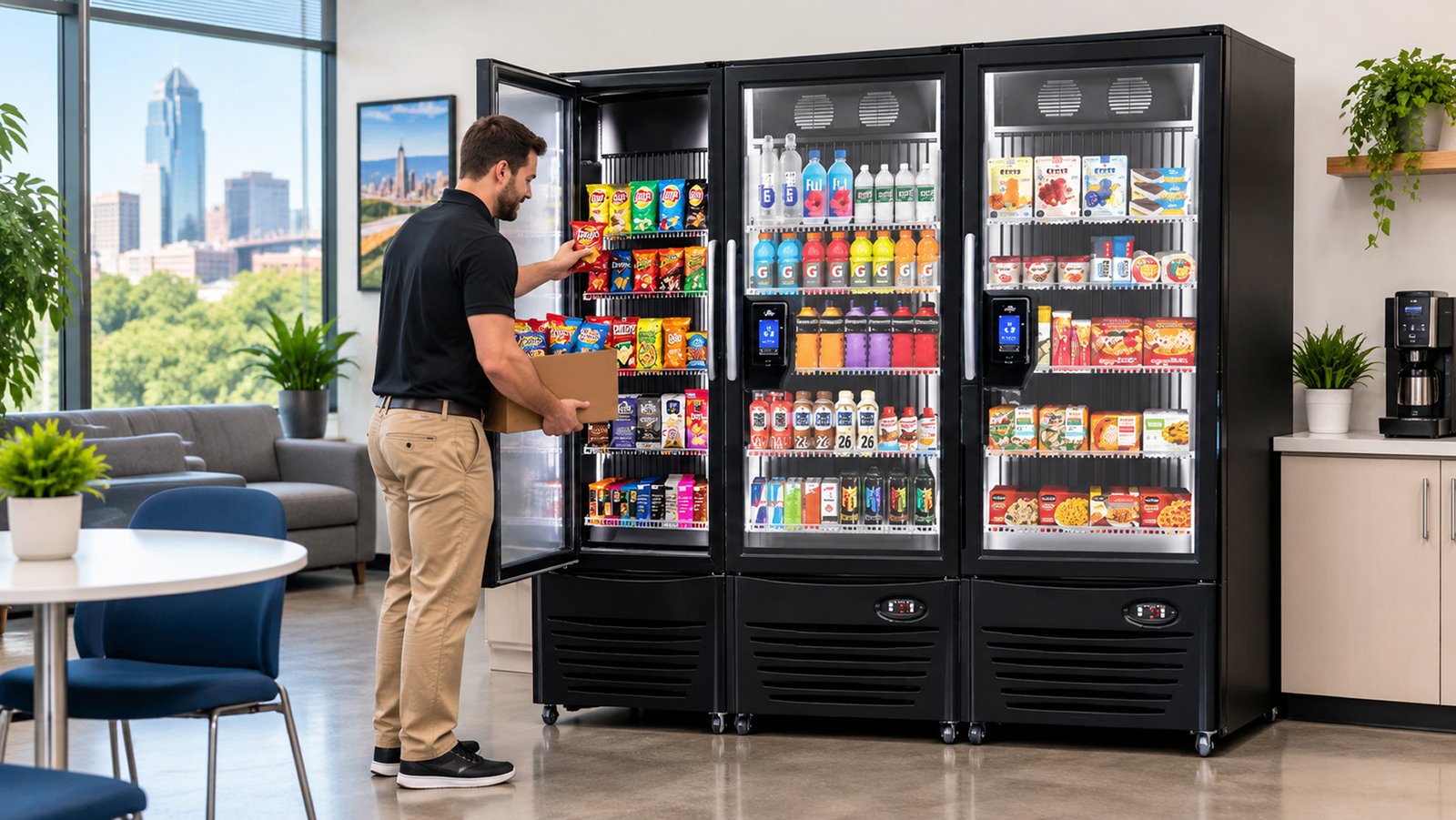
You signed the agreement. Now you wait for the machines to arrive. What happens next? Many Memphis businesses feel unsure at this stage. A clear roadmap removes the guesswork. A good vending machine provider guides you through installation, payments, restocking, and support. This guide explains what to expect during your first 90 days and what to ask along the way.
Key Takeaways
- Prepare your space and employees before installation.
- Test equipment and payment options during the first month.
- Review pricing, billing, and restocking during days 31–60.
- Use sales reports and employee feedback to improve product selection.
- Discuss maintenance and service expectations before your 90-day review.
Why the First 90 Days Matter
The first three months set the tone for your service relationship. Employees learn to use the machines, while your provider becomes familiar with your workplace. Small issues may arise; what matters is how quickly the provider responds. Ask for a timeline covering installation, restocking, maintenance, support contacts, and expected response times.
This period also helps you determine whether the service arrangement meets your original expectations. A machine may be installed correctly but still need adjustments to its product selection, location, or restocking schedule. Regular communication gives both sides an opportunity to address these details before they become ongoing problems.
Still comparing providers? Read our guide on what to ask before signing a vending service agreement before making your decision.
Before Day 1: Prepare Your Space and Your Team
Choose one point of contact at your business to coordinate access and decisions. Confirm delivery details, clear the route from the loading area, and check door widths, elevator access, power outlets, and building rules. Ask your building manager about approved delivery hours.
Tell employees when the machines should be ready and invite product suggestions. Their feedback can shape the first stock order. You should also decide where employees can find instructions or report problems once the machines are operating. Preparing these details beforehand makes the transition easier for everyone.
Days 1–30: Installation, Setup, and Payments
Installation involves more than getting machines through the door. Confirm each location has enough room, power access, and space for employees to use the equipment comfortably. Consider whether the machines are easy to reach during busy breaks and whether their placement interferes with normal workplace traffic.
Your provider should coordinate:
- Measuring the location and checking power access.
- Delivering, positioning, and leveling each machine.
- Testing machine functions and payment readers.
- Stocking the initial product selection.
Accessibility matters. The U.S. Access Board explains general reach ranges for operable parts, typically 15 to 48 inches depending on conditions. Check lighting, signage, and walking space as well.
Payment options should work from day one. Federal Reserve Financial Services reported that cash accounted for about 14% of consumer payments in 2024, compared with 35% for credit cards and 30% for debit cards. Ask whether machines accept cards and mobile payments, then test each option.
Also, ask how refunds work if a machine accepts payment but does not dispense a product. Find out whether employees contact your business or the provider directly. Make support instructions easy to find so payment problems can be reported and resolved without confusion.
Days 31–60: Pricing, Billing, and Restocking
By the second month, focus on costs, inventory, and service consistency. Ask how product prices are set, whether they can change, and when invoices arrive. Request a breakdown of equipment, supplies, and service charges so you can identify unexpected costs.
The Tennessee Department of Revenue provides guidance on merchandise sales through vending machines. Ask your provider how applicable sales taxes appear on invoices and confirm relevant responsibilities with the Department.
Restocking should follow an agreed schedule. A dependable vending machine restocking service adjusts visits to demand and keeps products fresh. Check whether:
- Popular products are usually available.
- Expired or damaged items are removed.
- Visits follow the agreed schedule.
- Your provider welcomes product requests.
Modern vending technology can help monitor stock and identify products needing attention. Request sales reports and compare them with employee feedback. Slow sales may reflect an unpopular product, its price, or poor visibility; understand the reason before replacing it.
Also, pay attention to how quickly the provider responds when products run out between scheduled visits. If certain items regularly sell out before the next restocking day, discuss whether the schedule or order quantities need adjusting. These small improvements can make the service more reliable.
Days 61–90: Fine-Tune Products and Plan Maintenance
By the third month, review sales reports and ask employees which products they enjoy. Replace slow sellers with better alternatives and consider new categories based on requests. Make changes gradually so you can see what works. Avoid changing too many products at once, as this makes it harder to identify which adjustments improved sales.
Discuss preventive maintenance, too. Ask how often technicians inspect and clean machines, what routine maintenance includes, who handles emergency repairs, and how quickly technicians respond. Show employees how to report payment failures or other issues, and keep support details visible.
You should also clarify what happens if a machine becomes unavailable. Ask whether temporary arrangements are possible and how your provider communicates repair updates. Knowing the process beforehand helps your business manage disruptions and keeps employees informed.
Hold a Simple 90-Day Review
At the end of the first three months, meet with your provider. Bring sales reports, employee feedback, and notes about service issues. Discuss product performance, installation, restocking frequency, response times, and changes needed for the next 90 days.
Record agreed actions, assign responsibility, and set a review date. This gives both sides a clear reference point and prevents important requests from being forgotten after the meeting.
Red Flags to Watch For
Watch for warning signs:
- Machines arrive late without explanation.
- Popular products remain out of stock.
- Payment readers fail repeatedly.
- Support requests go unanswered.
- Billing answers are unclear.
- Restocking visits are missed.
Raise concerns early and keep written records. A professional vending machine provider should welcome feedback and explain how issues will be addressed. If the same problem keeps happening, ask for a specific resolution plan and a realistic timeline rather than accepting repeated promises.
Why Choose January Service Company?
January Service Company has served Memphis-area workplaces since 1982. Its local team supports businesses from installation to ongoing service. The company provides vending services and technology options, helps stock machines, maintains equipment, and responds when assistance is needed.
Explore January Service Company’s vending services to learn how it supports Memphis businesses with workplace vending solutions.
Make the First 90 Days Count
The first 90 days shape your long-term vending experience. A successful start requires more than delivery: it depends on clear communication, reliable restocking, working payment options, and a provider who understands your workplace.
Prepare your space, test the equipment, and show employees how to get help. Then review billing, monitor product availability, and use sales reports to improve the selection. Address concerns early and treat the first three months as an opportunity to build a service relationship that works for everyone. Regular check-ins and a practical maintenance plan can make vending a convenient workplace benefit employees can depend on.