
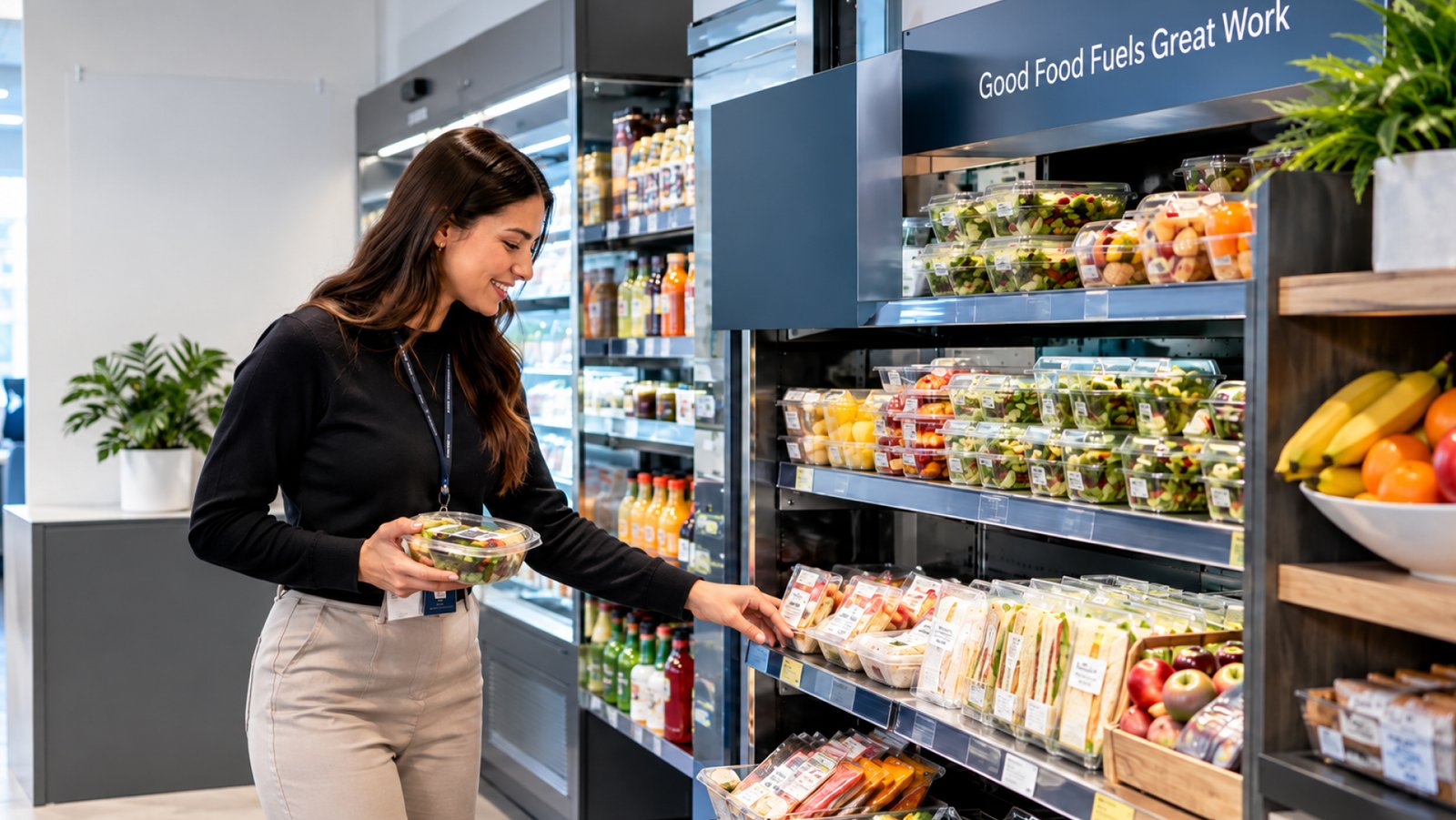
Employees using a workplace micro market want to know whether food is fresh and coolers are working properly. For office micro markets, these questions affect food safety and trust. Clear procedures must support safe storage, regular checks, and timely product removal.
What Standards Apply to Office Micro Markets?
Micro markets are unattended retail spaces, but they are not exempt from food-safety rules. State and local agencies may base requirements on the FDA Food Code, a model for retail food handling and sanitation. It is not automatically law everywhere: jurisdictions adopt specific editions and may add permit, inspection, or operating requirements of their own.
Ask which rules apply locally, whether permits are needed, and who responds to inspection findings. Unattended retail still requires routines for hygiene, date labels, cooler checks, cleaning, and product removal. Each restocking visit should include an inspection of packaging, dates, spills, and refrigeration. Written procedures and service records help keep checks consistent.
Why Food Safety Matters in the Workplace
Foodborne illness can affect employees’ health, disrupt work, and undermine confidence in the refreshment program. Since customers choose food without a cashier overseeing each purchase, the system needs to identify expired items, damaged packaging, warm coolers, and unclean surfaces.
A professionally managed office micro market should have a service schedule, clear responsibilities, and procedures for handling questionable products. Employers should know whom to contact if a cooler seems warm or an item looks damaged. They should also understand whether the provider or the workplace is responsible for responding to a reported problem.
Employees also judge the market by visible signs of care: clean shelves, clear date labels, chilled meals, and consistent selection. A simple way to report damaged packaging or refrigeration concerns helps the service team respond quickly.
Temperature Control and Refrigeration
Temperature is one of the most important parts of food safety. The range between 40°F and 140°F is commonly called the danger zone because bacteria can grow rapidly in it. Clemson Extension’s food-safety guidance explains that bacteria can multiply rapidly in this range. Perishable food should not be left at room temperature for more than two hours, or one hour when temperatures exceed 90°F.
Refrigerated food must remain cold during storage, transport, delivery, and display. A clean cooler does not prove it is cold enough, so providers need reliable temperature checks and a plan for unsafe readings.
Cold-Chain Habits That Work
The cold chain begins before food reaches the breakroom. Perishable meals need proper preparation, chilling, and transport, and staff should avoid leaving them unrefrigerated while stocking shelves. Cooler doors should close securely, with seals checked if a unit struggles to stay cold.
Record temperature checks consistently. Ask who reviews readings and what happens if a cooler is too warm. A response plan should cover safe storage and discarding food when its safety cannot be confirmed. Keep shelf-stable snacks in clean, dry areas away from heat and sunlight.
What Research Says About Monitoring
A 2015 study by António Raposo and colleagues examined food safety in vending machines on Spain’s Gran Canaria island. The researchers found Listeria monocytogenes in 5.7% of 105 food samples and noted that unsuitable transport temperatures and inadequately cooled machines may have contributed. This study is not a U.S. benchmark, but it illustrates why refrigeration and transport controls should be verified rather than assumed. Read the study in the Universidade Lusófona Research Repository.
Continuous monitoring can identify changes between visits, while staff checks provide another layer of oversight. Ask whether alerts are available, what the system measures, and who responds. Smart technology may also track inventory and sales. These data cannot replace food-safety checks, but can complement temperature records, cleaning schedules, and date rotation.
Freshness Standards and Daily Quality Control
Date Labels and Product Rotation
Freshness starts with rotation. During each service visit, staff should check product dates, inspect packaging, and place older stock ahead of newer stock when appropriate. Follow product labels and the provider’s food-safety procedures rather than relying on appearance or smell alone. Food can look normal and still be unsafe if it has been held at an improper temperature.
Sandwiches and salads often have short shelf lives, so they need active inventory management. Products approaching their approved sale or use limits should be handled according to the provider’s policy and applicable rules. Expired, damaged, recalled, or questionable items should be removed and documented instead of being left for the next visit. These records can also help identify waste patterns and improve ordering without compromising safety.
A rotation system should show which products arrived first and when they must be removed. Check frequency should reflect the menu, delivery schedule, traffic, and how quickly products sell.
Preparation, Delivery, and Cleaning
Where food is prepared and how it reaches the market matter. Local preparation may shorten the journey, but it does not guarantee safety. Ingredient handling, hygienic preparation, suitable packaging, chilled transport, and correct storage remain essential throughout the process.
January Service Company says it prepares sandwiches, salads, and wraps at its Memphis culinary center. Its article on how the Memphis culinary center supports fresher meals explains the local preparation process. When comparing providers, ask how often fresh products are delivered, how transport temperatures are controlled, and what happens to unsold items.
The market needs a cleaning schedule. Staff should clean shelves, cooler handles, and checkout surfaces, address spills promptly, and store cleaning products away from food. Follow a defined schedule for routine and deeper cleaning.
Questions to Ask Before Choosing a Provider
Before committing to a program, ask direct questions and expect specific answers:
- Service schedule: How often is the market serviced, and who checks product dates at each visit?
- Temperature control: How are refrigerator temperatures measured, recorded, and reviewed?
- Transport: How is food kept cold between preparation and delivery?
- Equipment problems: What happens when a cooler fails or a temperature reading is unsafe?
- Product removal: How are expired, damaged, or recalled items removed and documented?
- Compliance: Can the provider explain local permit requirements and share relevant inspection documentation?
Ask how the team handles a failed temperature check or recall, who covers service absences, and how urgent after-hours concerns are managed. Clear answers help you assess the provider before an incident.
A Safer Breakroom Starts With Clear Standards
The best micro market is one that employees can use with confidence. That confidence comes from cold storage, careful product rotation, clean surfaces, clear records, and a service team that follows a consistent schedule. Employers should understand the provider’s responsibilities and have a simple way to report concerns.
Food safety is a shared effort. Providers need reliable handling and maintenance procedures, while workplaces should report concerns quickly. Review the service plan periodically as office size, product mix, and demand change.
To explore a managed micro-market program for your Memphis workplace, call January Service Company at (901) 373-4433 and ask about a free walkthrough.