
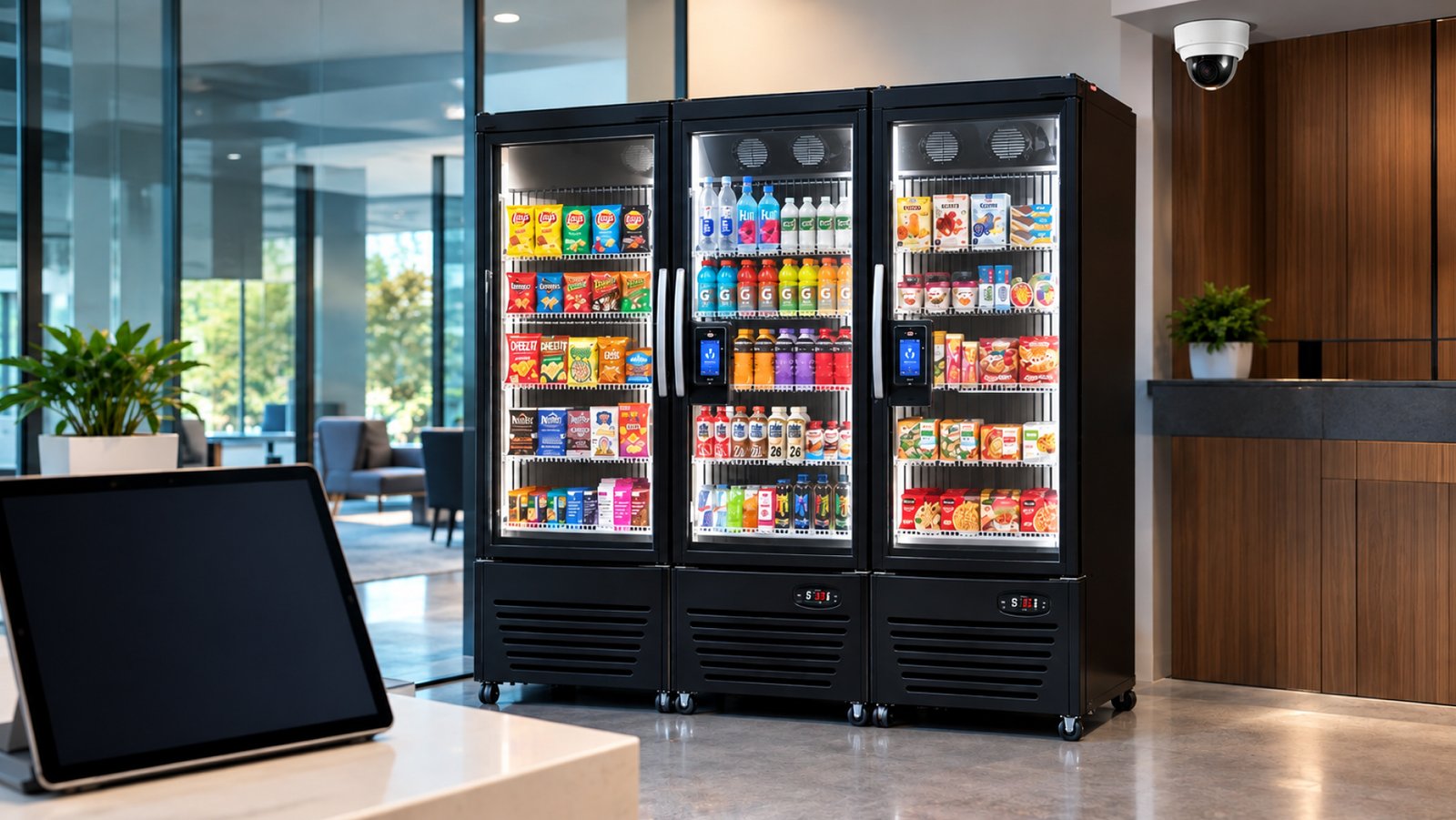
Self-service food and drinks are a convenient workplace perk. Employees can shop without waiting for a staffed counter. For managers, however, that raises an obvious question: what happens when no one is watching?
A modern smart store addresses that concern through several layers of technology. Depending on the system, these may include cameras, smart sensors, controlled access, cashless payments, and real-time inventory tracking.
Together, these features improve visibility into purchases and product movement. Here is what Memphis businesses should consider before choosing a system.
Why Losses Happen in Self-Service Spaces
Not every missing product is the result of deliberate theft. An employee may miss an item during checkout, choose the wrong product, or return something to a different location. Inventory counts can also become inaccurate because of stocking or transaction errors.
Effective theft prevention therefore requires more than catching someone taking a product. Businesses need a reliable way to compare inventory, purchases, and activity within the store. Better visibility makes unusual discrepancies easier to identify without treating every error as intentional theft.
What Makes a Smart Store Different?
A smart store combines self-service shopping with technology that monitors transactions and inventory. Unlike a basic honor-system snack area, it can provide information about purchases, stock levels, and product movement.
January Service Company’s Smart Store solutions use AI-powered technology, secure access, and real-time inventory management to support unattended workplace retail. Employees can access food and beverages throughout the day without requiring someone to operate a checkout counter.
Layer One: Cameras and Visible Monitoring
Cameras are one of the most familiar security tools in self-service retail. Visible monitoring can make customers aware that activity may be recorded and provide context when a transaction or inventory discrepancy needs review.
A U.S. Department of Justice resource summarizes research on retail theft-prevention measures, including CCTV domes and public-view monitors. The practical lesson is that cameras should be one part of a security strategy rather than treated as a complete solution.
Businesses should also follow applicable privacy requirements and clearly communicate where monitoring is used.
Layer Two: Smart Sensors and Product Tracking
Cameras provide visual information, while smart sensors, AI, and computer vision can add activity data. Depending on the system, the technology may monitor access, product movement, or activity inside a cooler without requiring someone to watch a video feed continuously.
A systematic review by PubMed of retail security tagging examined different types of tags and the ways they may contribute to theft reduction. For workplaces, the broader point is that tracking technology can improve accountability, although no individual sensor, tag, or camera can eliminate every type of product loss.
Layer Three: Inventory Loss Prevention
Security also depends on knowing whether recorded inventory matches what is physically available. If a system shows twelve sandwiches but only nine remain, that gap affects restocking even when its cause is not immediately clear.
Research by ScienceDirect on RFID and theft-related inventory inaccuracy has examined how theft creates differences between recorded and physical inventory and how better visibility may help address those discrepancies.
Real-time data can help businesses and providers identify differences earlier, look for repeated patterns, and keep popular products available. That makes inventory tracking both a security tool and an operational tool.
Why Integrated Security Features Work Better Together
Every security feature has limits when used alone. A camera may provide footage without explaining an inventory count. Inventory data can show that something is missing without revealing why. A sensor may record activity without providing the full context.
Integrated systems bring several sources of information together. Transaction records can show what was purchased, inventory data can reveal unexpected changes, and cameras or access controls may provide additional context.
The advantage of integrated security features is not that they guarantee zero loss. They give businesses more useful information for identifying mistakes, reviewing unusual activity, and improving store management.
Controlled Access Adds Another Layer
Some workplaces want self-service convenience without leaving products completely open. Controlled-access coolers can provide that balance.
January Service Company’s AI Smart Coolers combine unattended access with AI-powered product tracking. This can suit offices and other workplaces that want employees to access fresh food and drinks without maintaining a staffed retail counter.
The shopping process should still remain simple. Authorized users need to understand how to access products, complete payment, and report a transaction problem.
Need a more secure self-service option? January Service Company can help determine whether a Smart Store or AI Smart Cooler better fits your workplace.
Protect Trust, Not Just Products
A workplace breakroom should not make employees feel like suspects whenever they buy a drink or snack. Security should support the shopping experience rather than dominate it.
Clear instructions can prevent avoidable mistakes. Employees should understand how checkout works, whether monitoring is used, and who to contact about a payment issue. Accurate records also protect employees by providing information when questions arise instead of forcing managers to rely on assumptions.
January Service Company has also explained how smart stores reduce theft and improve workplace transparency. The goal is a more accountable environment that remains convenient for employees.
Questions to Ask Before Choosing a Smart Store
Not every smart store uses the same technology. Ask how customers access products, how purchases are identified, and what payment methods are available.
Find out whether the system uses cameras, AI, sensors, controlled access, or another form of tracking. Ask what happens when inventory and transaction records do not match, who reviews discrepancies, and how employee billing questions are resolved.
Equipment and inventory support matter too. Ask who handles repairs, how frequently products are restocked, and how the provider uses sales data to adjust the product mix. Specific answers are more useful than a general promise that a system is “secure.”
Why Choose January Service Company?
January Service Company has served Memphis and Mid-South workplaces since 1982. Its refreshment services include Smart Stores, AI Smart Coolers, vending, micro markets, coffee, and water solutions.
JSC manages stocking and ongoing service, reducing the daily work placed on office managers. Working with a local provider can also make support easier when equipment or service needs attention.
Build a Breakroom With Better Visibility
Preventing product loss is not about treating every employee like a potential thief. It is about creating a self-service environment where purchases are easier to track, inventory is more visible, and discrepancies can be identified sooner.
Cameras provide visual context. Smart sensors and AI add activity data. Controlled access places another layer around products. Real-time inventory tracking shows whether expected stock matches what is actually available.
For Memphis workplaces, the right smart store should balance convenience, inventory visibility, and security appropriate for the location.
Call January Service Company at (901) 373-4433 to discuss a Smart Store, AI Smart Cooler, or another breakroom solution for your workplace.