
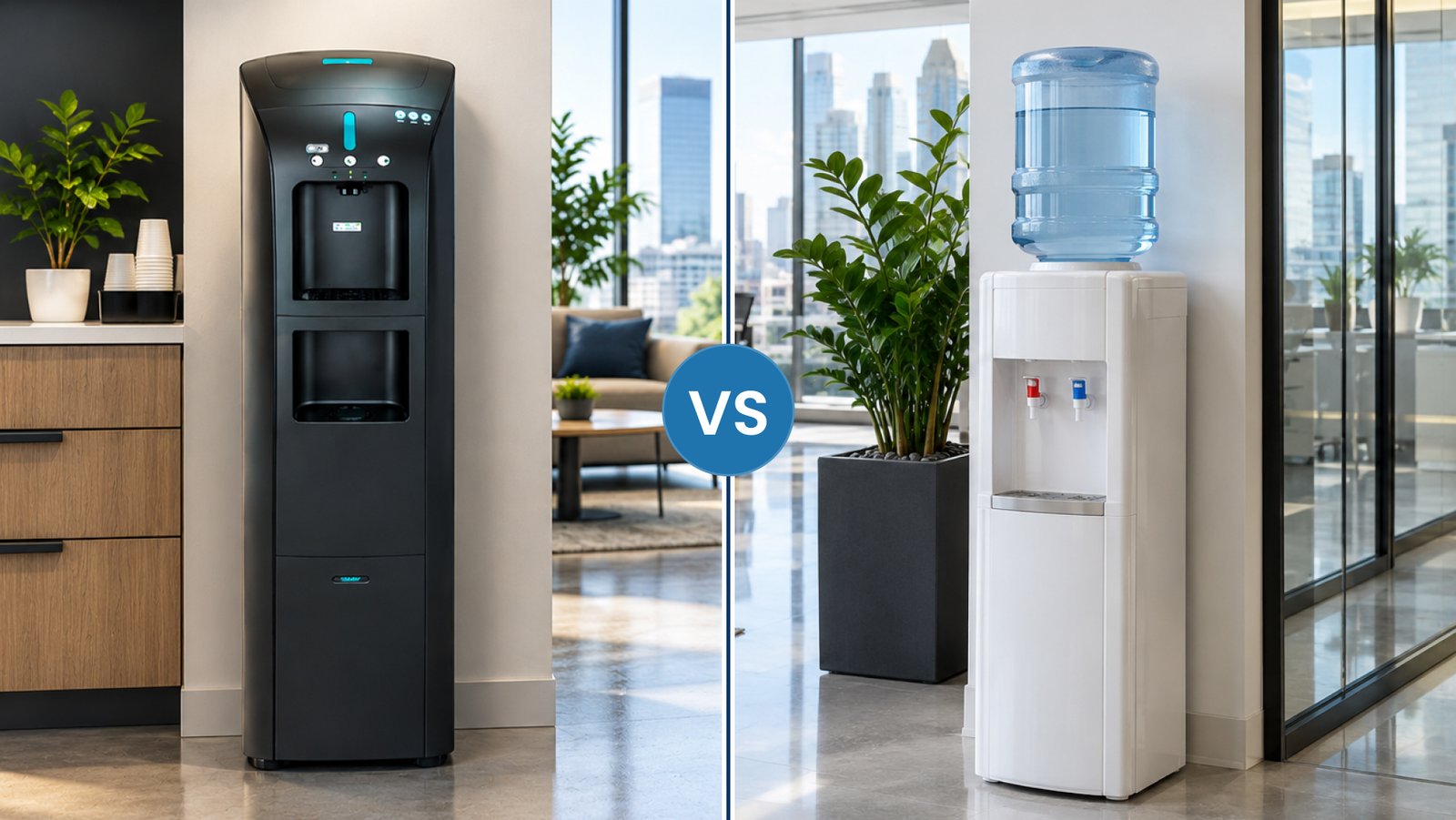
Every breakroom needs drinking water, but choosing a system takes thought. Some Memphis offices use five-gallon jugs delivered on a schedule. Others rely on bottleless water coolers that connect to the building’s water supply and filter water at the point of use.
Both options can work. The better choice depends on your office size, plumbing access, water usage, storage, maintenance expectations, and budget.
How Bottled Water Coolers Work
A bottled cooler uses replaceable water jugs, commonly holding three or five gallons. A provider delivers full bottles and collects empty ones according to an agreed schedule.
The main advantage is placement flexibility. Because the cooler does not need a direct water-line connection, it may work well in temporary offices, leased spaces with plumbing restrictions, or rooms where suitable plumbing is difficult to access.
The tradeoff is bottle management. Jugs require storage, deliveries need coordination, and someone must replace each empty bottle. This becomes more demanding as water consumption increases.
Businesses planning broader hydration improvements can also read January Service Company’s guide to a summer office water system upgrade.
How Bottleless Water Coolers Work
A bottleless cooler connects to an existing cold-water line and refills automatically. Water passes through the unit’s filtration equipment before it reaches the dispenser, removing replacement jugs from the process.
Depending on the system, filtration may address taste, odor, sediment, chlorine, or specific contaminants. Businesses should look beyond general claims about “pure” water. The NSF filtration standards cover different contaminant-reduction and performance claims, so check the certification associated with the specific filter.
Bottleless systems remove the need to order, store, lift, and replace large jugs. However, the cooler must be installed near an appropriate water line and electrical outlet.
Comparing the Total Cost
There is no universal answer about which system costs less.
Bottled service normally includes recurring deliveries, with pricing affected by consumption, the number of bottles ordered, and other service charges. Bottleless pricing may include equipment, installation, filtration, scheduled maintenance, and repairs.
Compare the complete cost, including deliveries, installation, filters, maintenance, storage, and possible repair fees.
Space and Everyday Convenience
Full and empty bottles require storage, which may be limited in a smaller Memphis office.
Changing bottles also requires physical effort. The Occupational Safety and Health Administration’s water-delivery guidance notes that a five-gallon bottle weighs approximately 48 pounds. OSHA describes lifting and positioning one on a top-loading cooler as an awkward task that can strain the back, shoulders, arms, and legs.
A bottleless cooler removes that lifting task and does not require bottle storage. Bottled systems, however, offer more freedom when a suitable water line is unavailable.
Capacity and Placement
The right cooler should handle peak demand. If several employees use it during the same break, a small dispenser may struggle to keep enough chilled water available. Ask about storage capacity and recovery rate instead of choosing based only on appearance.
Placement matters as much as capacity. One centrally located cooler may work for a compact office, but it may be inconvenient in a warehouse, multi-floor building, or workplace with separate departments. In those settings, two smaller dispensers may provide better access than one larger machine.
Employees should be able to reach and use the dispenser safely. A provider should review the location, nearby plumbing and power, space, and expected traffic before recommending a system.
This review can prevent costly placement problems.
Maintenance and Service Requirements
Both systems require care. Bottled coolers need cleaning and sanitization, while bottleless units require filter changes, sanitization, and equipment service.
The exact responsibilities depend on the provider. January Service Company’s office water filtration service includes installation, filter changes, sanitization, and ongoing maintenance for its bottleless systems.
Before choosing a plan, ask how often service is performed, what the monthly price includes, who monitors filter changes, and how quickly the provider responds when equipment needs attention.
Need a more convenient office water system? Talk with January Service Company about a professionally installed and maintained bottleless cooler for your Memphis workplace.
Taste, Filtration, and Memphis Water Quality
Taste is subjective, so bottled water should not automatically be considered better than filtered water, or vice versa. With a bottleless system, performance depends on the incoming water, filter technology, maintenance schedule, and equipment condition.
The Memphis Light, Gas and Water Quality Report provides information about local drinking water and testing. MLGW reports that Memphis water comes from the Memphis Sand Aquifer and is treated before distribution.
A point-of-use cooler adds filtration where employees dispense water. Choose filtration based on your goals and the system’s verified capabilities rather than assuming that more filtration stages automatically produce better results.
Planning a Complete Breakroom Setup
Many businesses use the same breakroom for water, coffee, tea, snacks, and other refreshments. Planning these services together can simplify ordering and help the company choose equipment based on actual employee habits.
January Service Company’s office coffee service can be coordinated with its other breakroom options. If employees regularly use hot water for tea, oatmeal, or instant meals, include that demand when comparing cooler features.
Environmental Considerations
Large water jugs may be reused, but they still need transportation, storage, collection, cleaning, and eventual replacement. Bottleless coolers remove routine jug deliveries but use electricity and replacement filters. Businesses with sustainability goals should compare the actual energy, delivery, and waste requirements of each proposal.
What Memphis Offices Should Consider
Start with the building. Is there a suitable water line and outlet near the preferred location? Is there enough space for full and empty bottles? Then consider headcount, work shifts, peak demand, and the distance employees must walk to reach the dispenser.
Office size alone should not determine the choice. Consider daily demand, peak break times, work shifts, and whether several smaller units would provide better access than one large cooler.
Ask who installs the equipment, changes filters, sanitizes the dispenser, and handles repair requests. Clear service responsibilities can prevent routine maintenance from becoming another job for office staff.
Why Choose January Service Company?
January Service Company has served Memphis and Mid-South workplaces since 1982. Its bottleless water service includes professional installation, scheduled filter replacement, sanitization, and ongoing equipment maintenance.
Businesses can also coordinate water, coffee, vending, micro markets, and other refreshment services through one local provider.
Find the Right Water Cooler for Your Memphis Office
Bottled coolers can make sense when plumbing access is limited, the workplace is temporary, or water demand is low enough that storage and bottle replacement are manageable.
Bottleless water coolers for offices may be better when a workplace wants automatic refilling, less storage, and managed filtration. Compare your floor plan, water use, plumbing access, maintenance responsibilities, and total ongoing costs before deciding.
Ready to simplify workplace hydration? Call January Service Company at (901) 373-4433 to discuss a water cooler system for your Memphis or Mid-South workplace.