
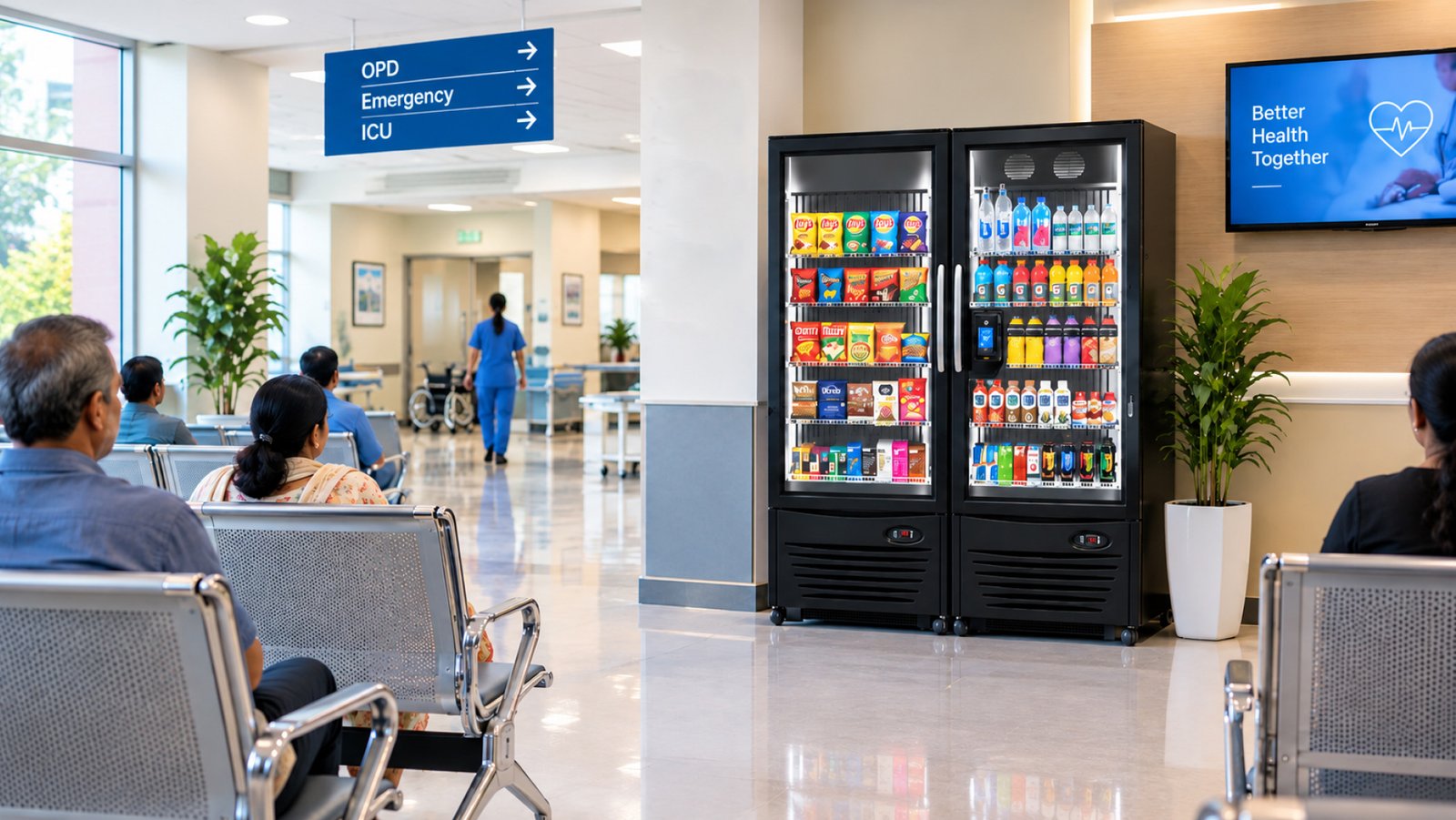
Searching for vending machines for sale in Memphis is a common first step for hospital facilities managers who need dependable food and beverage access. Hospitals operate around the clock, serve employees and visitors, and need refreshment options that remain available after the cafeteria closes.
However, the machine itself is only one part of the decision. Product selection, placement, restocking, maintenance, payment technology, nutrition standards, and ongoing support all affect whether hospital vending works well.
Before purchasing equipment, compare ownership with a managed vending program and decide which arrangement your team can realistically support.
Why Hospitals Need More Than Standard Vending
A hospital cafeteria operates on a schedule, but nurses, physicians, technicians, security teams, and other employees may work nights, weekends, or extended shifts. Visitors can arrive at any hour and may remain in waiting areas for long periods.
Vending helps fill those gaps by providing drinks, snacks, and food when staffed dining areas are unavailable. Reliability matters because an empty machine or failed payment terminal can remove one of the few after-hours options in the building.
Placement is equally important. Machines must be convenient without narrowing hallways, blocking exits, or disrupting busy circulation routes. Facilities teams should also consider electrical access, delivery routes, accessibility, and the space needed for restocking and repairs.
Match Vending to Different Hospital Areas
Hospital areas do not all have the same demand. A staff lounge may experience a rush during shift changes, while an emergency waiting room may have steady traffic throughout the day and night. Outpatient clinics usually see the most demand during daytime hours.
Those patterns should influence equipment, capacity, and inventory. Staff areas may need beverages, protein-focused snacks, and more substantial choices. Visitor areas may benefit from bottled water, crackers, and familiar products that are easy to eat.
Night coverage deserves particular attention. When cafeterias and nearby restaurants close, vending may become the most convenient option available. Instead of stocking every location identically, review sales by area and adjust the mix around what people purchase.
Buying Machines vs. Using a Service Provider
Facilities managers comparing vending machines for sale in Memphis should consider what happens after delivery. Ownership means someone must purchase inventory, fill machines, monitor dates, process refunds, handle payment issues, arrange repairs, and replace slow-selling products.
Those responsibilities can become significant when equipment is spread across several floors or buildings.
A managed program moves much of that work to the provider. January Service Company’s vending service includes equipment, stocking, and continuing support for Memphis-area facilities.
When comparing proposals, ask:
- Who installs and owns the equipment?
- How often are machines restocked?
- How are nights, weekends, and holidays handled?
- What happens when equipment stops working?
- Who removes expired or damaged products?
- Can inventory differ by location?
- What sales and inventory reporting is available?
Compare the whole operating arrangement, not only the machine price. A low purchase price may not mean lower long-term cost once labor, inventory, spoilage, repairs, and management are included.
Include Healthier Food and Drink Options
Hospitals often want vending selections that support their broader approach to health while still giving employees and visitors familiar choices.
A study conducted by Pubmed of healthier hospital vending at a site in Slovenia found that purchases categorized as healthy increased after a healthier assortment was introduced. The results should not be treated as a guarantee for every Memphis facility, but they show why availability and product mix deserve attention.
Hospitals can create standards for beverages, snacks, and meals offered on-site. Depending on local demand, selections may include water, lower-sugar drinks, nuts, fruit-based products, protein-focused snacks, and other options alongside traditional favorites.
The CDC Food Service Guidelines provide a framework for increasing healthier food and beverage choices in settings including hospitals, worksites, and vending areas. Facilities should also consider allergens, dietary preferences, package labeling, and how clearly choices are displayed.
A balanced selection is usually more practical than removing every familiar snack. Review purchasing data and employee feedback to determine what works in each location.
Use Technology to Improve Restocking
Connected vending systems can show which products sell quickly, when demand is highest, and which items remain untouched. Providers can use that information to plan service visits and tailor inventory by department or shift.
An inventory tracking system is especially useful in a hospital because demand can vary by floor. A beverage that sells quickly near an emergency waiting room may perform differently in an administrative area.
AI vending solutions and January Service Company’s Smart Store options can expand self-service access beyond conventional machines. Depending on the setup, smart technology may support cashless payments, product tracking, temperature control, and a wider fresh-food selection.
Ask providers what data is collected, how often it is reviewed, and how it changes replenishment. Technology is valuable when it prevents empty selections and unnecessary service calls, not when it simply produces another report.
Plan Maintenance and Cleaning From the Beginning
Hospital vending needs a clear maintenance plan. Facilities managers should know who cleans each part of the equipment, how frequently machines are inspected, and how quickly failures are addressed.
For refrigerated or fresh-food equipment, ask how temperatures are monitored, how products are rotated, and what happens if cooling fails. Responsibilities assigned to the hospital and provider should be documented before installation.
Payment support matters too. A machine that accepts cards or mobile wallets needs a process for handling transaction problems and refunds without creating extra work for hospital employees.
Understand Vending Labeling Requirements
Calorie labeling should also be discussed with potential providers. The FDA’s vending-machine labeling requirements apply to certain operators that own or operate 20 or more machines and establish calorie-disclosure requirements for covered foods.
Ask the provider whether the rule applies to its operation and how required information is displayed. Facilities managers should also confirm relevant state, local, licensing, tax, accessibility, and hospital-specific requirements before installation.
The service agreement should clearly document compliance responsibilities rather than leaving the facility to resolve them after launch.
Why Choose January Service Company?
January Service Company has served Memphis and the Mid-South since 1982. The local team can assess traffic patterns, shift schedules, available space, product preferences, and service requirements before recommending equipment.
Hospitals can combine traditional vending with smart stores, AI coolers, office coffee, water, or micro markets instead of coordinating several providers. Regular stocking, inventory monitoring, maintenance, and local support help reduce the operational burden on hospital teams.
Facilities considering a larger self-service food area can also read how micro markets support employee retention before deciding which format fits each part of the hospital.
Build a Hospital Vending Plan That Lasts
Before buying equipment or signing an agreement, evaluate the hospital location by location. Identify who will use each machine, when demand peaks, what products should be available, and how often restocking may be needed.
For hospitals across Memphis, Eastern Arkansas, and North Mississippi, January Service Company can build a program around staff, visitors, operating hours, and facility requirements. Call (901) 373-4433 to discuss your locations and request a tailored vending recommendation.