
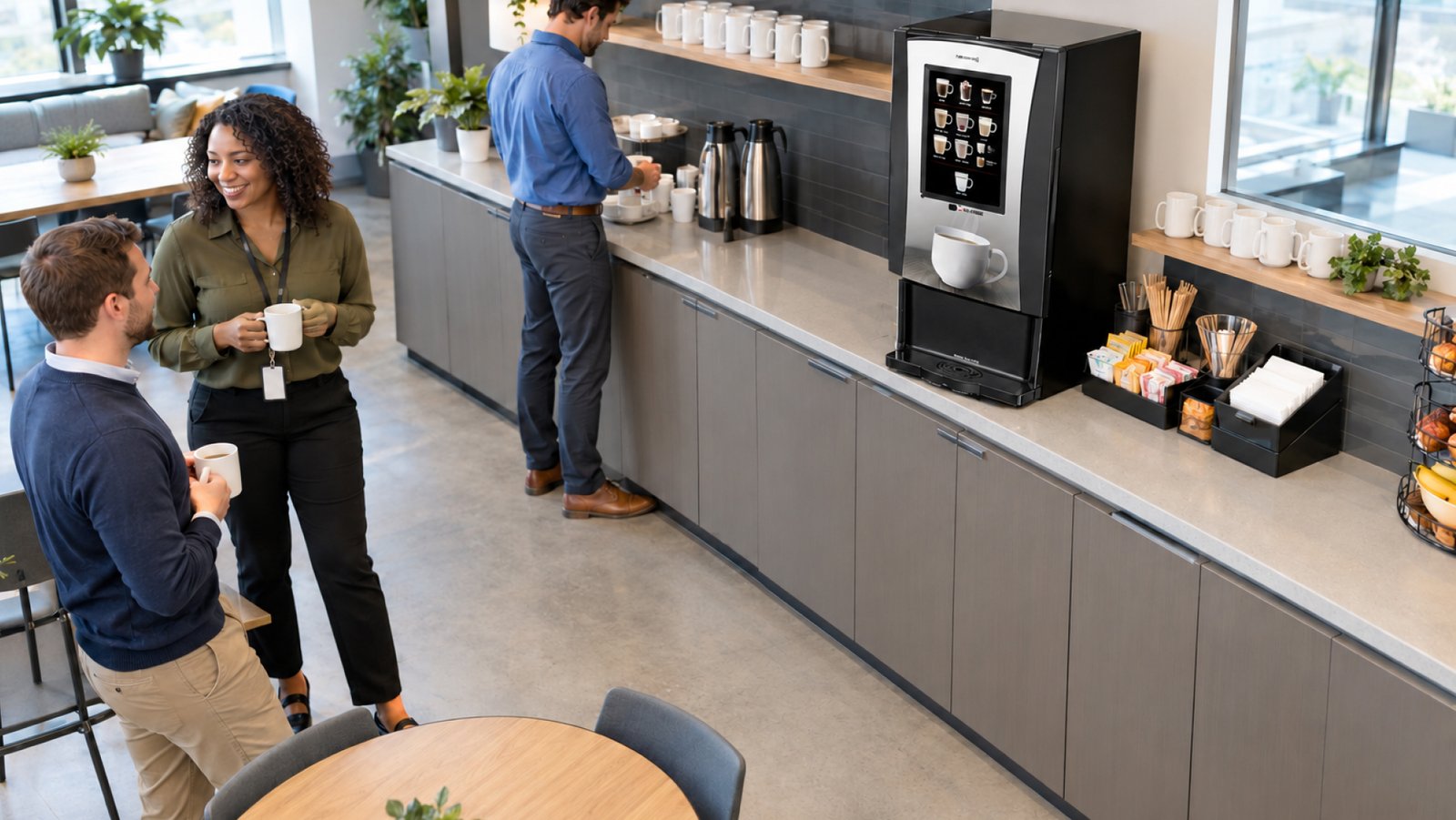
An office coffee bar can look great on opening day and still be ignored weeks later. The machine is slow, supplies run out, or the counter becomes cluttered.
A successful office coffee setup starts with how employees use the break room. It should provide a convenient place to make a drink without searching for supplies or waiting in line.
For Memphis workplaces building a new coffee station or improving an existing one, the following steps can make the space easier to use and maintain.
Why the Coffee Bar Matters
Employees notice whether coffee service works. A reliable station gives them a practical place to step away, prepare a drink, and return without leaving the building.
A review of research by PubMed on work breaks and employee wellbeing examined how different types of breaks relate to outcomes such as wellbeing and performance. Coffee alone cannot create those outcomes, but a functional break room can make it easier for employees to take a convenient pause during the workday.
The best coffee bar is the one designed around its users.
Start With the People Who Will Use It
Do not choose a machine before understanding demand. A 40-person office with one morning rush has different needs from a three-shift warehouse.
Ask employees a few simple questions:
- How many people regularly drink coffee?
- When is demand highest?
- Do employees prefer regular, decaf, or specialty drinks?
- Are tea and hot chocolate popular?
- Are dairy-free creamers requested?
- How many people may use the machine at once?
A short survey can prevent a business from buying an impressive machine that employees do not want. It also supports useful variety without clutter.
Choose a Coffee Machine That Fits Your Workplace
The brewer is the center of the station, so match it to usage rather than appearance.
Commercial brewers suit predictable, high-volume rushes. Single-cup systems provide individual choice, while bean-to-cup machines grind beans for each drink. Each has different capacity and maintenance needs.
A small professional office may prioritize variety. A Memphis manufacturing facility with a large shift starting at once may care more about brewing speed and volume. Employees are less likely to use an office coffee station if getting one cup regularly requires a long wait.
January Service Company’s office coffee service includes traditional, single-cup, and bean-to-cup options that can be matched to workplace size and expected demand.
Plan the Layout Around How People Move
A coffee station should be easy to approach and leave. Avoid squeezing the brewer, condiments, and waste bin into one corner where one person can block the line.
Organize the counter in a natural sequence:
Cup → Brew → Customize → Dispose
Keep cups beside the machine, condiments farther along, and waste bins at the end so employees do not move backward through the line.
Accessibility also needs to be considered when a break room is built or renovated. The U.S. Access Board’s guidance on ADA requirements for employee break rooms explains that break rooms and other employee common-use spaces must be accessible in new construction.
Consider circulation paths, reachable supplies, counter height, and equipment controls. Early planning is easier than changing fixed counters later.
Stock the Coffee Station Essentials
Coffee alone does not make a useful station. The supplies should reflect employee preferences, but most workplaces need a dependable base of everyday items.
Common coffee station essentials include:
- Regular and decaf coffee
- Cups and lids
- Sugar and alternative sweeteners
- Creamers and dairy-free options
- Stirrers and napkins
- Tea and hot chocolate
- Cleaning and spill supplies
Keep the selection intentional. Start with requested products, monitor consumption, and adjust future orders instead of collecting unpopular extras.
Water quality deserves attention because water makes up most of every brewed cup. Follow the equipment manufacturer’s recommendations for water and filtration. A maintained office water filtration system can support coffee quality while also providing employees with convenient drinking water.
Make Restocking Someone’s Responsibility
Unclear ownership quickly makes an office breakroom coffee program frustrating. When everyone assumes someone else ordered, coffee and cups run out.
Decide who monitors inventory, how often supplies are checked, and when orders should be placed. A self-managed station may use a recurring checklist assigned to an office manager or facilities employee.
A managed program can shift delivery, replenishment, and equipment service to the provider. Our guide to choosing the right office coffee machine explains how usage, maintenance, water, and long-term costs affect the decision.
Restocking should follow actual consumption. Popular products may need larger order quantities, while slow-moving options should be reduced or replaced.
Keep the Station Clean Without Making It Complicated
Shared coffee equipment is touched frequently. Spills happen, drip trays fill, and milk or creamer can be left on the counter. Cleaning must be part of the setup rather than something addressed only when the area starts looking neglected.
The FDA Food Code is a model used by regulators when developing food-safety rules. Workplace requirements vary, but businesses should always follow applicable regulations and the manufacturer’s cleaning and maintenance instructions.
Keep the routine straightforward: wipe counters and spills, empty drip trays, clean reusable components on schedule, and check refrigerated milk and creamers. Assigning these tasks prevents confusion about who is responsible.
Think Beyond Coffee
A useful station should also serve employees who do not drink coffee. Tea, decaf, hot water, and a few alternative beverages can make the space more inclusive without turning it into a full café.
Placement matters as well. If employees often grab breakfast or an afternoon snack with their drinks, locating coffee near other refreshments can make the break room easier to use.
After launch, increase products that sell out and replace those left untouched. Small adjustments keep the station relevant.
Why Choose January Service Company?
January Service Company has served Memphis and the Mid-South since 1982. Its team can evaluate employee count, peak demand, available space, drink preferences, water needs, and service expectations before recommending equipment.
Businesses can combine office coffee with water, vending, micro markets, or pantry service rather than coordinating several separate providers. Ongoing delivery, restocking, maintenance, and equipment support can also reduce the daily work placed on office and facilities teams.
Local service makes it easier to adjust the program when headcount, shifts, or employee preferences change.
Create a Coffee Bar That Works Every Day
A successful coffee bar is not defined by the longest drink menu. It works because the machine handles demand, the layout is easy to navigate, popular supplies stay available, and cleaning responsibilities are clear.
For a customized office coffee setup in Memphis, Eastern Arkansas, or North Mississippi, call January Service Company at (901) 373-4433. The team can help plan the equipment, products, and service schedule around your workplace.