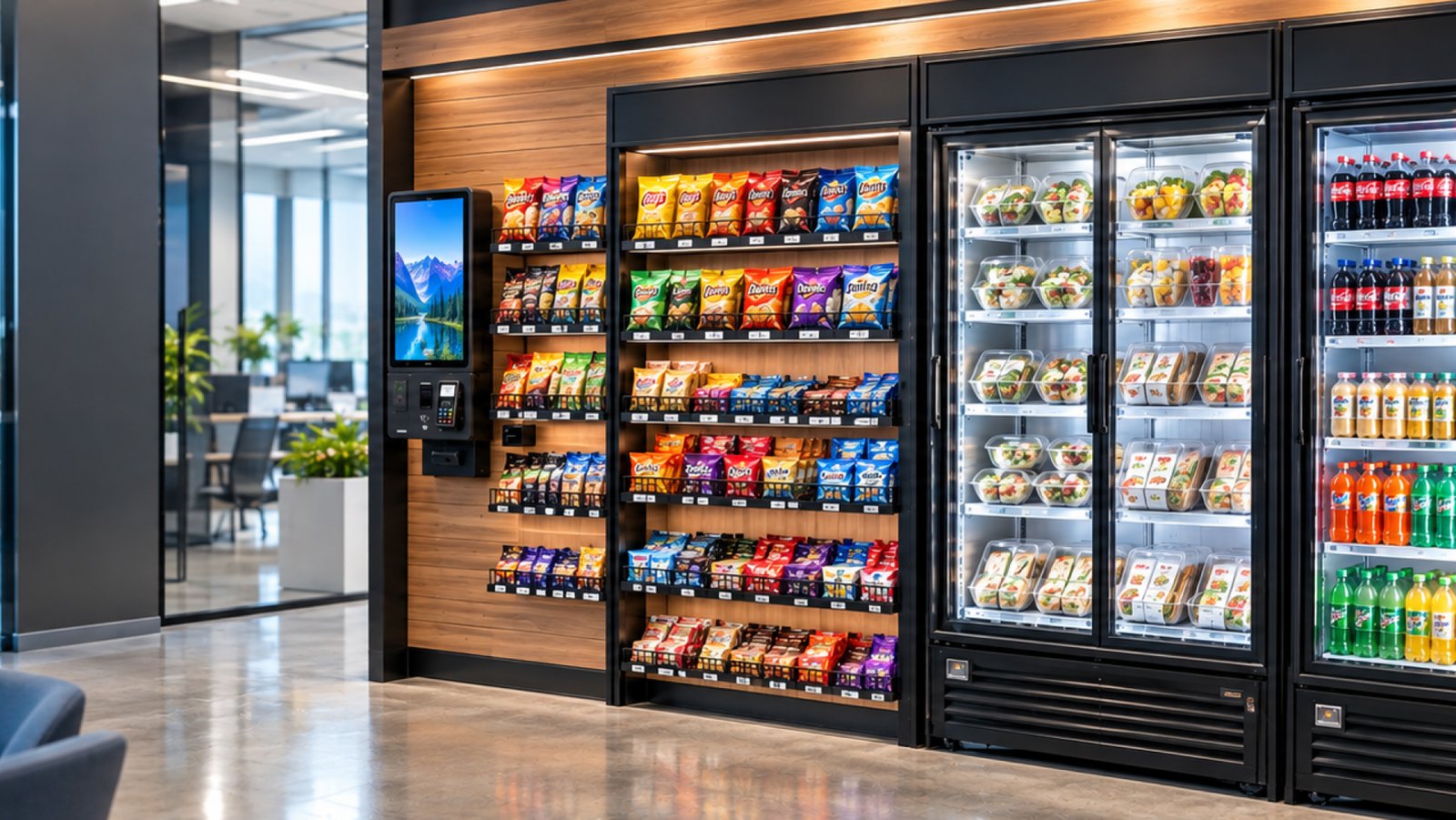
A micro market turns an ordinary break room into a self-service food destination. Employees browse open shelves and coolers, choose what they want, and pay at a kiosk.
For Memphis employers considering the switch, one question usually comes first: How much does an office micro market cost?
There is no flat price. Cost depends on headcount, operating hours, space, equipment, products, technology, security, and service. A compact office market will differ from one serving a multi-shift warehouse.
This guide explains the cost factors so you can compare proposals and choose a setup that fits your workplace.
What Is Included in a Micro Market?
Before comparing costs, it helps to understand what is being installed. The National Automatic Merchandising Association offers an overview of how micro markets work, describing unattended retail spaces with open displays, self-checkout technology, and cashless payment.
A workplace setup may include:
- Open shelving for snacks and packaged products
- Refrigerated coolers for drinks, sandwiches, and fresh food
- Freezers for frozen meals and treats
- A self-checkout kiosk or payment terminal
- Cashless and mobile payment options
- Displays, cabinetry, and storage
- Inventory-management tools
- Security and loss-prevention features
A small office may need one cooler, shelving, and a compact checkout station. A high-traffic facility may require several cases, more products, and greater capacity. Equipment should match actual demand.
What Determines Micro Market Installation Cost?
Several practical factors shape the initial investment and service arrangement.
Workplace Size and Employee Demand
Headcount is a useful starting point, but usage matters more. A 100-person daytime office may have lower peak demand than a smaller operation running around the clock.
Providers should consider shift schedules, break times, expected participation, and how often the market will need replenishment. January Service Company’s micro market solutions can be planned around the location and workforce instead of forcing every business into the same format.
Refrigeration, Shelving, and Site Requirements
The amount and type of equipment also influence cost. Fresh meals and dairy products require dependable refrigeration, while frozen selections need freezer space. More variety usually means more shelving, display area, and inventory capacity.
Electrical access, floor space, traffic flow, and existing cabinetry can affect installation. A site assessment identifies these details before equipment is selected.
Checkout and Payment Options
Every market needs reliable checkout. Employees may pay with cards, mobile wallets, or stored-value accounts, while some kiosks support reporting or employee subsidies.
More features are not automatically better. The right platform is one employees can use easily and the provider can support consistently. Ask whether hardware, software, payment processing, updates, and technical support are included in the proposal.
How Does Smart Technology Affect Cost?
Transaction data can reveal popular items, peak demand, and slow sellers. That helps a provider refine the product mix and plan service visits.
Research by PubMed into intelligent self-service retail has explored real-time inventory tracking using tools such as cameras and product-recognition systems. In a workplace market, practical technology may range from basic sales reporting to connected inventory monitoring.
A small office may only need cashless checkout and basic reporting. A busy, multi-shift facility may benefit from monitoring that helps prevent empty shelves.
Security and Loss Prevention
Unlike vending machines, micro markets let employees pick up products before paying. That makes loss prevention part of the design.
The setup may use visible cameras, transaction monitoring, controlled access, or strategic equipment placement. A badge-access office may need less than a public-facing facility.
January Service Company’s break room technology supports inventory visibility and self-service operations. Security needs should be discussed during the site review so the appropriate measures are built into the plan from the beginning.
Do You Have to Buy the Equipment?
Not necessarily. This distinction can change how a business evaluates cost.
Buying equipment directly may mean paying for refrigeration, shelving, checkout hardware, installation, software, repairs, and eventual replacement. Businesses considering a purchase can review IRS guidance on depreciation with a qualified tax professional to understand how eligible business equipment may be treated.
With a managed service, the provider may supply equipment and handle installation, stocking, maintenance, and support, reducing the work placed on internal teams.
Ask each provider to explain upfront fees, recurring charges, service responsibilities, contract terms, and equipment ownership. A low installation quote may not be the least expensive option if software, repairs, and maintenance are billed separately later.
What Ongoing Costs Should Memphis Businesses Consider?
Installation is only one part of the total cost. The market must remain stocked, clean, functional, and relevant to the people using it.
Clarify who handles:
- Product replenishment and rotation
- Equipment maintenance and repairs
- Checkout software and payment support
- Inventory monitoring
- Cleaning responsibilities
- Expired or slow-moving products
- Emergency service calls
Service frequency can affect the program as well. A daytime office may need fewer visits than a Memphis warehouse operating nights and weekends. As our guide to micro markets for large facilities explains, around-the-clock access can be especially useful for employees working beyond traditional cafeteria hours.
Compare the operational burden as well as the quoted price. A managed program may offer better value if employees do not have to order products, troubleshoot kiosks, or arrange repairs.
Is a Micro Market More Expensive Than Vending?
It can involve a more substantial setup because it may include open shelving, multiple coolers, self-checkout equipment, inventory software, and a wider food selection. However, vending and micro markets provide different experiences, so equipment price alone is not a useful comparison.
Traditional vending can be an excellent fit when space is limited or employees mainly want packaged snacks and drinks. A micro market may be more appropriate when the workplace wants fresh food, broader variety, open displays, and a more flexible break room layout.
Some locations use both: a micro market in the main break room and vending near a distant production area. The layout should reflect how employees use the building.
Why Choose January Service Company?
January Service Company has served Memphis and the Mid-South since 1982. That local experience matters when a program needs dependable delivery routes, responsive support, and a product mix suited to the workplace.
The team can evaluate headcount, shifts, space, employee preferences, and existing infrastructure before recommending a design. January Service Company can also coordinate micro markets with vending, office coffee, water, and pantry service, helping businesses manage several refreshment needs through one local provider.
Most importantly, the market can change as the workplace changes. Product selections, service frequency, and equipment can be reviewed as participation grows or employee preferences shift.
How Much Will Your Office Micro Market Cost?
The most accurate estimate comes from a site-specific assessment. Two Memphis businesses with similar headcounts may need different equipment because of operating hours, room layout, food preferences, or peak break periods.
Start by identifying your workforce size, shifts, available space, desired product variety, and service expectations. Then request a proposal that clearly separates installation, equipment, technology, stocking, maintenance, and support.
January Service Company provides customized micro market programs throughout Memphis, Eastern Arkansas, and North Mississippi. Call (901) 373-4433 to discuss your workplace and request a tailored recommendation.