Walk into almost any modern office and you will notice something telling within the first few minutes: where the coffee station sits, how well it is stocked, and whether people actually use it. An office coffee service may seem like a small workplace amenity, but it becomes part of the daily routine for employees, visitors, and clients.
Choosing the right program is not as simple as picking whichever vendor shows up first with a sample kit. Team size, coffee preferences, equipment, maintenance, and long-term costs all matter. A setup that works perfectly for a 15-person office may become frustrating in a facility with several hundred employees.
The goal is to find a coffee program that fits how your workplace actually operates rather than paying for equipment or options your team will rarely use.
Why the Right Office Coffee Service Matters
Coffee remains a major part of daily life in the United States. The National Coffee Association reported in its 2026 National Coffee Data Trends research that 66% of American adults drank coffee in the previous day, while specialty coffee consumption reached a new record.
That makes coffee worth considering when planning workplace refreshments. Employees who already drink coffee regularly are likely to notice whether their workplace setup is convenient, reliable, and properly stocked.
A thoughtful corporate coffee service can also reduce unnecessary coffee runs outside the workplace. Instead of employees leaving the building whenever they want another cup, a reliable station gives them an accessible option during the workday.
That does not mean every workplace needs an elaborate café-style setup. The right solution depends on how many people will use it and what they actually want to drink.
Understanding Different Office Coffee Solutions
Not every workplace needs the same equipment. Most office coffee solutions fall into a few main categories.
Single-serve pod systems work well for smaller offices where variety matters more than volume. Employees can choose their preferred drink without brewing an entire pot, although pod costs can add up as usage increases.
Traditional drip brewers remain practical for high-volume workplaces. They can produce several cups quickly and usually cost less per serving, making them useful for warehouses, manufacturing facilities, and larger offices.
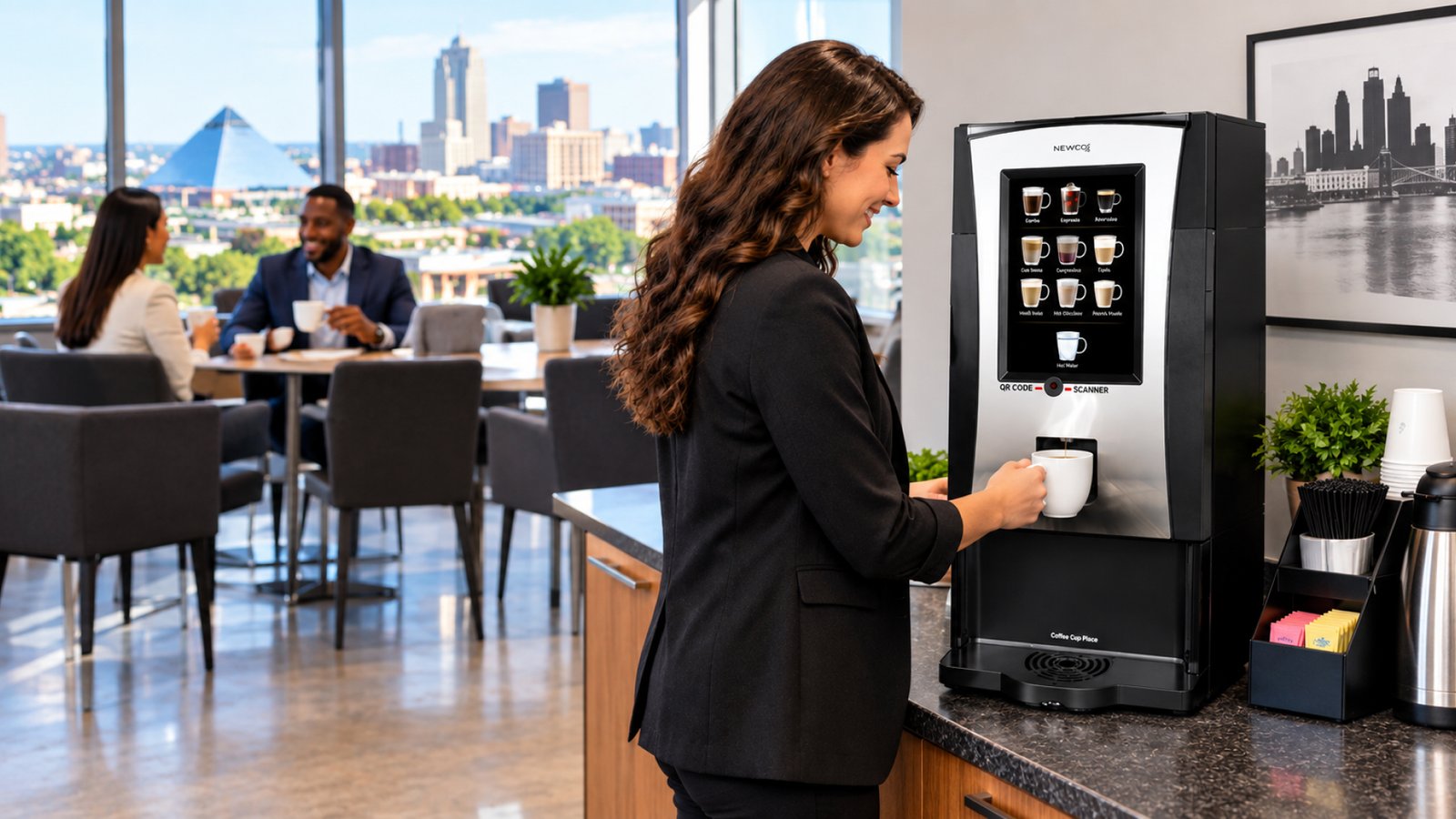
A bean to cup coffee machine offers a more premium experience. It grinds whole beans for each drink and can often prepare different coffee styles without requiring a dedicated barista. These machines can work particularly well for offices where employees value coffee quality and variety.
Some workplaces combine coffee with broader refreshments. For example, January Service Company’s micro market solutions can provide fresh food, snacks, and beverages alongside the coffee station.
Match the Program to Your Team Size and Routine
Headcount is a useful starting point, but it should not be the only factor.
Think about when employees actually use the breakroom. A 100-person office where everyone arrives around 8:30 a.m. may need more brewing capacity than a larger facility where employees work staggered shifts.
Consider questions such as how many employees drink coffee, when demand peaks, whether visitors regularly use the station, and whether employees prefer traditional coffee or specialty drinks.
It is also worth asking employees directly. A quick survey can reveal whether the team would rather have better beans, more drink choices, decaf, cold brew, tea, or plant-based milk.
Collecting this information before choosing equipment makes it easier to avoid paying for features that look impressive but receive little actual use.
Look Beyond the Initial Price
The machine itself is only one part of the cost of an office coffee service.
Some programs bundle equipment, coffee, supplies, maintenance, and restocking into one agreement. Others charge separately for products or equipment.
Before signing, ask exactly what the quoted price includes. Water filtration, cups, sweeteners, creamers, equipment repairs, refrigeration, and delivery can all affect the final cost.
Businesses that want snacks and other refreshments alongside coffee may also benefit from combining services. January Service Company’s office pantry service can simplify the process by keeping multiple workplace refreshments under one program rather than managing separate suppliers.
Contract flexibility matters too. Ask what happens if your team grows, downsizes, relocates, or decides the original machine is no longer appropriate.
Managed Coffee Service vs. Self-Managed Programs
Another important decision is whether the workplace will manage coffee internally or use a managed coffee service.
The National Automatic Merchandising Association notes that modern workplace coffee service has expanded beyond traditional hot coffee to options including cold brew, specialty teas, and flavored water.
With a managed program, the provider typically handles much of the recurring work associated with the coffee station. Depending on the contract, that may include restocking, equipment maintenance and service support.
This can be useful for busy workplaces that do not want an office manager constantly checking coffee inventory or troubleshooting equipment.
A self-managed program gives the business more direct control over what it buys, but somebody internally must handle ordering, cleaning schedules, supplies, and equipment problems.
For a very small office, that workload may be manageable. As employee numbers and coffee consumption increase, outsourcing those responsibilities can become more practical.
Consider Coffee Variety and Employee Preferences
Coffee quality is subjective, so variety matters.
Some employees want a strong morning coffee. Others prefer decaf, tea, flavored drinks, or espresso-style options. A good program does not necessarily need dozens of choices, but it should reflect the preferences of the people using it.
Harvard T.H. Chan School of Public Health notes that caffeine content varies by beverage and that individual responses to caffeine also differ. It identifies decaffeinated coffee as an option for people who are sensitive to caffeine.
Providing both caffeinated and decaffeinated choices therefore gives employees more flexibility without making the coffee station unnecessarily complicated.
Milk and creamer choices may also matter. If employees regularly request oat milk, almond milk, or other alternatives, ask whether the provider can reliably stock them instead of expecting employees to bring their own.
What to Ask an Office Coffee Service Provider
A good coffee machine means very little if the service behind it is unreliable.
Before signing a contract, ask how frequently supplies are restocked and what happens when something runs out early. Find out who handles machine cleaning and preventive maintenance, and ask what the normal response time is when equipment stops working.
You should also ask whether equipment can be upgraded if your workforce grows and whether the provider has experience serving workplaces similar to yours.
References can be useful here. A vendor serving another company with similar headcount and operating hours can provide a more meaningful comparison than a generic testimonial.
If you are still deciding between different types of equipment, our guide to choosing the right office coffee machine explains the tradeoffs between different machine styles in more detail.
Choosing a Program That Can Grow With Your Workplace
The best office coffee service is usually the one employees barely have to think about. Coffee is available when they want it, supplies stay stocked, the equipment works, and someone knows who to call when something goes wrong.
Start by understanding how many people will actually use the station and what they prefer to drink. Then compare equipment, ongoing costs, maintenance responsibilities, restocking, and contract flexibility rather than choosing based only on the machine itself.
A coffee program does not need to be complicated to work well. It simply needs to match the people using it. When the equipment, products, and service level fit the workplace, the coffee station becomes a reliable part of the workday instead of another task somebody has to manage.