Modern breakroom technology is no longer just a back-office upgrade. For many workplaces, it is part of the everyday employee experience. When people have limited time between meetings, shifts, or tasks, easy access to food and drinks can make breaks more convenient.
That shift goes beyond adding another vending machine to the hallway. Modern breakroom vending solutions combine smart technology, flexible payment options, and a wider mix of fresh and shelf-stable products. The goal is to create a breakroom that works around employees rather than making them work around outdated equipment.
For employers considering an upgrade, the key is choosing technology and services that match how their workforce actually uses the space.
Why Employee Experience Now Includes the Breakroom
Employee experience extends beyond salary and traditional benefits. The technology and workplace systems people interact with every day also shape how convenient and supportive their work environment feels.
Harvard Business Review discusses how workplace technology can influence employee experience, particularly as organizations adapt to hybrid work.
The breakroom is another everyday workplace touchpoint. When machines are frequently empty, payment options are limited, or food choices do not reflect what employees want, the space becomes less useful. A well-planned breakroom removes some of those everyday frustrations.
That is one reason businesses are increasingly considering breakroom vending solutions alongside broader employee experience and workplace wellness initiatives.
What Modern Breakroom Vending Solutions Actually Include
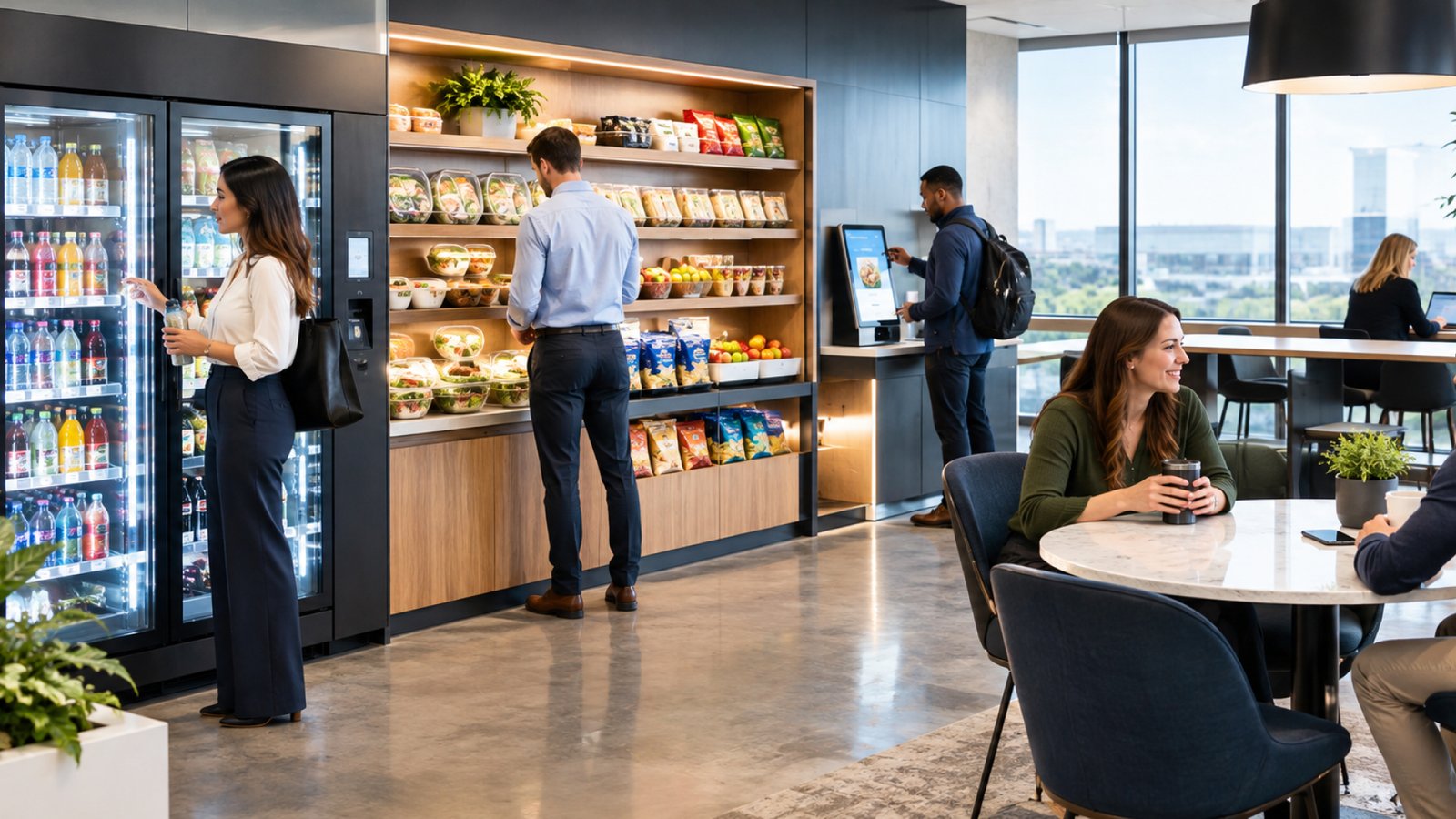
Modern vending has moved beyond the traditional snack machine. Depending on the workplace, a setup may combine connected vending equipment, cashless payments, refrigerated coolers, and self-checkout micro markets.
Smart Vending Technology and Inventory Management
One of the biggest advantages of smart vending technology is better visibility into inventory.
Connected systems can provide vending operators with sales and inventory information, helping them understand which products are selling and which items may need restocking. Instead of relying entirely on fixed schedules or manual checks, operators can use data to make more informed service decisions.
January Service Company’s AI Smart Coolers provide another approach to modern workplace refreshments, combining convenient access with technology designed to support inventory management.
For employees, the benefit is simple: a breakroom designed around consistent availability and easier purchasing.
Cashless Vending Machines and Easier Payment
A modern breakroom should also make purchasing simple.
Cashless vending machines can support payment methods such as credit or debit cards and compatible contactless options. Employees no longer need to carry exact change just to grab a drink or snack during a short break.
Reducing unnecessary steps can make vending more convenient, especially in workplaces where employees have limited break times.
Payment technology also introduces security considerations. The NIST Cybersecurity Framework 2.0 provides organizations with general guidance for managing cybersecurity risk. Businesses using connected workplace technology should consider security as part of their overall technology planning.
Micro Market Services Offer More Variety
For workplaces that need more variety than traditional vending can provide, micro market services offer another option.
A micro market is an open, self-checkout refreshment space that can include shelves, refrigerated coolers, snacks, beverages, fresh food, and grab-and-go meals. The format feels closer to a small convenience store than a traditional vending area.
Because there is more room for different product categories, micro markets can accommodate a broader mix of employee preferences.
January Service Company’s Micro Markets are designed around workplace needs, with product selections that can be adjusted according to the location and customer demand.
Food variety can also complement workplace wellness efforts. The CDC Food Service Guidelines provide guidance for creating food-service environments that make healthier food and beverage choices more accessible.
A micro market does not replace a workplace wellness program, but it can give employees more options during the workday.
How to Build a Breakroom Employees Actually Want to Use
A successful upgrade starts with understanding the workplace rather than choosing equipment first.
Before changing the breakroom, review current usage patterns. Which products sell consistently? What remains untouched? When does traffic peak? Are employees asking for healthier snacks, fresh meals, better coffee, or more convenient payment options?
From there, focus on a few practical priorities:
- Offer flexible payment options. Cashless and contactless purchasing can make transactions easier.
- Balance fresh and shelf-stable products. The right mix depends on employee demand and available equipment.
- Use inventory data. Smart systems can help operators make better-informed restocking decisions.
- Consider the physical space. Lighting, seating, accessibility, and layout influence how comfortable the breakroom feels.
- Collect employee feedback. Product preferences can change, so the initial selection should not be treated as permanent.
For businesses planning a larger technology upgrade, January Service Company’s guide to automated office refreshment technology explains how connected refreshment systems can fit into a modern workplace.
The Business Case for Modern Breakroom Vending
A breakroom upgrade does not need to be positioned as a dramatic employee benefit to provide value.
Sometimes the improvement is much simpler: employees can buy food without leaving the workplace, use their preferred payment method, and find a better range of products during their break.
There can also be operational advantages. Inventory data can help operators make more informed stocking decisions, while flexible formats allow businesses to choose between vending machines, smart coolers, micro markets, or a combination of systems.
The right solution depends on workforce size, available space, operating hours, and employee preferences.
A manufacturing facility with multiple shifts may have different needs from a hybrid office where attendance changes throughout the week. A large workplace may benefit from a full micro market, while a smaller location may only need upgraded vending equipment.
Start With the Right Breakroom Setup
Businesses do not necessarily need to replace everything at once.
A workplace can begin by identifying its biggest current problem. If employees struggle with payment options, cashless vending may be the priority. If limited food variety is the issue, a micro market may make more sense. If inconsistent inventory creates frustration, connected vending technology may deserve more attention.
Starting with a clearly defined need makes it easier to choose the right equipment and evaluate whether the upgrade is working.
Usage data and employee feedback can then guide future changes. Products can be adjusted, equipment can be added, and the breakroom can evolve as workforce needs change.
What This Means for Your Next Breakroom Upgrade
The best breakroom vending solutions are not necessarily the ones with the most technology. They are the ones that fit the workplace.
For some businesses, that means cashless vending machines with dependable product availability. For others, it may mean micro market services with fresh meals and a larger selection. Larger facilities may benefit from combining multiple options.
Smart vending technology gives operators more information, but technology works best when it supports a clear goal: making workplace refreshments easier to access and manage.
By starting with employee needs, reviewing available space, and using actual usage data to guide decisions, businesses can build a breakroom that remains practical as their workforce changes.