Nothing derails a workday faster than a broken coffee machine on a Monday morning. For many offices, coffee is more than a breakroom perk. It can shape the morning routine, employee experience, and even how much time people spend waiting for a cup.
Choosing the right office coffee machine means considering more than taste. You also need to think about the number of employees, daily usage, maintenance, water quality, and long-term costs.
This guide covers the main factors to consider when choosing a coffee machine for your workplace.
Why the Right Machine Matters
It is easy to treat coffee equipment as an afterthought. However, workplace coffee access can influence how employees feel and function during the day.
A study by PubMed Central published in Human Psychopharmacology found that employees who consumed more caffeine reported greater alertness and fewer mistakes and accidents at work than those who consumed less.
That does not mean every office needs an expensive machine. Instead, the equipment should match how your team works and provide coffee employees will actually use.
Types of Office Coffee Machines to Consider
Before comparing brands and prices, it helps to understand the main types of workplace coffee machines.
Single-Serve Pod Machines
Single-serve pod machines are a practical option for smaller offices. They are easy to use, require little training, and provide a consistent cup.
The main drawback is the higher cost per cup over time. Pod packaging can also create more waste, which may matter to businesses with sustainability goals.
Traditional Drip Brewers
Traditional drip brewers work well for teams that drink coffee throughout the morning. They are generally affordable and can brew several cups at once.
However, someone needs to manage the brewing schedule. Coffee can also lose quality when it sits on a warming plate for too long.
Bean-to-Cup Coffee Machines
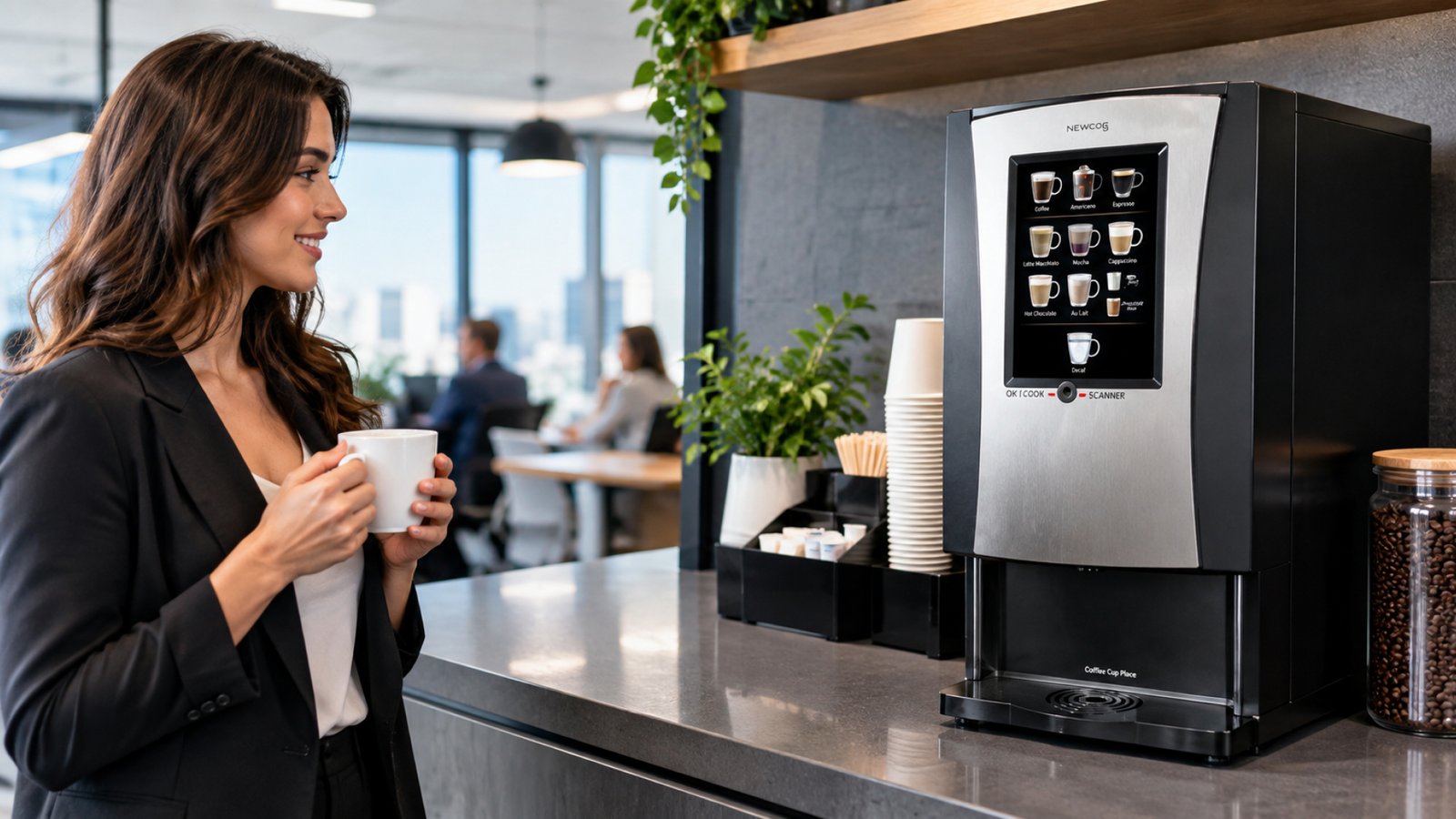
Bean-to-cup coffee machines grind whole beans before brewing each cup. This can provide a fresher taste while giving employees more options for strength and drink style.
These machines usually cost more upfront. However, they can be a strong choice for businesses that want coffee to be a more noticeable part of the employee experience.
Super-Automatic and Connected Machines
Super-automatic machines offer a more advanced setup. Depending on the model, they can prepare espresso-based drinks, provide programmable settings, and offer usage information.
They tend to make the most sense for larger workplaces or companies that want a more premium coffee experience.
Ultimately, the best machine depends on your employee count, budget, available space, and expected usage.
Match the Machine to Your Office Size
A ten-person startup and a 200-person office have very different coffee needs. Choosing the right capacity can help prevent two common problems: buying more equipment than necessary or creating long lines during busy periods.
Smaller teams may do well with a pod machine or entry-level bean-to-cup unit. Mid-sized offices may benefit from a dedicated brewing station that can handle heavier morning use.
Larger workplaces may need multiple coffee stations across different floors or departments. In these cases, an office coffee service can also help manage equipment, supplies, and maintenance.
Do not look only at headcount. Consider when employees arrive and when coffee demand peaks. An office where most employees arrive at 8 a.m. will have different needs from one where employees arrive throughout the morning.
Consider Maintenance and Water Quality
Coffee machines need regular maintenance to perform consistently. Mineral buildup from hard water can contribute to scale inside equipment and may affect performance over time.
Routine cleaning, descaling, and filter changes should therefore be part of your coffee machine plan.
Water quality matters, too. Pairing a commercial coffee machine with a water filtration system can help reduce mineral buildup and improve the taste of brewed coffee.
This is especially useful for businesses dealing with hard water. Investing in filtration can also help protect expensive coffee equipment from unnecessary buildup.
Daily hygiene is equally important. The FDA Food Code provides a model for food-service sanitation practices. Applying appropriate cleaning practices to shared coffee equipment can help keep surfaces and components clean.
Carafes, brew baskets, drip trays, and water reservoirs should be cleaned according to the machine manufacturer’s instructions and the level of daily use.
Look at Energy Efficiency and Long-Term Cost
The purchase price is only one part of the cost of an office coffee machine. Businesses should also consider electricity, supplies, maintenance, repairs, and filter replacement.
According to ENERGY STAR, certified commercial coffee brewers can be up to 35 percent more energy efficient than standard models.
Features such as improved insulation and automatic shutoff can help reduce unnecessary energy use.
When comparing machines, therefore, look beyond the initial price. A more efficient model may offer lower operating costs over its useful life.
Consider Working With an Office Coffee Supplier
Some businesses prefer working with an office coffee supplier instead of managing equipment and supplies themselves.
A supplier may handle tasks such as maintenance, restocking, equipment service, and repairs. This can reduce the amount of time employees spend dealing with coffee equipment.
Before choosing a supplier, ask how often equipment is serviced and how quickly repairs are handled. It is also worth asking whether the supplier offers different workplace coffee solutions as your business grows.
If you are comparing different setups, our guide on bean-to-cup versus a traditional pot setup explains the main differences between the two options.
Frequently Asked Questions
How much does an office coffee machine cost?
The cost depends on the machine type. Basic pod machines may cost a few hundred dollars, while commercial bean-to-cup equipment can cost thousands. Renting through an office coffee service may reduce the upfront expense.
How often should an office coffee machine be cleaned?
Cleaning frequency depends on the machine and how heavily it is used. Many machines benefit from daily surface cleaning and regular deeper cleaning or descaling. Follow the manufacturer’s maintenance instructions for the recommended schedule.
What is the difference between a bean-to-cup machine and a pod machine?
A bean-to-cup machine grinds whole beans before brewing each cup. A pod machine uses pre-portioned coffee and is generally simpler and faster to operate. The better option depends on your budget, usage, and desired coffee experience.
Does an office coffee machine need a water filter?
Not every machine requires one, but filtration can be useful in areas with hard water. Reducing mineral buildup may help limit scaling and support more consistent machine performance.
Should a business buy a coffee machine or use a supplier?
Buying gives a business more direct control over its equipment. However, the business also takes responsibility for maintenance, repairs, and supplies. An office coffee supplier can handle more of these tasks, which may be useful for busy workplaces.
Bringing It All Together
Choosing the right office coffee machine starts with understanding how your workplace actually uses coffee. Consider the number of employees, peak demand, machine type, water quality, maintenance requirements, and long-term operating costs.
A smaller team may only need a simple pod or drip machine. Larger workplaces may benefit from bean-to-cup equipment, multiple stations, or a full office coffee service.
Whatever option you choose, reliable equipment and regular maintenance can make the breakroom easier to manage. Taking time to compare your options now can help your business avoid unnecessary costs, breakdowns, and daily frustration later.