
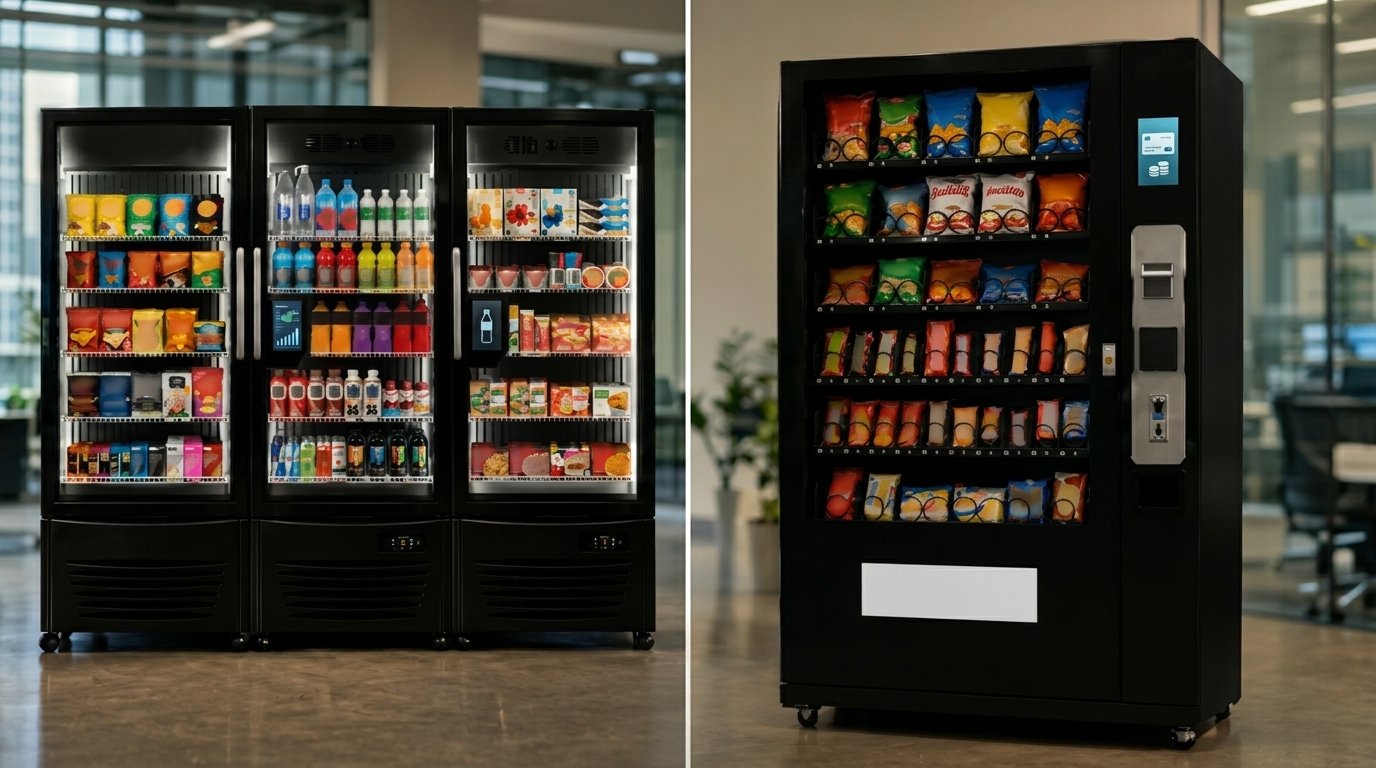
Every vending setup works fine until it does not. A machine that ran smoothly for years suddenly cannot keep up with demand. Employees start complaining that their favorite items are always sold out. At some point, businesses start asking a real question. Is it time to move from a traditional vending machine to an AI smart cooler? This guide breaks down the signs that suggest an upgrade makes sense. It also covers when sticking with what already works is still the smarter choice.
There is no single right answer for every business. The decision depends on foot traffic, product variety, and how much visibility a facility manager actually needs into daily sales. Understanding the real differences between the two systems makes that decision much easier.
What Actually Separates an AI Smart Cooler From Traditional Vending?
A traditional vending machine works through mechanical selection. Employees choose a slot, insert payment, and the machine drops or dispenses the item. It is simple and reliable. But it offers limited visibility into what is selling and little flexibility in how products are displayed.
An AI vending machine, including AI powered coolers, works differently. Instead of individual slots, employees open the cooler door, take what they want, and walk away. Cameras and sensors identify the items removed and charge the account automatically. This creates a form of frictionless shopping where there is no scanning, no cash, and no waiting in line.
Research on computer vision checkout systems helps explain how this works. A study published on arXiv found that convolutional neural networks can identify retail items under a camera. Similar computer vision technology helps power automatic checkout in some smart coolers.
Sign One: Employees Are Frustrated by Frequent Stockouts
If certain items sell out consistently and stay empty for hours, that is often a sign the current system cannot keep pace with actual demand. Traditional vending machines rely on manual restocking schedules. That means popular items can disappear well before the next visit.
Inventory tracking built into smart coolers changes this. The system knows exactly what has been purchased in real time. Restocking teams get accurate alerts instead of guessing based on a fixed schedule. Businesses exploring AI smart coolers for the first time often start here. Solving stockouts tends to be the most immediate win.
Sign Two: Your Facility Has Outgrown a Single Machine
A small break room with light foot traffic may never need more than a standard vending machine. But facilities grow. More employees, added shifts, or a larger footprint can all push a single traditional machine past its limits.
Smart coolers typically hold a wider variety of products than a mechanical vending machine, since there is no need for individual coil slots. This makes them a strong fit for facilities that want more fresh food and snack variety, without lining up multiple machines side by side. Running several refrigerated units around the clock also raises a practical question worth asking early. How much energy will this equipment actually use?
Sign Three: Payment Friction Is Slowing Down Breaks
Employees only get so much time during a break. If cash handling or slow card readers are eating into that time, it is worth looking closely at payments. Contactless payment support is now standard in most smart coolers. Employees can tap a card or phone and walk out without waiting on a traditional transaction.
This matters more than it might seem. A slow purchasing process during a short break can leave employees feeling rushed. That chips away at the overall employee experience, even when the food and drink options at your current vending setup are good.
Sign Four: You Need Better Data, Not Just Better Snacks
Traditional vending machines can provide sales data, but the level of detail varies by system. An AI smart cooler goes further, showing exactly which products perform well during specific shifts. This level of detail helps reduce waste, since orders can reflect what actually sells rather than a general guess.
This kind of visibility helps facility managers make smarter purchasing decisions over time. Instead of relying on generic product assumptions, teams can order based on what real data shows.
Do Not Overlook Food Safety in the Decision
Any cooler storing fresh food, whether traditional or AI powered, still has to keep that food at a safe temperature. The FDA’s guidance on cooling food safely explains how quickly perishable food must move through safe temperature ranges to avoid bacterial growth. The same rule applies to a smart cooler’s fresh grab and go items and to a standard refrigerated vending machine. It is worth confirming with any provider exactly how temperature control is monitored.
When Sticking With Traditional Vending Still Makes Sense
Not every business needs to upgrade right away. A small office with predictable, low volume snack needs may not see enough benefit to justify the investment. If stockouts are rare and payment friction is not a common complaint, a traditional vending machine may still be the more practical choice.
Cost also plays a role. Businesses weighing the investment should also consider the cost of downtime tied to unreliable machines. A well maintained traditional vending setup can still outperform a poorly supported smart cooler. This is especially true when the provider behind it responds slowly to service calls. On the energy side, the ENERGY STAR program notes that certified refrigerated vending machines run meaningfully more efficiently than standard models. Businesses should factor that into either decision.
How to Decide: A Practical Checklist
Before making a decision, it helps to ask a few direct questions. How often do employees complain about empty machines or long lines? Does the facility have enough foot traffic to justify a wider product selection? Would better sales data actually change how products are stocked and ordered? Are payment delays a real friction point, or just a minor inconvenience?
If most of these point toward frustration with the current setup, an upgrade is likely worth exploring. If the current system runs smoothly with few complaints, there may be no urgent need to change anything yet. It also helps to talk directly with employees rather than guessing at their preferences. The people using the breakroom every day usually know exactly where the friction points are.
There is no universal timeline for making this switch. The right moment depends on workforce size and how much visibility your team actually needs. It also depends on whether the current setup is creating real, daily friction for employees. Testing one smart cooler in the busiest location first is often the lowest risk way to see the real difference before committing further.
Read the Signs, Not the Sales Pitch
The businesses that get the most value from an AI smart cooler are rarely the ones chasing the newest gadget on the market. They are the ones who noticed a real pattern first. Empty shelves by mid afternoon. A line of employees waiting on a slow card reader. A facility manager guessing at reorders instead of working from real numbers.
If none of that sounds familiar, there is nothing wrong with keeping things simple. A traditional vending machine, well stocked and well maintained, still does its job. But if those patterns do sound familiar, that is usually the clearest signal a business gets that it is time to upgrade.