Empty shelves, jammed spirals, and missing stock have long been the main frustrations of workplace breakroom services. Traditional vending models often leave employees disappointed when their favorite meal or drink is out of stock. AI smart coolers solve this issue by changing how workplace food and beverage inventory management is handled, monitored, and restocked.
Modern workplaces need reliable, continuous access to fresh food and refreshments. Combining computer vision, Internet of Things (IoT) sensors, and predictive algorithms transforms automated retail into an intelligent system. This article explains how smart cooler technology works, how real-time inventory tracking maintains stock, and why these systems improve product availability for employees.
Why Traditional Breakroom Systems Fall Short
Legacy vending machines rely on mechanical coils and static scheduled restocking. If an item sells out on Monday morning, the slot stays empty until the route driver’s next scheduled visit. Traditional open-shelf micro markets give employees more product variety, but they rely entirely on manual scanning. This manual process can lead to inventory errors, unrecorded sales, and stock loss.
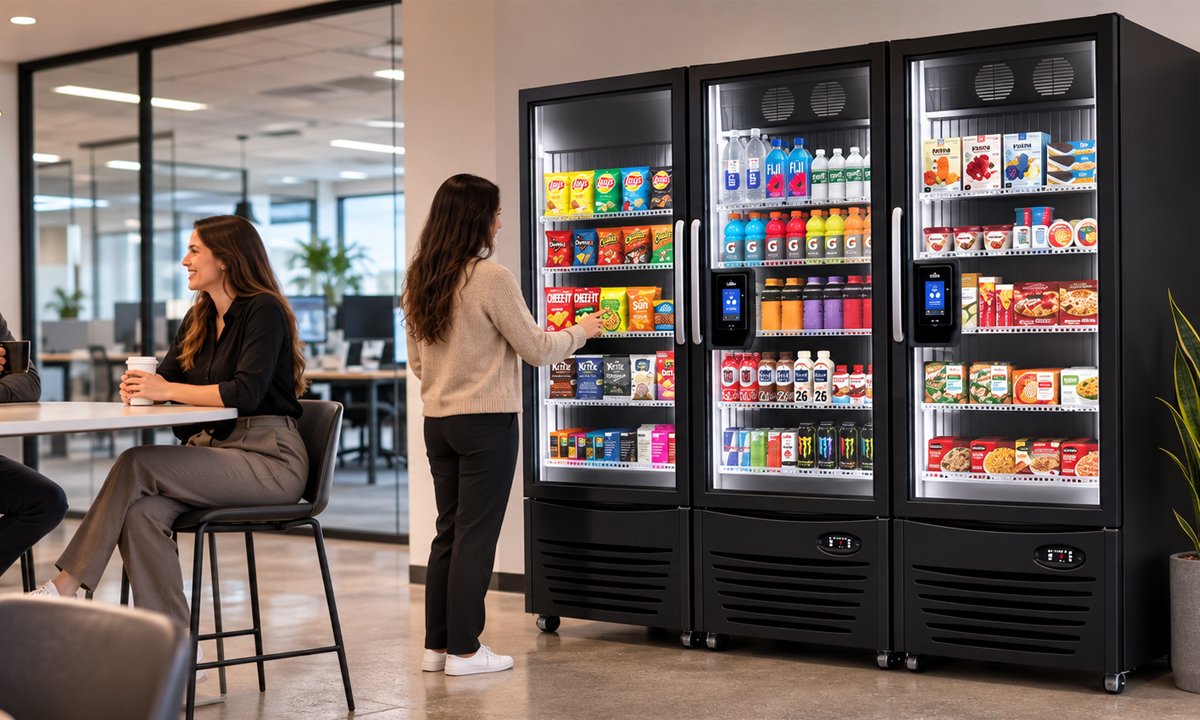
AI smart coolers bridge the gap between traditional vending and open micro markets using connected technology that tracks every transaction automatically. These closed units stay locked until a user presents a credit card or mobile payment. Once unlocked, the customer opens the door, selects their items, and closes the cabinet. The system identifies what was taken, charges the account automatically, and updates the inventory log instantly.
This approach provides a seamless checkout experience while giving operators precise data on stock levels. By replacing manual routines with automated tracking, businesses eliminate the guesswork of breakroom management and reduce the back-and-forth between facility managers and their service provider over missing or miscounted products.
Real-Time Inventory Tracking and Automated Replenishment
Maintaining product availability requires complete visibility into stock levels at all times. AI smart coolers use internal cameras and weight-sensing shelves to log every transaction as it happens.
Research published in PMC demonstrates how real-time, camera-based self-service systems track products and inventory without requiring manual barcode scanning. When an employee takes an item, visual recognition sensors identify the product and update the system instantly.
Automated restocking notifications help route drivers receive instant alerts when stock drops below set thresholds. This prevents popular items from staying empty for days.
Accurate route planning allows service trucks to visit facilities with exact replacement items, minimizing unnecessary delivery trips.
Waste reduction strategies monitor expiration dates on fresh sandwiches, salads, and dairy products to ensure older stock moves out first, reducing food waste.
With real-time inventory tracking, breakrooms stay consistently stocked with fresh meals, snacks, and drinks without requiring manual stock checks. Facility managers also gain a clearer picture of overall performance, since dashboards can show which machines run low most often and which locations may need a larger unit or an adjusted delivery schedule.
Smart Data Analytics for Demand Forecasting
Knowing current inventory levels is only half the battle. Predicting future demand ensures that popular items do not run out during peak break hours.
Smart cooler technology analyzes historical purchasing patterns to forecast demand accurately. It tracks sales volume by hour, day of the week, and seasonal weather shifts. For instance, if an office consumes more cold brew coffee on hot Monday mornings and energy drinks on Thursday afternoons, the system adjusts stock recommendations accordingly.
This data-driven approach replaces static stocking routines with predictive planning. Service providers can customize product offerings for each facility’s unique workforce preferences, rotating in seasonal items or swapping out slow sellers based on actual purchase history rather than guesswork.
Over time, this kind of demand forecasting also helps reduce unnecessary product waste. Instead of stocking every unit with the same fixed assortment, providers can tailor quantities to match how each specific breakroom actually gets used, which keeps shelves fuller with the right items instead of just fuller overall.
Reducing Downtime Through Predictive Maintenance
A machine cannot deliver products if it is out of service. Mechanical failures, cooling compressor issues, or network disconnects directly harm product availability.
Modern AI smart coolers use IoT telemetry to monitor internal operating conditions constantly. Predictive maintenance models analyze IoT sensor data, such as cabinet temperature and compressor vibration, to forecast equipment failures before downtime occurs. Research on predictive equipment monitoring by arXiv shows how machine learning prevents sudden breakdowns and keeps coolers running smoothly.
By tracking environmental parameters, the cooler detects minor system issues early. If a cooling component shows signs of failure, an automated service alert dispatches a technician before food items spoil or the cabinet shuts down. Further academic research on ScienceDirect highlights how cloud-based IoT architectures support central management of automated retail networks.
This kind of early detection matters most for perishable inventory. A single unnoticed temperature fluctuation can spoil an entire cabinet of fresh sandwiches and salads overnight, so catching the problem within minutes rather than during the next scheduled visit protects both product quality and employee trust in the breakroom.
Loss Prevention and Inventory Security
Stock shrinkage is a major challenge for open micro-markets and unsecured snack racks. Unrecorded items distort stock counts, leaving system logs showing products in stock that are missing from shelves.
Integrated theft prevention technology addresses this issue directly. The cooler door remains locked until a valid payment method is verified. Once the door opens, machine vision cameras capture item movements from multiple angles. When the door closes, the system tallies the selected items and completes the transaction instantly.
Securing the cabinet while automating billing protects inventory management records from discrepancies. Facility managers receive precise stock counts, ensuring replenishment alerts trigger correctly when inventory runs low. This also removes a common source of frustration in shared workplaces, where honor-system payment can quietly erode both product margins and morale.
Improving Employee Satisfaction Across All Shifts
Workplace schedules extend far beyond standard day shifts. Facilities operating multiple shifts, healthcare centers, and manufacturing plants require 24/7 access to fresh food and drinks.
Traditional cafeterias usually close in the early afternoon, leaving evening and overnight shifts with limited food choices. AI smart coolers provide continuous, unstaffed access to fresh meals, salads, and healthy beverages.
Because the system tracks sales and monitors machine health continuously, overnight teams enjoy the same product selection as morning shifts. Keeping breakrooms well-stocked around the clock supports employee well-being, energy levels, and job satisfaction, and it signals to every shift that their break time matters just as much as anyone else’s.
Upgrading Workplace Refreshment Programs
Integrating smart cooling units improves how businesses handle workplace refreshments. Automated tracking, predictive stocking, failure detection, and secure access ensure that breakroom products remain available when employees need them.
Transitioning to automated retail systems helps operations run smoothly, cuts maintenance delays, and keeps shelves stocked with fresh, quality options. For businesses still relying on manual restocking routes or open-shelf setups, the shift to AI-driven coolers is often less disruptive than expected, since most units integrate directly into existing breakroom layouts without requiring major renovations.
Upgrade your breakroom experience with modern automated solutions. Explore January Service Company to learn how our managed AI smart coolers and self-service refreshment services can support your workplace.