
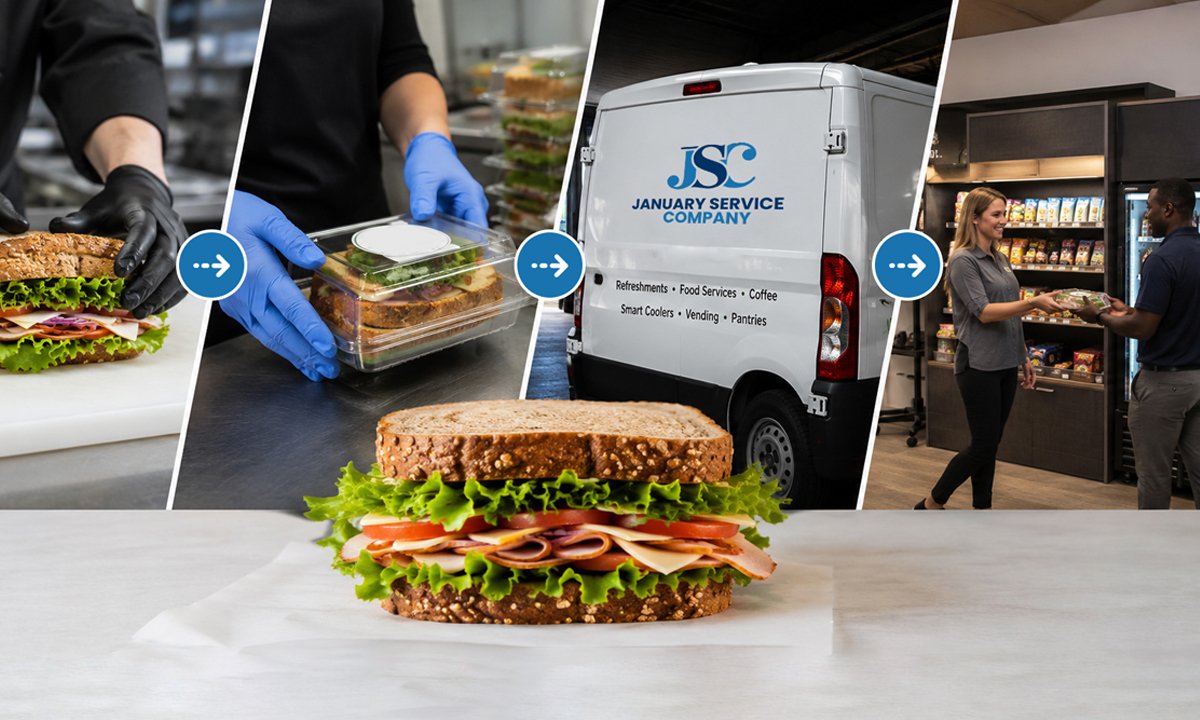
A sandwich seems simple. Bread, protein, a few fresh ingredients, and it is ready to eat. The journey is much longer than most employees realize.
Before it reaches an office breakroom, a fresh sandwich passes through several important stages. These include ingredient sourcing, preparation, packaging, transportation, and refrigerated storage.
For businesses that rely on workplace food services, this process matters. It affects freshness, quality, food safety, and the overall employee experience.
A good sandwich program is not just about putting food in a cooler. It requires careful planning at every stage. This article follows the journey of a fresh sandwich from preparation to the breakroom. It also explains what businesses should look for when choosing a fresh food provider.
Why Fresh Sandwiches Matter in the Workplace
Employees do not always have time to leave the building for lunch. Some have short breaks. Others work in busy environments where leaving the facility is not practical.
That makes on-site food an important convenience.
Grab and go food gives employees a quick option during a busy workday. A fresh sandwich can also provide a more substantial meal than many packaged snack options.
Convenience becomes even more important when employees have limited break time. A food option that is close, refrigerated, and ready to eat can make the lunch decision much easier.
The food environment at work can also shape how employees eat over time. Research on workplace food environments has found that access, convenience, and available options at work play a meaningful role in employees’ everyday food choices. Read the study by PubMed on workplace food environments and employee eating behavior.
Businesses cannot make every food decision for employees. They can, however, make convenient, better options easier to reach during the workday. Reliable access to fresh food is one practical part of a well-planned workplace environment.
Step One: Sourcing Quality Ingredients
The journey starts before anyone makes the sandwich.
A reliable food service program needs dependable suppliers. Ingredients may include bread, proteins, vegetables, cheese, sauces, and other fillings.
Quality starts with receiving those ingredients properly. Staff should check deliveries and follow established handling procedures. Ingredients that do not meet the provider’s standards should not move into production.
Freshness also depends on timing. Ingredients that spend too long in storage may lose quality before they become part of a finished product.
That is why food freshness begins with the supply chain.
Businesses should ask providers how they source ingredients. They should also ask how providers manage refrigerated products and monitor freshness throughout the process.
A transparent answer can tell you a lot about the quality of the overall program.
Step Two: Preparation and Food Safety
Once ingredients arrive, preparation begins.
Professional food preparation requires consistent hygiene and handling practices. Staff need to keep preparation areas clean. They also need to prevent cross-contamination and maintain appropriate temperatures.
These steps protect the quality and safety of ready-to-eat food.
Food safety becomes even more important when a sandwich contains ingredients such as deli meat, cheese, or other refrigerated foods. Each ingredient needs appropriate handling from preparation through storage.
The process does not end when the sandwich is assembled. The finished product still needs proper packaging, labeling, and refrigeration.
The USDA Food Safety and Inspection Service recommends four basic practices for keeping food safe: clean, separate, cook, and chill. These principles help reduce the risk of contamination and foodborne illness during food preparation and storage. Review the USDA’s food safety basics for safe food handling.
Good providers treat food safety as part of the entire process. It should not be something they consider only after food reaches the workplace.
Step Three: Packaging and Fresh Food Delivery
After preparation, staff package each sandwich for transport.
Packaging helps protect the food during storage and delivery. Providers can also use date labels to help track products and manage rotation.
The next stage is transportation.
Fresh food needs appropriate temperature control while it moves from the preparation location to the workplace. This refrigerated process is often described as a cold chain.
Maintaining that chain helps protect product quality during transportation. It also supports proper food handling.
This is one reason fresh food delivery requires more planning than delivering shelf-stable snacks.
The provider needs to consider travel time, refrigeration, delivery schedules, and storage at the destination. A short and well-managed delivery process can help the food arrive in better condition.
For businesses, this is worth asking about before choosing an office sandwich delivery program.
Do not focus only on the menu. Ask how the provider handles transportation and temperature control.
Step Four: Arrival at Your Breakroom
The sandwich has now reached its destination.
At the workplace, staff need to place it into appropriate refrigerated storage. This could include a refrigerated display case, smart cooler, or another suitable food storage system.
The provider also needs a clear rotation process.
Older products should not remain in front of newer products indefinitely. Staff should monitor dates and remove items according to established food handling procedures.
This is where a managed workplace food program can make a difference.
January Service Company offers pantry service and ai micro market solutions for businesses looking to expand their workplace food options.
Both services can provide a more organized way to offer food and beverages on-site. The right setup depends on the size of the workplace, employee demand, available space, and operating schedule.
Why Fresh Food Can Improve the Breakroom Experience
A breakroom should be more than a place where employees grab a quick snack.
It should give employees a practical place to step away from their work and enjoy a meal. Fresh food can help make that space more useful.
This becomes especially important for workplaces with demanding schedules.
A well-planned workplace food program can also make nutritious choices more convenient. Our article on the Benefits of fresh food vending machines for workplace productivity explores how convenient access to fresh food can support a better workplace experience.
The goal is not to tell employees what they should eat. It is to give them more convenient choices during the workday.
When fresh food is easy to access, employees can make their own decisions without leaving the workplace.
What Sets a Reliable Sandwich Program Apart?
Not every fresh food program operates the same way.
Businesses should look beyond the appearance of the cooler or the number of menu items. The service behind the food matters just as much.
A reliable program should include:
- Quality ingredients from dependable suppliers
- Consistent food preparation practices
- Appropriate refrigerated storage
- A managed cold chain
- Clear product date labeling
- Regular product rotation
- Delivery schedules based on demand
- Monitoring of employee preferences
- Responsive service and restocking
These details can determine whether employees continue using the program.
A cooler full of food does not automatically make a good workplace food service. The provider needs to keep the selection fresh and relevant.
Demand should also guide product selection. If employees consistently choose turkey sandwiches but rarely purchase a particular option, the provider can use that information to adjust inventory.
The goal is not to offer the largest possible menu. The goal is to offer food employees actually want.
Fresh Sandwiches and Workplace Convenience
Convenience is one of the biggest advantages of an on-site food program.
Employees can choose a meal without leaving the building. They can use their break for eating instead of spending part of it driving to a restaurant.
That can be particularly useful in large offices, industrial facilities, distribution centers, and other workplaces where nearby food options may be limited.
A well-managed grab and go food program also gives employees more choice. Some may want a sandwich. Others may prefer a salad, snack, drink, or another fresh option.
The best programs recognize those differences.
They also use workplace demand to decide what should remain available.
How January Service Company Supports Fresh Food Programs
January Service Company has expanded its fresh food capabilities through its Memphis Culinary Center.
The goal is to create a more direct path between preparation and delivery for businesses in the Mid-South. A shorter delivery route can help simplify logistics and reduce unnecessary time in transit.
The company also uses its workplace food services to bring fresh options closer to employees.
For businesses, this can create a more convenient alternative to relying only on packaged vending snacks.
The right solution still depends on the workplace. Some businesses may benefit from a pantry program. Others may prefer a micro market. A combination of services may make sense for larger locations.
The important point is to match the program to actual employee demand.
Keeping Fresh Sandwiches Safe After Delivery
Food safety does not stop when the delivery arrives.
The workplace needs to maintain appropriate storage and cleanliness. Employees should also have a suitable area for eating.
The FDA recommends practices for buying, storing, and serving food safely once it reaches its destination, including keeping cold food cold, protecting food from contamination, and maintaining clean surfaces and storage areas. Review the FDA’s guidance on buying, storing, and serving food safely.
That makes breakroom maintenance an important part of the overall food program.
A clean refrigerator is useful. A clean counter is useful. Proper waste disposal is useful. Together, these small details create a better environment for employees.
The USDA also emphasizes the importance of keeping food at safe temperatures and preventing cross-contamination. Those principles remain important after food reaches the workplace.
Common Questions About Fresh Sandwich Programs
How often should fresh sandwiches be rotated?
There is no single rotation schedule for every sandwich.
The appropriate schedule depends on the product, ingredients, packaging, storage conditions, and provider’s food safety procedures. A reliable provider should have a clear process for monitoring dates and rotating inventory.
Employees should also be able to identify product dates easily.
What makes fresh sandwiches different from typical vending snacks?
Traditional vending programs often focus on packaged products with longer shelf lives.
A fresh sandwich program takes a different approach. It relies on refrigerated food with a shorter usable window.
That difference creates additional requirements for preparation, transportation, storage, and rotation.
The benefit is a meal option that feels more like fresh workplace food than a packaged snack.
Can a small office offer fresh sandwiches?
Yes.
The program simply needs to match the office’s demand.
A smaller workplace may need fewer deliveries or a smaller product selection. A larger workplace may need more frequent service and greater variety.
Smart coolers and micro markets can also give providers more flexibility when managing fresh food programs.
What should a business ask a food service provider?
Start with the basics.
Ask where the food is prepared. Ask how products are transported. Ask how temperatures are managed. Ask how often products are rotated.
You should also ask how the provider adjusts its menu based on employee demand.
These questions help businesses compare the entire service rather than looking only at the price of individual sandwiches.
What This Means for Your Team
The next time an employee picks up a sandwich from the breakroom cooler, that simple choice represents several stages of work.
It started with ingredient sourcing. Staff then prepared and packaged the food. A controlled delivery process moved it to the workplace. Finally, the provider stocked and managed it in the breakroom.
Each stage matters.
A reliable fresh food program can make workplace meals more convenient. It can also give employees more choices during their breaks.
For businesses, the key is to choose a provider that understands the complete journey. Fresh food needs more than a refrigerator and a menu. It needs careful preparation, transportation, storage, rotation, and service.
If your Memphis-area workplace is considering office sandwich delivery or a broader workplace food services program, January Service Company can help you explore options that fit your space and employee needs.
The result should be simple for employees: walk into the breakroom, find a fresh option, and get back to their day.