
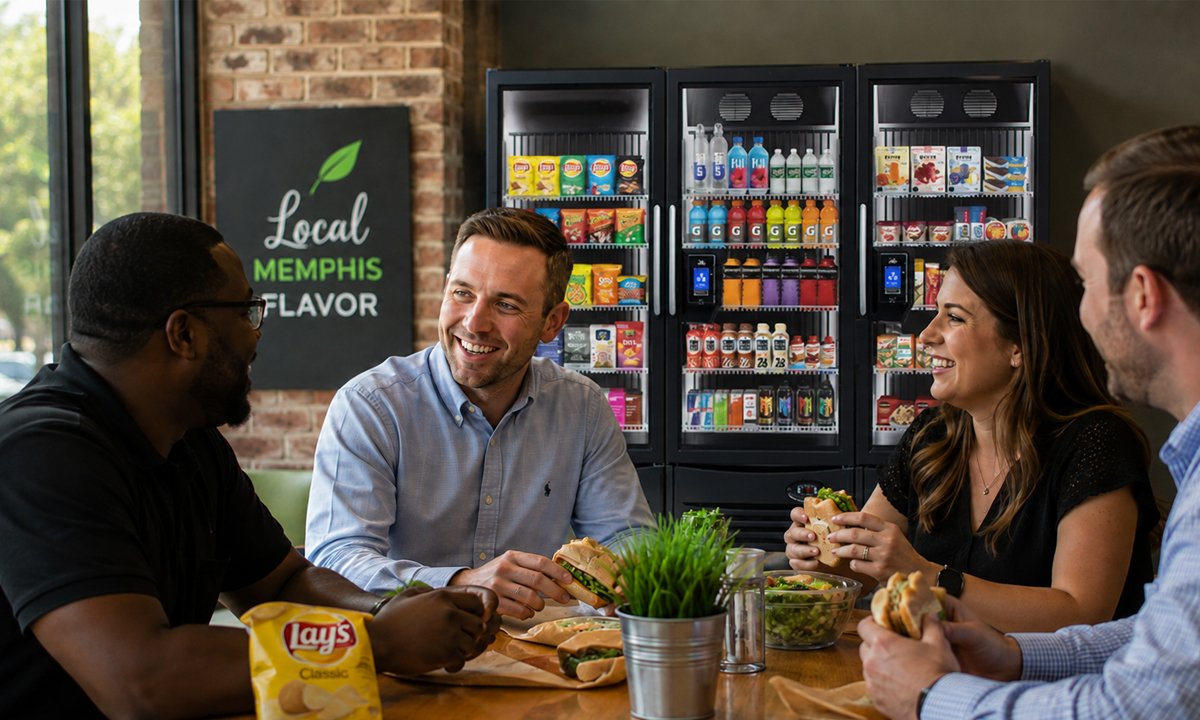
Walk into almost any Memphis office or break room today, and the snack drawer looks different than it did a decade ago. More Memphis businesses are intentionally choosing locally made food instead of defaulting to whatever a national chain ships out on a standard rotation, and the reasoning is more practical than sentimental.
What Makes Food “Locally Made”?
There is no single legal definition that separates “local” food from everything else. According to the U.S. Department of Agriculture’s Economic Research Service, local food is typically defined less by a strict mileage radius and more by the relationship between producer and buyer, meaning food sold directly or through a short supply chain rather than moving through a large, centralized distribution network.
For Memphis businesses, that distinction matters. Locally made food usually comes from a bakery, kitchen, farm, or small manufacturer operating in or near the city, rather than a factory producing identical packaged goods for thousands of locations across the country.
The Freshness Factor: Why Fresh Ingredients Still Win
Ask any Memphis facilities manager why they switched vendors, and freshness usually comes up first. National chains rely on long, multi-state distribution routes. Products can spend days or even weeks in transit and storage before reaching an employee’s hands.
Local producers do not have that problem. A shorter supply chain helps fresh food reach Memphis businesses faster. It also gives products less time to lose quality along the way. Fresh ingredients can retain their flavor and nutritional value better than items stored in a regional warehouse for weeks.
A shorter path from producer to break room also reduces the need for heavy preservatives. National brands often use preservatives to support longer transit times. That is one reason locally made food can taste closer to homemade.
This difference is especially noticeable with perishable foods. Baked goods, produce, and dairy-based snacks can lose quality quickly after production. A national brand may need to plan around deliveries across several states. A Memphis-based baker or producer only needs to plan for local delivery. That means less handling, fewer preservation compromises, and food that tastes closer to its intended quality.
The Economic Case for Choosing Local Food Suppliers
Freshness is only part of the story. There is also a straightforward economic argument for working with local food suppliers instead of national chains.
Research from the Fair Food Network points to what economists call the local multiplier effect, the idea that money spent with a locally owned business circulates through that community two to three times more than money spent with a non-local business. When a Memphis company buys a national chain’s product, most of that revenue leaves the region immediately. When it sources from local food suppliers instead, a much larger share of that spending stays in Memphis, supporting other small businesses and regional producers.
This is one reason many employers are rethinking how their break rooms are stocked. Businesses exploring a modern ai micro market setup often find it easy to rotate in local food products alongside national staples, giving employees variety while keeping more of the company’s spending in the local economy.
For a city like Memphis, where small and mid-sized businesses make up a significant share of the local economy, this kind of purchasing decision adds up. A single office switching a handful of vending or pantry items to local suppliers will not transform the regional economy on its own, but it does contribute to a broader pattern that keeps producers, bakers, and small manufacturers in business, which in turn keeps the local food scene diverse enough to keep offering something better than a standardized national catalog.
Health-Conscious Employees Are Driving the Shift Toward Healthy Food
Workplace food decisions are not just about taste and economics anymore. A peer-reviewed study published through the National Institutes of Health found that consumers increasingly associate local food with better health and environmental outcomes, and that belief directly influences purchasing behavior.
For Memphis businesses, offering healthy food does not have to mean sacrificing convenience. Local producers tend to be more flexible than national manufacturers, making it easier to introduce lower-sugar snacks or simpler ingredient lists without waiting on a corporate product catalog to catch up with demand.
Memphis’s Business Culture Reinforces Local Buying Habits
Memphis has a well-documented culture of supporting small and local businesses, and that mindset extends naturally into food purchasing decisions. This same shift is playing out across the city’s vending and breakroom services, where businesses are increasingly choosing local operators over national chains for many of the same reasons: freshness, accountability, and a stronger connection to the community they serve.
What This Means for Memphis Workplaces
Put these factors together and the case for locally made food becomes clear. It is fresher, it keeps more spending inside the Memphis economy, it aligns with employees’ health priorities, and it reflects the community-first values that define much of the city’s business identity.
For companies ready to make the shift, the transition does not need to be complicated. Many Memphis businesses start by reviewing their existing pantry service program and identifying where local products can realistically replace national chain items.
Bringing Locally Made Food Into Your Business
None of this means national chains disappear from Memphis break rooms entirely, and they probably should not. Reliability still matters, especially for businesses juggling multiple locations or unpredictable schedules. But the businesses getting this right are not treating it as all-or-nothing. They are asking a better question: where does local actually make the offering better, and where does a national product still make sense? Usually, the answer favors locals on freshness, flavor, and ingredient transparency, while national products still hold their place for consistency and shelf-stable staples.
Making the shift does not require overhauling an entire program overnight. Most Memphis businesses start small, swapping in a handful of local snacks or beverages. Once businesses see what works, they can expand their selections. Over time, these changes can create a break room that looks and tastes different from a generic national chain setup. They can also keep more spending in the local economy and reflect the community-first values that matter to Memphis businesses. As more companies make that connection, local food is quickly becoming less of an alternative and more of the new standard.