
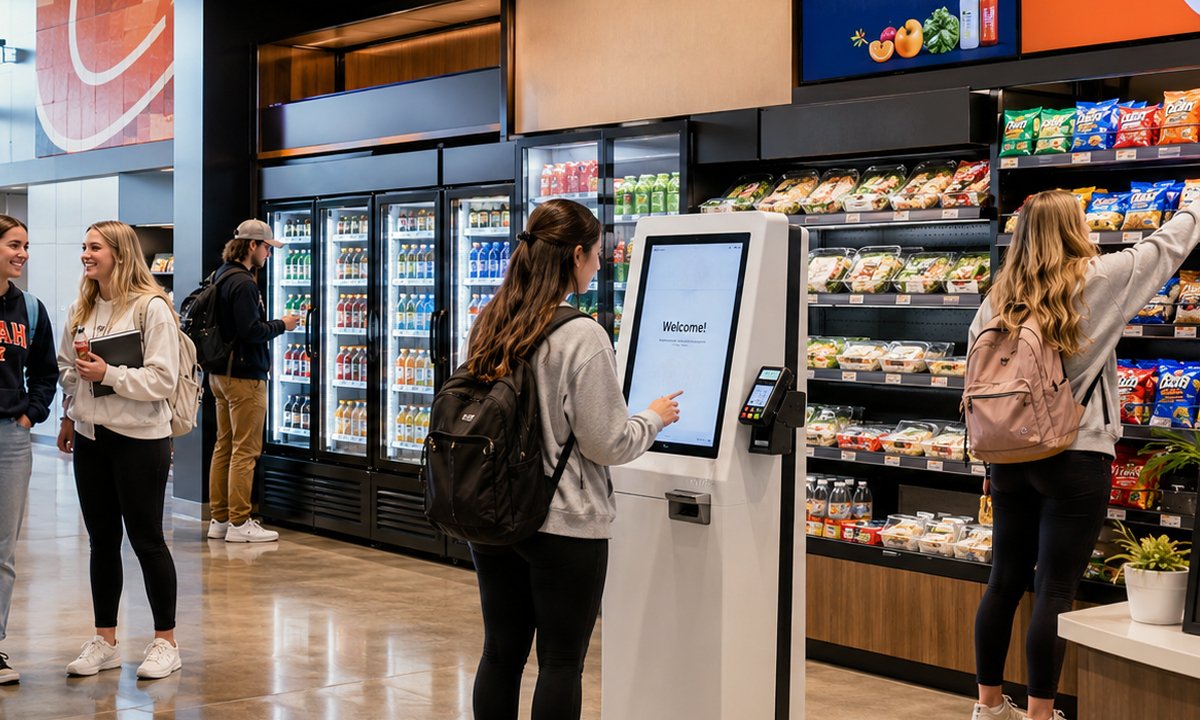
Universities operate far beyond standard business hours. Students attend evening classes, study late into the night, participate in campus activities, and often live on campus year-round. Faculty members conduct research, administrative teams manage operations, and support staff work around the clock. This constant activity creates a growing demand for convenient food and beverage access at all hours.
To meet these needs, many institutions are adopting micro market services as part of their campus infrastructure strategy. Unlike traditional vending machines, micro markets provide a self-service shopping experience with a broader selection of products, modern payment options, and greater convenience. These systems help universities support students and staff while improving overall campus operations.
As higher education institutions continue embracing technology and service innovation, micro markets are becoming an increasingly valuable component of modern campus life.
Why Universities Need Flexible Food Access
Traditional dining halls play an important role on college campuses, but they often operate within fixed schedules. Students studying after midnight or arriving early for classes may find limited food options available outside standard dining hours.
This challenge affects more than students. Faculty, campus security personnel, maintenance teams, and overnight staff also require reliable access to refreshments throughout the day and night.
Micro markets help bridge these gaps by offering continuous access to food and beverages. Their ability to operate without dedicated staffing makes them especially effective for locations that experience varying levels of activity throughout the day.
Many universities are finding that micro markets complement existing dining services while expanding convenience across campus.
Benefits of Micro Market Services for Campus Operations
- Provide food and beverage access twenty-four hours a day
- Support students, faculty, and staff across different schedules
- Reduce dependence on dining hall operating hours
- Offer more variety than traditional vending machines
- Improve convenience in residence halls and academic buildings
- Help universities expand services without major staffing increases
These advantages make micro markets a practical solution for institutions seeking to improve operational efficiency while enhancing the campus experience.
Supporting Modern Campus Food Service Expectations
Today’s students expect convenience in nearly every aspect of campus life. From online learning tools to digital payment systems, technology has reshaped how students interact with university services.
The same expectation applies to campus food service. Students increasingly prefer flexible dining options that allow them to grab snacks, beverages, or meals whenever needed.
Through ai micro market services, universities can provide a retail-style experience that gives students more choices than traditional vending machines. Fresh meals, healthy snacks, beverages, and grab-and-go items can all be offered within a single location.
This flexibility supports both student convenience and institutional goals related to service accessibility.
How Unattended Retail Supports 24/7 Campus Activity
One of the biggest advantages of micro markets is their ability to function as unattended retail environments. Advanced payment technology and inventory systems allow students to browse products, make selections, and complete purchases independently.
This model enables universities to maintain food availability even when dining facilities are closed. It also reduces the staffing requirements associated with traditional retail operations.
The growth of unattended retail aligns with broader campus technology trends. According to insights from Wikipedia’s Smart Campus overview, universities are increasingly integrating digital technologies to improve efficiency, convenience, and service delivery across campus environments.
Micro markets fit naturally within these smart campus initiatives by combining accessibility with operational efficiency.
Improving Food Accessibility Across Campus
Food access plays a significant role in student success and overall campus well-being. Students who have convenient access to meals and snacks can better manage demanding academic schedules and extracurricular commitments.
Micro markets improve food accessibility by placing refreshments in strategic campus locations where students spend significant amounts of time. Residence halls, libraries, student centers, and academic buildings are all common deployment areas.
Reliable access becomes particularly important during exam periods, weekends, and holiday breaks when traditional dining schedules may be reduced.
Resources from the Centers for Disease Control and Prevention (CDC) emphasize the importance of nutrition and healthy eating habits for overall health and wellness. Expanded food access supports these goals while enhancing the student experience.
Why Micro Markets Are Replacing Traditional Vending Solutions
For decades, vending machines served as the primary source of after-hours refreshments on many campuses. While they remain useful in certain environments, universities increasingly recognize the limitations of traditional vending systems.
Micro markets offer larger product selections, greater flexibility, and a more engaging shopping experience. Students can browse multiple categories of products rather than being restricted to what fits inside a vending machine.
This shift mirrors broader trends in workplace and educational environments where organizations seek alternatives that better meet user expectations.
Although terms such as vending machine memphis, vending service memphis, and vending machine supplier memphis are often associated with commercial refreshment solutions, the same evolution toward self-service retail is influencing university campuses nationwide.
Many institutions are exploring solutions that provide the convenience of a convenience store while maintaining the efficiency of automated retail systems.
The Role of Technology in Campus Operations
Technology continues to transform higher education. Universities use digital tools to improve communication, learning experiences, facility management, and operational efficiency.
The expansion of digital infrastructure is helping universities deliver services more efficiently and respond to evolving student expectations. According to insights from the World Bank’s Digital Development and AI initiatives, technology continues to play a critical role in improving operational performance, accessibility, and service delivery across institutions. Micro markets reflect this shift by combining automated retail, digital payments, and data-driven inventory management into a convenient campus solution.
Micro markets benefit from many of the same innovations. Digital payments, inventory tracking, and automated monitoring help institutions manage services more effectively while providing a better user experience.
Universities implementing ai smart store technology often discover additional opportunities to improve self-service retail operations and expand convenience offerings across campus.
The integration of technology enables universities to respond more effectively to changing student needs while maintaining operational control.
Factors Driving Student Satisfaction
- Convenient access to food and beverages at any time
- Greater product variety and healthier options
- Reduced need to leave campus for refreshments
- Faster purchasing through digital payment systems
- Improved availability during evenings and weekends
- Enhanced campus convenience overall
These factors contribute directly to student satisfaction, helping universities create more supportive and engaging campus environments.
Learning from Large-Facility Micro Market Success
Universities share many characteristics with other large facilities that operate throughout the day and night. Multiple buildings, diverse user groups, and varying schedules create similar operational challenges.
Institutions considering micro markets can learn from successful implementations in comparable environments. The article How Micro Markets Work in Large Facilities highlights how these systems improve accessibility, efficiency, and convenience across large-scale operations.
Many of the same benefits apply directly to college campuses, making micro markets a logical extension of broader service modernization efforts.
Conclusion
Universities face growing pressure to support students and staff around the clock while maintaining efficient operations. Micro market services provide a practical solution by expanding food accessibility, enhancing campus food service, and supporting continuous campus operations.
Through unattended retail, universities can provide convenient access to refreshments without the limitations of traditional dining schedules. These systems also serve as effective vending machine alternatives, offering a broader selection of products and a more engaging shopping experience.
As campuses continue investing in technology and student-centered services, micro markets will remain an important tool for improving convenience, efficiency, and overall student satisfaction.