
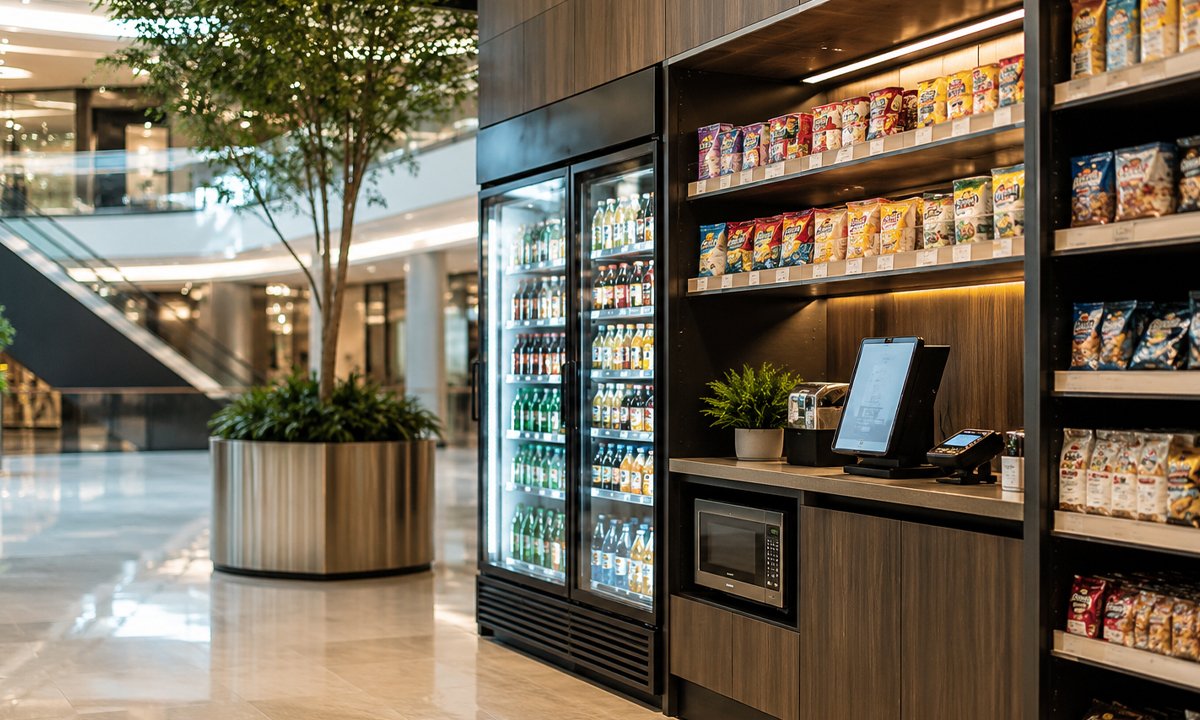
Shopping malls have evolved significantly over the past decade. While most discussions focus on improving the customer experience, there is another group that plays a critical role in mall success: employees. Retail associates, security personnel, maintenance teams, management staff, and support workers spend long hours on-site, often with limited access to convenient food and beverage options during their shifts.
As malls look for better ways to support their workforce, micro markets are emerging as a practical and modern solution. These self-service retail spaces provide employees with convenient access to snacks, beverages, fresh meals, and essential items without requiring a traditional cashier or full-service cafeteria.
The growing adoption of micro markets reflects broader changes in workplace expectations, technology, and employee experience strategies. By combining convenience, technology, and flexibility, micro markets are helping shopping malls create a better environment for employees while improving operational efficiency.
Why Employee Convenience Has Become a Priority in Shopping Malls
The modern workforce expects convenience in every aspect of the workplace. Employees working in shopping malls often face unique challenges when it comes to food access. Break times are limited, shifts can be long, and traveling to external restaurants may not always be practical.
Traditionally, employees relied on food courts or nearby convenience stores. However, these options can involve long lines, limited healthy choices, or time-consuming trips away from work areas.
According to insights from Forbes Coaches Council, employee experience has become a major factor in workplace satisfaction and engagement. Providing easy access to refreshments is one way organizations can improve the daily experience of their workforce.
This shift in expectations is one reason why micro markets are becoming increasingly attractive in mall environments.
Benefits of Micro Markets for Mall Employees
Micro markets address many of the challenges associated with traditional workplace food services.
- Convenient access to food and beverages throughout the workday
- Reduced time spent leaving work areas to purchase refreshments
- Availability of healthier meal and snack options
- Flexible self-service shopping experience
- Improved employee satisfaction and workplace experience
- Access to refreshments during non-traditional working hours
These benefits make micro markets particularly valuable in shopping malls where employees work across different schedules and departments.
How Micro Markets Support Workplace Food Services
Modern workplace food services are evolving beyond traditional cafeterias and vending machines. Employees now expect greater variety, convenience, and flexibility when purchasing food during their shifts.
Micro markets meet these expectations by providing a retail-like experience within the workplace. Employees can browse products, select what they need, and complete transactions quickly using self-service technology.
Unlike conventional vending machines, micro markets offer a broader selection of fresh meals, snacks, beverages, and convenience items. This expanded variety improves food access while creating a more appealing refreshment experience.
Businesses looking to implement these solutions often explore ai micro market services that are specifically designed to support modern workplace environments.
The Role of Frictionless Shopping in Employee Experience
One of the most significant advantages of micro markets is their ability to support Frictionless Shopping. Employees can enter the market area, select products, and complete purchases quickly without waiting in traditional checkout lines.
This streamlined experience is especially valuable in shopping malls, where employees often have limited break periods. The ability to purchase refreshments efficiently allows workers to maximize their available time.
The concept is similar to the convenience offered by modern retail environments. According to information from Wikipedia’s overview of convenience stores, consumers increasingly value speed, accessibility, and ease of purchase when selecting retail options.
Micro markets bring these same benefits directly into the workplace.
Why Mall Operators Are Investing in Smart Retail Solutions
Shopping malls are continuously seeking ways to improve efficiency while enhancing the experience for both customers and employees. This has led to increased investment in smart retail solutions that leverage automation and data-driven technologies.
Micro markets align perfectly with these goals because they require minimal staffing while providing a high level of convenience. Advanced systems can track inventory, monitor purchasing patterns, and generate valuable operational insights.
Many organizations complement micro markets with technologies such as ai smart store solutions to create more intelligent and efficient workplace retail environments.
These technologies help reduce waste, improve inventory accuracy, and ensure products remain available when employees need them.
How Micro Markets Improve Retail Operations
Managing employee amenities efficiently is an important part of successful retail operations. Traditional food service options can be expensive to maintain and may not provide the flexibility employees require.
Micro markets offer a more scalable alternative. They operate with lower overhead costs while providing a wider range of products. Because inventory and transactions are tracked digitally, managers gain better visibility into consumption patterns and purchasing behavior.
This data helps operators make informed decisions about product selection, replenishment schedules, and overall service performance.
As shopping malls continue to modernize, these operational advantages make micro markets an increasingly attractive investment.
The Growing Demand for Better Food Access
Providing reliable food access has become a growing priority across many industries. Employees who have easy access to refreshments are more likely to remain productive and satisfied throughout the workday.
Research published by the U.S. Bureau of Labor Statistics highlights the growing importance of workplace benefits and employee support programs in attracting and retaining talent.
Food availability may seem like a small detail, but it contributes significantly to overall employee well-being. Workers who can quickly access meals and beverages during shifts often experience greater convenience and less disruption to their daily routines.
Micro markets address this need by making refreshments readily available without requiring employees to leave the workplace.
Technology Is Making Micro Markets More Effective
The latest generation of micro markets relies heavily on automation and intelligent technology. Digital payment systems, inventory monitoring tools, and data analytics platforms allow these markets to operate efficiently with minimal supervision.
These innovations create a more seamless experience for employees while helping organizations manage inventory and operations more effectively.
For businesses interested in learning how large facilities leverage these technologies, the article How Micro Markets Work in Large Facilities provides additional insights into the operational benefits of modern micro market systems.
Technology is not replacing convenience. Instead, it is enhancing it by making workplace retail faster, smarter, and more responsive.
Why Micro Markets Are the Future of Employee Refreshments
Several workplace trends are contributing to the continued growth of micro markets.
- Increased demand for self-service retail experiences
- Growing emphasis on employee wellness and convenience
- Expansion of workplace technology and automation
- Greater focus on operational efficiency and cost control
- Need for flexible food service options across varying work schedules
- Rising expectations for workplace amenities and benefits
These factors are driving adoption across corporate offices, manufacturing facilities, healthcare environments, and increasingly, shopping malls.
Conclusion
The growing popularity of micro markets in shopping malls reflects a broader shift toward employee-focused workplace solutions. By improving food access, supporting Frictionless Shopping, and enhancing workplace food services, micro markets provide a convenient and modern alternative to traditional refreshment options.
Mall operators are also benefiting from improved retail operations, lower overhead costs, and valuable data insights that support smarter decision-making. Combined with emerging smart retail solutions, micro markets are helping create a better experience for employees while increasing operational efficiency.
As workplace expectations continue to evolve, micro markets are positioned to become an essential part of the modern shopping mall ecosystem, delivering convenience, flexibility, and value for both employees and operators.