
The rapid growth of co working spaces has transformed how professionals, startups, freelancers, and remote teams work. Modern shared workplaces are no longer competing solely on office space and internet connectivity. Today’s members expect convenience, flexibility, and amenities that improve their daily work experience. As a result, operators are increasingly investing in advanced breakroom solutions that go beyond traditional coffee stations and vending machines.
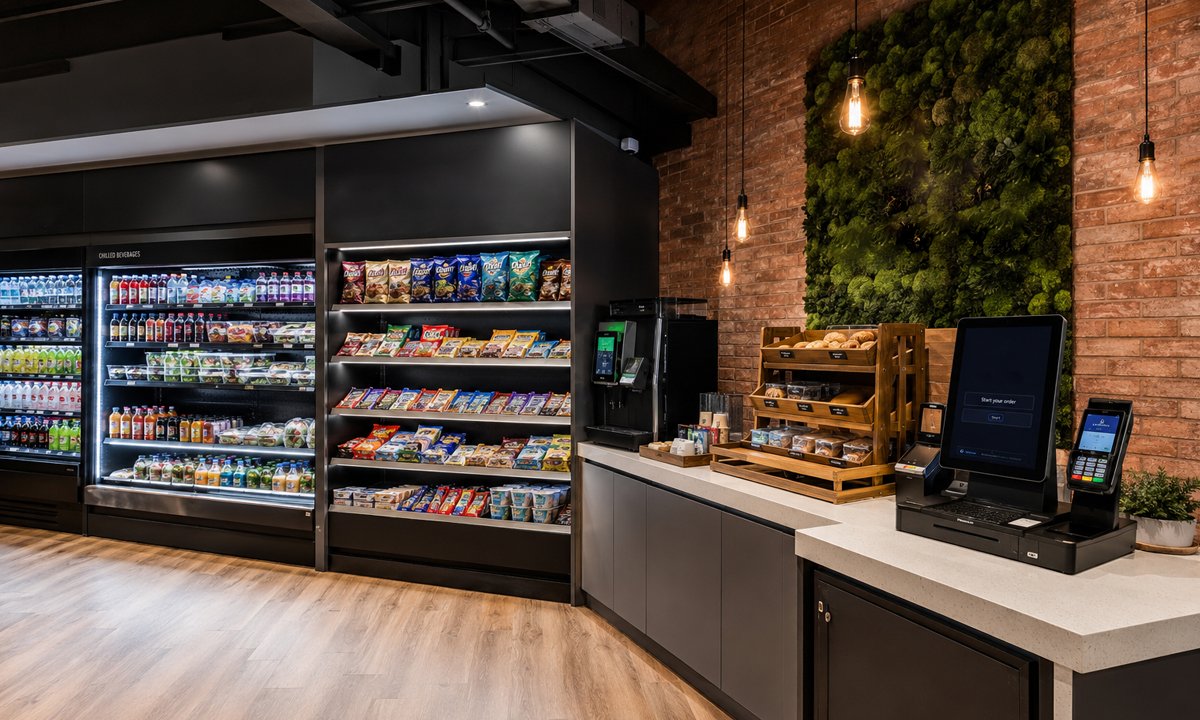
One of the most notable trends is the rise of self-serve retail environments inside co-working facilities. These modern refreshment areas provide convenient access to snacks, beverages, and meals throughout the day without requiring dedicated staff. By combining convenience with technology, self-serve stores are helping co-working providers improve operational efficiency while enhancing the overall workspace experience.
As competition within the flexible workspace industry continues to increase, investing in workplace amenities has become a strategic decision rather than simply an added benefit.
The Evolution of Amenities in Co-Working Spaces
The expectations of co-working members have changed significantly over the past decade. Early co-working environments focused primarily on affordability and flexibility. Today, members seek experiences that support productivity, wellness, and convenience.
Modern co-working operators recognize that amenities play a major role in attracting and retaining members. Comfortable lounges, meeting rooms, wellness spaces, and food access have become important differentiators.
The ability to provide convenient workplace food services throughout the day helps members remain productive without leaving the facility. This convenience becomes especially valuable for entrepreneurs, remote workers, and teams managing demanding schedules.
As a result, self-service food and beverage solutions are becoming increasingly common across shared workplaces.
Why Self-Service Retail Fits the Co-Working Model
Self-service retail aligns naturally with the flexible nature of co-working environments. Unlike traditional cafeterias that require staffing and fixed operating hours, self-serve stores offer continuous access while maintaining lower operational costs.
Members can purchase refreshments whenever needed, whether they arrive early, work late, or maintain unconventional schedules.
The growth of self service retail is also supported by technological advancements. According to insights from IBM’s research on the Internet of Things, connected technologies are enabling smarter and more efficient retail environments through automation, real-time monitoring, and data-driven operations.
These capabilities allow co-working operators to deliver convenient food access without increasing administrative complexity.
How Breakroom Solutions Improve Workspace Experience
The quality of workplace amenities directly affects how members perceive a co-working environment. Convenient access to refreshments contributes to comfort, productivity, and overall satisfaction.
When members can quickly grab a snack, beverage, or meal without leaving the building, they experience fewer interruptions throughout the workday.
Effective breakroom solutions help create an environment that feels supportive and professional. They also encourage members to spend more time within the facility, increasing engagement with the broader co-working community.
The overall workspace experience becomes stronger when convenience is integrated into daily operations rather than treated as an afterthought.
Micro Markets Are Becoming a Preferred Solution
Many co-working operators are adopting micro markets as an alternative to traditional vending systems. These self-service retail environments provide a wider selection of products while creating a more open and engaging shopping experience.
Unlike conventional vending machines, micro markets allow users to browse products directly and make selections based on personal preferences.
Organizations interested in implementing modern refreshment programs often explore ai micro market solutions because they offer greater flexibility and product variety.
Benefits of micro markets in co-working spaces include:
- Expanded food and beverage selections
- Convenient self-service purchasing
- Improved member satisfaction
- Reduced staffing requirements
- Flexible deployment in shared environments
- Enhanced workplace convenience
These advantages make micro markets particularly attractive for facilities serving diverse member populations.
Supporting Member Retention Through Better Amenities
Attracting new members is important, but retaining existing members often delivers greater long-term value.
Amenities have become increasingly influential in membership renewal decisions. Professionals comparing multiple co-working options frequently evaluate convenience, workplace culture, and available services.
Providing high-quality refreshment options helps create a more complete workplace experience that encourages loyalty.
Research published through ScienceDirect’s workplace and service environment studies suggests that environmental factors and support services can influence user satisfaction and engagement.
For co-working operators, investing in food access and convenience can therefore contribute directly to stronger member retention.
Members who perceive greater value from their workspace are more likely to remain long-term customers.
Technology Is Driving Modern Workplace Food Services
Technology plays a critical role in today’s workplace refreshment systems.
Advanced inventory management, automated restocking alerts, digital payment systems, and user analytics allow operators to manage self-service environments efficiently.
Many providers are incorporating ai smart store technology to improve operational visibility while delivering seamless member experiences.
Technology-driven systems help ensure products remain available while reducing manual oversight.
This combination of convenience and automation enables operators to scale food service offerings without significantly increasing labor requirements.
As self-service retail continues evolving, technology will remain a key factor driving adoption.
Operational Efficiency Matters for Growing Facilities
As co-working facilities expand, managing amenities efficiently becomes increasingly important.
Traditional food service models often involve staffing costs, inventory challenges, and operational complexity. Self-service retail solutions provide a more scalable alternative.
Operators can offer refreshments across multiple locations while maintaining centralized oversight.
Self-serve stores improve operational efficiency by:
- Reducing labor requirements
- Streamlining inventory management
- Supporting flexible operating hours
- Lowering administrative workload
- Improving product availability
- Providing actionable usage insights
These efficiencies allow operators to allocate resources toward other aspects of facility management and member experience.
The result is a more sustainable and scalable amenity strategy.
The Future of Co-Working Amenities
The future of co-working will likely be shaped by increasing expectations for convenience, personalization, and technology integration.
According to data from the U.S. Bureau of Labor Statistics productivity resources, organizations continue seeking ways to improve efficiency and workplace effectiveness. Co-working operators face similar pressures as they strive to deliver higher value to members.
Future refreshment environments may incorporate AI-driven recommendations, predictive inventory systems, mobile purchasing experiences, and personalized product offerings.
For additional insight into how workplace retail is evolving, explore our guide on AI-powered workplace food and beverage personalization.
As technology advances, self-service retail will likely become a standard feature rather than a premium amenity.
Conclusion
The growing investment in breakroom solutions reflects a broader shift in how co working spaces compete for members. Today’s professionals expect more than desks and meeting rooms, they want convenience, flexibility, and amenities that support their daily routines.
Through self service retail, micro markets in the workplace, and advanced workplace food services, co-working operators can enhance the overall workspace experience while improving operational efficiency.
By creating more convenient and engaging environments, self-serve stores contribute directly to stronger member retention, higher satisfaction, and a more competitive co-working offering.
As flexible work continues to grow, self-service retail solutions will remain an important part of the modern co-working experience.