
Businesses today are constantly searching for ways to improve workplace amenities while controlling expenses. Providing employees with convenient access to snacks, beverages, and fresh food has become an important part of workplace culture, but the cost of maintaining these services can vary significantly depending on the solution chosen.
Two of the most common workplace refreshment options are micro market services and full service vending. Both offer employees convenient access to food and beverages, yet they operate differently and have distinct impacts on operational expenses, inventory management, and employee satisfaction.
As organizations evaluate modern breakroom solutions, understanding the cost implications of each model becomes essential. While vending machines have long been the standard choice, micro markets are rapidly gaining popularity due to their flexibility, expanded product offerings, and self-service convenience.
Understanding Micro Market Services and Full-Service Vending
Before comparing costs, it is important to understand how each system operates.
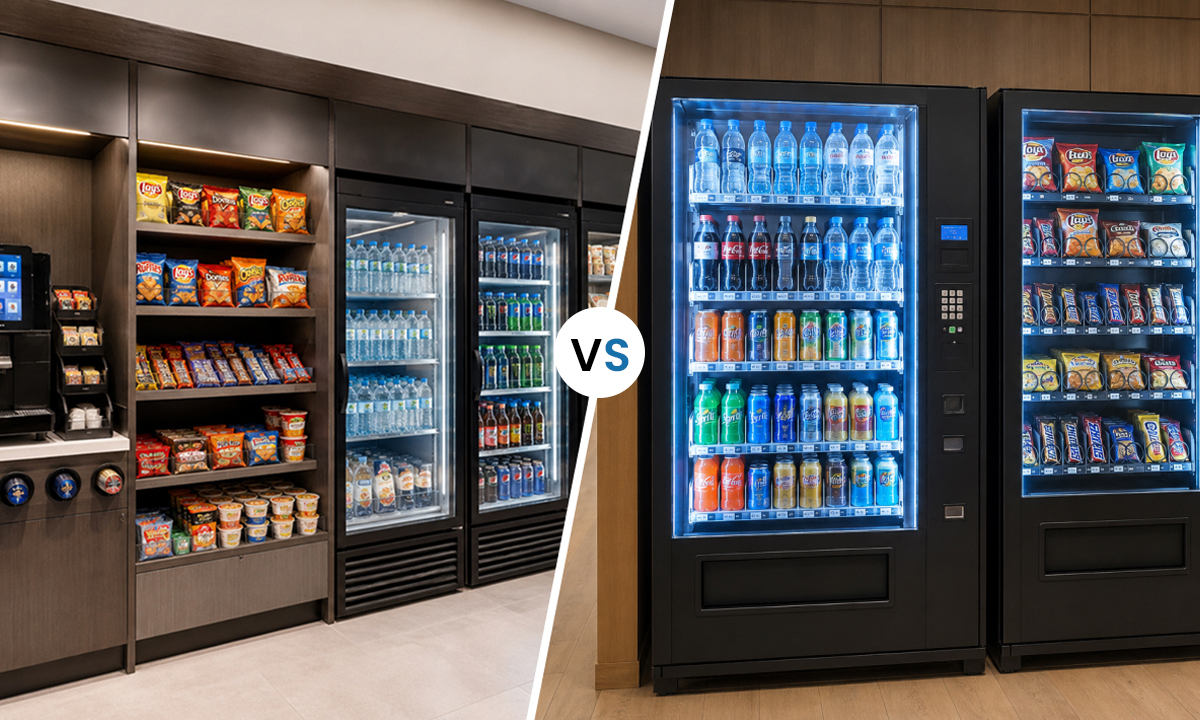
A traditional full-service vending program relies on vending machines stocked with snacks, beverages, and other products. Employees purchase items directly from the machine using cashless or traditional payment methods.
In contrast, micro market services create a self-contained retail environment inside the workplace. Employees can browse open shelves, refrigerated coolers, and fresh food displays before checking out through a self-service kiosk.
According to insights from Wikipedia’s overview of self-service technology, self-service systems are designed to improve convenience and reduce operational friction by allowing customers to complete transactions independently.
Both models provide workplace convenience, but their cost structures differ significantly.
Operating Costs Associated with Full-Service Vending
Full-service vending has traditionally been considered one of the most cost-effective workplace refreshment options. Vending machines require relatively little floor space and can operate without dedicated staff.
However, businesses should consider several factors that contribute to long-term operating expenses.
Common vending-related operating costs include:
- Equipment maintenance and repairs
- Inventory replenishment visits
- Product spoilage from slow-moving inventory
- Payment processing fees
- Utility and energy consumption
- Equipment replacement over time
Although these expenses may seem manageable individually, they can accumulate as workplace demand grows.
In larger facilities, multiple vending machines are often required to meet employee needs, increasing overall operating expenses and management complexity.
How Micro Markets Create Cost Efficiency
One of the biggest advantages of micro market services is their ability to improve cost efficiency through a more flexible retail model.
Unlike vending machines, micro markets can accommodate a broader product selection without requiring multiple machines. Fresh meals, healthy snacks, beverages, and convenience items can all be offered within a single retail space.
This flexibility allows businesses to optimize product offerings based on employee demand while reducing the need for additional equipment investments.
Micro markets also generate valuable inventory data that helps operators make smarter purchasing decisions and reduce waste.
As a result, many organizations find that micro markets provide stronger long-term value despite potentially higher initial setup costs.
Product Variety Can Influence Operating Costs
One often-overlooked factor when comparing workplace refreshment systems is product variety.
Traditional vending machines are limited by physical product slots. This restriction can make it difficult to offer fresh foods, speciality beverages, and healthier options that employees increasingly expect.
Micro markets provide greater merchandising flexibility, allowing operators to adapt inventory based on purchasing behaviour and workplace preferences.
Better product variety often results in increased employee participation and higher sales volumes.
Higher engagement can improve overall profitability while helping offset operating expenses more effectively than traditional vending environments.
Organizations seeking modern workplace convenience often find that broader product selection contributes significantly to overall program success.
Inventory Management Plays a Major Role
Effective inventory management is critical when evaluating workplace refreshment costs.
According to insights from Investopedia’s guide to inventory management, inventory optimization helps businesses reduce waste, improve product availability, and control operational expenses.
Traditional vending machines often require manual inventory planning based on limited visibility into consumer behavior.
Micro markets typically leverage digital inventory systems that provide real-time sales and consumption data.
This improved visibility helps operators:
- Reduce product waste
- Improve restocking accuracy
- Identify top-performing products
- Minimize inventory shortages
- Optimize purchasing decisions
- Improve overall profitability
Better inventory control directly contributes to lower operating costs and greater operational efficiency.
Employee Experience Impacts Financial Performance
While operating costs are important, businesses should also consider how workplace refreshment programs affect employee satisfaction.
Modern employees increasingly expect convenient access to quality food and beverage options without leaving the workplace.
Micro markets generally provide a retail experience that feels more similar to a convenience store than a vending machine. Employees can browse products, compare options, and access fresh foods that may not fit inside traditional vending equipment.
Improved employee satisfaction can positively influence workplace culture, productivity, and engagement.
Companies investing in workplace amenities often view these benefits as part of the broader value equation when comparing refreshment solutions.
Fixed Costs and Long-Term Investment Considerations
Cost comparisons should include both short-term and long-term financial factors.
According to insights from Investopedia’s explanation of fixed costs, businesses must evaluate recurring operational expenses alongside initial investments when assessing overall cost effectiveness.
Traditional vending often has lower upfront implementation requirements. However, expanding vending capacity typically requires additional machines, service visits, and maintenance expenses.
Micro markets may require a larger initial setup investment but can scale more efficiently as workplace populations grow.
For medium-sized and large organizations, this scalability often improves long-term return on investment.
Which Option Delivers Better Value for Modern Breakrooms?
The answer depends largely on workplace size, employee demand, and organizational goals.
Smaller workplaces with limited refreshment requirements may find traditional vending machines sufficient.
However, organizations seeking comprehensive breakroom solutions often discover that micro markets provide greater flexibility, stronger employee engagement, and improved operational efficiency.
Businesses can also learn more about workplace retail evolution through our guide on How micro markets work in large facilities, which explores how these systems support larger employee populations.
As workplace expectations continue evolving, many employers are prioritizing convenience, variety, and scalability alongside direct cost considerations.
The Future of Self-Service Retail in the Workplace
The workplace refreshment industry continues moving toward more sophisticated self service retail environments.
Advances in inventory automation, cashless payments, artificial intelligence, and data analytics are helping organizations optimize workplace retail operations more effectively.
Micro markets are particularly well-positioned to benefit from these innovations because they offer greater flexibility than traditional vending systems.
As businesses increasingly embrace data-driven workplace amenities, micro market services are expected to continue growing across offices, healthcare facilities, manufacturing sites, and corporate campuses.
Conclusion
When comparing micro market services and full service vending, operating costs should be evaluated alongside employee experience, product variety, inventory management capabilities, and long-term scalability.
Traditional vending remains a practical option for smaller workplaces with limited refreshment needs. However, organizations seeking improved cost efficiency, broader product selections, and more advanced breakroom solutions often find greater value in micro market environments.
Through enhanced inventory visibility, expanded retail offerings, and stronger employee engagement, micro markets frequently deliver lower long-term operating costs while creating a more modern workplace experience.