
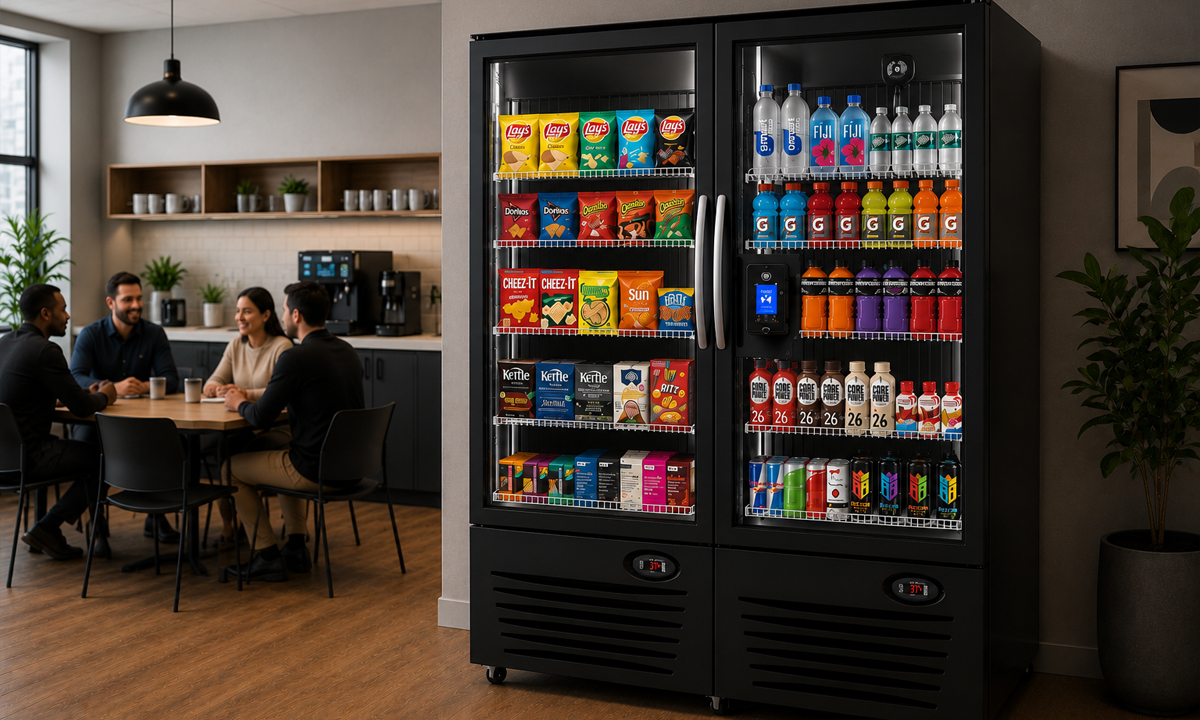
Workplace refreshment programs have evolved significantly over the past decade. Traditional office pantry setups that once relied on manual inventory checks, basic snack supplies, and limited oversight are increasingly being replaced by intelligent, technology-driven systems.
Today’s organizations are looking for smarter ways to provide employees with convenient access to food, beverages, and refreshments while improving operational efficiency. As a result, AI-powered breakroom solutions are becoming a preferred alternative to conventional pantry programs.
By combining automation, intelligent inventory management, and data-driven decision-making, AI-controlled systems help businesses reduce waste, improve employee satisfaction, and create more efficient workplace environments. As employee expectations continue changing, modern organizations are turning to AI technology to transform how workplace refreshments are managed.
The Limitations of Traditional Office Pantry Setups
For years, traditional office pantry programs served as a standard workplace amenity. Companies stocked snacks, beverages, and pantry essentials to support employees throughout the day.
While these setups provided convenience, they often created several operational challenges. Manual inventory tracking made it difficult to monitor consumption accurately, while inconsistent restocking frequently resulted in product shortages or unnecessary waste.
Traditional pantry environments also provide limited visibility into employee preferences. Businesses often purchase products based on assumptions rather than actual consumption data, which can reduce both efficiency and employee satisfaction.
As organizations grow, these challenges become even more difficult to manage, creating a need for more scalable and intelligent refreshment systems.
How AI Is Transforming Modern Breakroom Solutions
Artificial intelligence is changing how businesses manage workplace amenities. AI-powered breakroom systems use advanced software, sensors, and analytics platforms to automate many tasks that traditionally required manual oversight.
According to insights from McKinsey’s explanation of artificial intelligence, AI enables systems to analyze data, identify patterns, and make intelligent decisions that improve efficiency and performance.
In workplace refreshment environments, AI can automatically monitor inventory levels, predict demand, and optimize product selection based on employee behavior.
This level of automation helps businesses create more responsive and efficient refreshment programs while reducing administrative workload.
Organizations implementing advanced workplace technology solutions are increasingly leveraging AI to modernize breakroom operations.
Real-Time Inventory Tracking Eliminates Guesswork
One of the biggest advantages of AI-powered breakroom systems is real-time inventory tracking. Traditional pantry programs often rely on periodic inventory checks that may not accurately reflect actual product usage.
AI-driven systems continuously monitor inventory levels and automatically update stock information as products are consumed.
Benefits of real-time inventory tracking include:
- Improved inventory accuracy
- Faster restocking decisions
- Reduced product shortages
- Lower inventory waste
- Better product availability
- Increased operational visibility
This level of transparency allows businesses to manage workplace refreshments more effectively while improving employee access to preferred products.
Why Inventory Optimization Matters
Inventory inefficiencies can significantly impact workplace refreshment programs. Overstocking can lead to expired products and waste, while understocking may leave employees frustrated when preferred items are unavailable.
AI-powered inventory optimization systems use historical consumption data and predictive analytics to balance inventory levels more effectively.
Rather than relying on manual forecasts, AI continuously analyzes usage patterns and adjusts recommendations accordingly.
This approach helps organizations maintain the right mix of snacks, beverages, and pantry products while reducing unnecessary costs.
Better inventory management also contributes to a more reliable and satisfying employee experience.
AI Vending Machines Are Expanding Workplace Options
Modern ai vending machine technology has become an important component of intelligent breakroom environments. These systems provide employees with self-service access to refreshments while collecting valuable data that supports operational improvements.
Unlike traditional vending machines, AI-powered systems can track purchasing patterns, identify high-demand products, and improve inventory forecasting.
Businesses are increasingly combining AI vending technology with broader workplace refreshment programs to create more flexible and convenient employee experiences.
Many organizations are also integrating AI vending systems into modern micro market environments that offer expanded food and beverage selections through self-service retail technology.
This integration helps businesses provide greater variety while maintaining efficient inventory management.
The Role of IoT in Smart Breakroom Systems
Modern AI-powered refreshment solutions rely heavily on connected technology. Sensors, cloud platforms, and smart devices communicate continuously to provide real-time operational insights.
According to insights from TechTarget’s explanation of the Internet of Things, IoT technology enables connected devices to exchange information and automate processes across digital environments.
Within workplace breakrooms, IoT systems support inventory monitoring, equipment diagnostics, maintenance alerts, and usage analytics.
These connected capabilities allow businesses to manage workplace refreshments more efficiently while minimizing manual oversight.
The combination of AI and IoT creates a highly intelligent refreshment ecosystem that continuously adapts to workplace needs.
How AI-Controlled Systems Improve Employee Retention
Employee expectations continue evolving as organizations compete for talent. Workplace amenities now play a larger role in employee satisfaction and overall workplace experience.
Convenient and well-managed refreshment programs contribute positively to employee perception of workplace culture.
AI-powered breakroom solutions support employee retention by:
- Providing consistent access to refreshments
- Reducing frustration caused by stock shortages
- Supporting healthier food options
- Creating a more modern workplace experience
- Improving convenience during busy workdays
- Demonstrating investment in employee well-being
Businesses that invest in employee-focused amenities often create stronger workplace cultures and higher levels of engagement.
Well-designed refreshment programs can become a meaningful component of broader employee retention strategies.
Automation Improves Operational Efficiency
One reason businesses are rapidly adopting AI-powered refreshment systems is their ability to improve operational performance.
According to insights from Forbes’ analysis of AI-driven operational efficiency, automation technologies help organizations streamline processes, reduce manual work, and improve productivity.
In workplace breakrooms, automation supports inventory management, demand forecasting, restocking schedules, and system monitoring.
These efficiencies allow organizations to allocate resources more effectively while maintaining high-quality refreshment services.
Automation also helps businesses scale refreshment programs more easily as workforce sizes and operational requirements change.
Why Healthcare and Large Facilities Are Leading Adoption
Large workplaces, hospitals, and manufacturing facilities often face unique challenges related to employee refreshments. Multiple shifts, variable staffing levels, and around-the-clock operations make traditional pantry management more difficult.
Organizations can learn from automated breakroom strategies used in healthcare environments, where inventory visibility and continuous product availability are critical.
AI-powered systems help these facilities maintain consistent service levels while minimizing waste and administrative burden.
As a result, many large organizations are leading the adoption of intelligent breakroom technologies.
Conclusion
Traditional pantry setups are increasingly struggling to meet the demands of modern workplaces. Manual inventory processes, limited visibility, and inefficient restocking methods often create unnecessary costs and employee frustration.
AI-powered breakroom solutions provide a smarter alternative through automation, real-time inventory tracking, and intelligent inventory optimization. These technologies help businesses improve operational efficiency while creating more convenient and employee-focused refreshment experiences.
As organizations continue embracing digital transformation, AI-controlled breakroom systems will play an increasingly important role in workplace amenities, employee satisfaction, and long-term operational success.